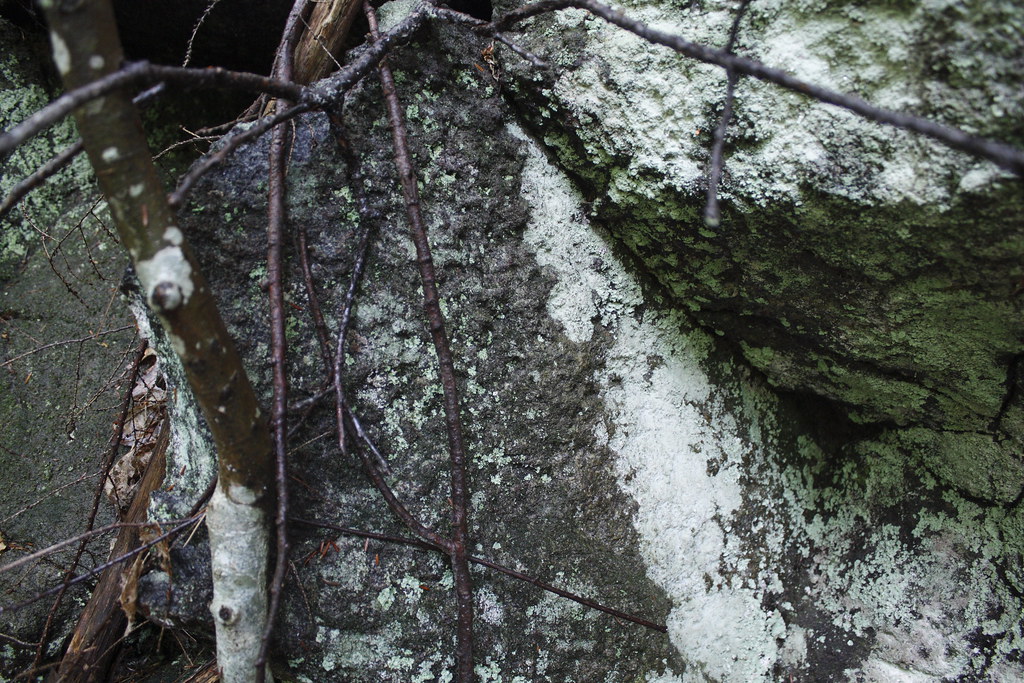
 We see so much on our hikes. There are too many photos to post. But I have chosen a selection of photographs that highlight what I learned on the hike, whether it be about the plants, animals or geography of the area we hiked in. You can click on any photo to see it full size in a new window. If you click on a text link you will be taken to my Flickr set for the photograph. All of my hike photos are in my Photowalks & Hikes Collection. I call this hike the Behind the Dump Hike because we walked to the dump and then left it behind as we entered the Mt. Kearsarge State Forest.
Above is a quartz flecked granite boulder on John's property. You can't see it well here but it is studded with garnets. The boulder is in an old abandoned garnet mine here. These small mines stud the country side in New England. Granite, quartz, mica, garnets, feldspar and other minerals were mined by local people.
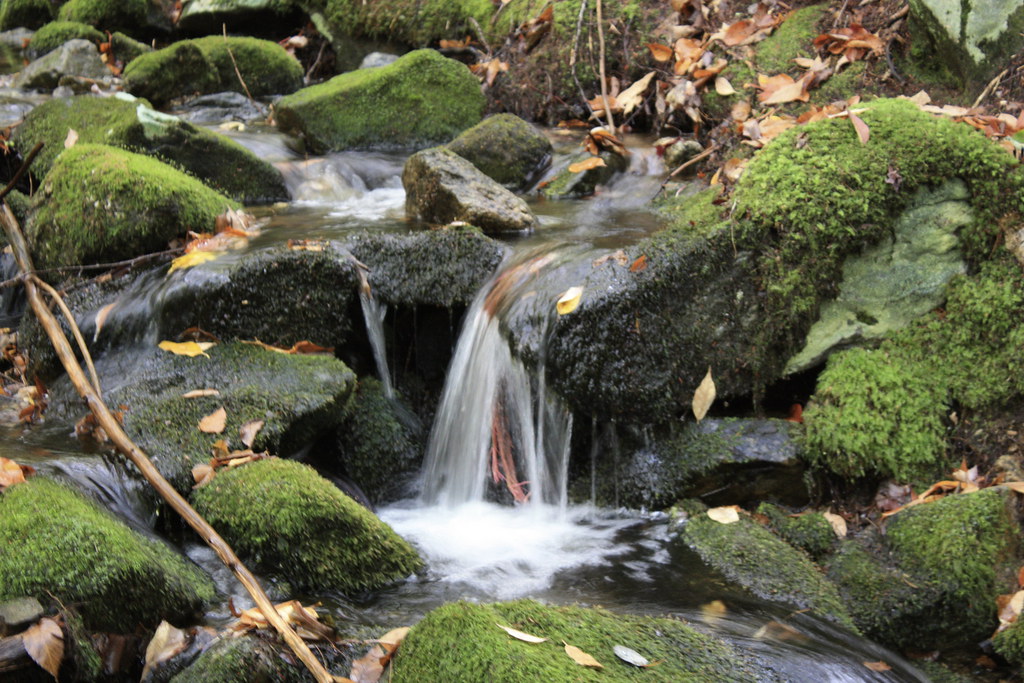 The photos above and below are of the unnamed brook in the forest that we followed up the hill and back on this hike. There were beautiful falls such as these and quiet flats where the brook quietly burbled.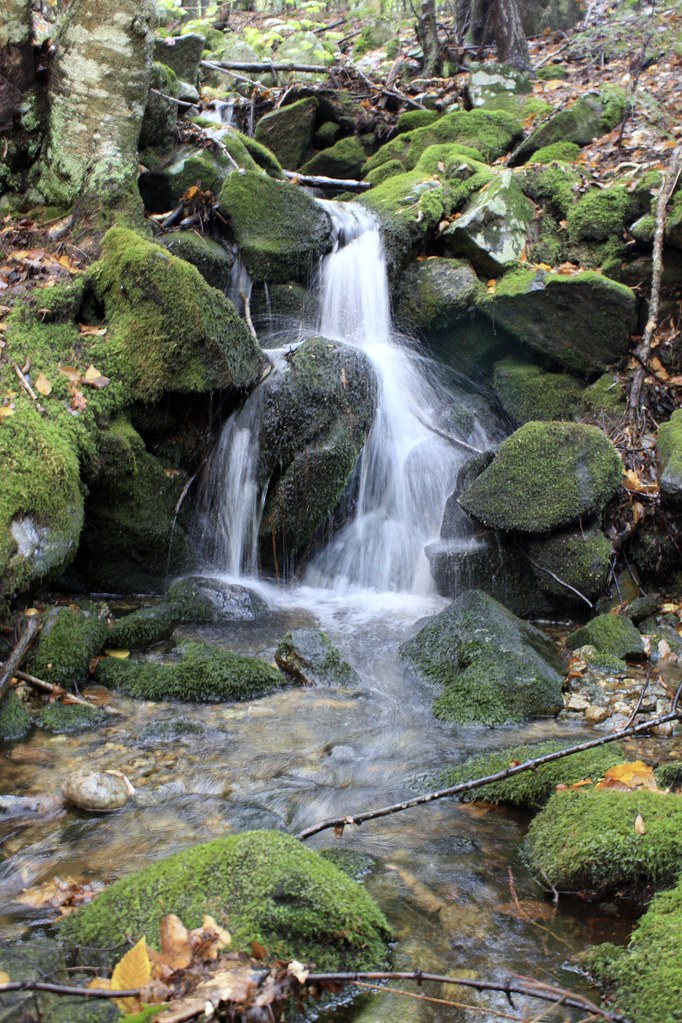
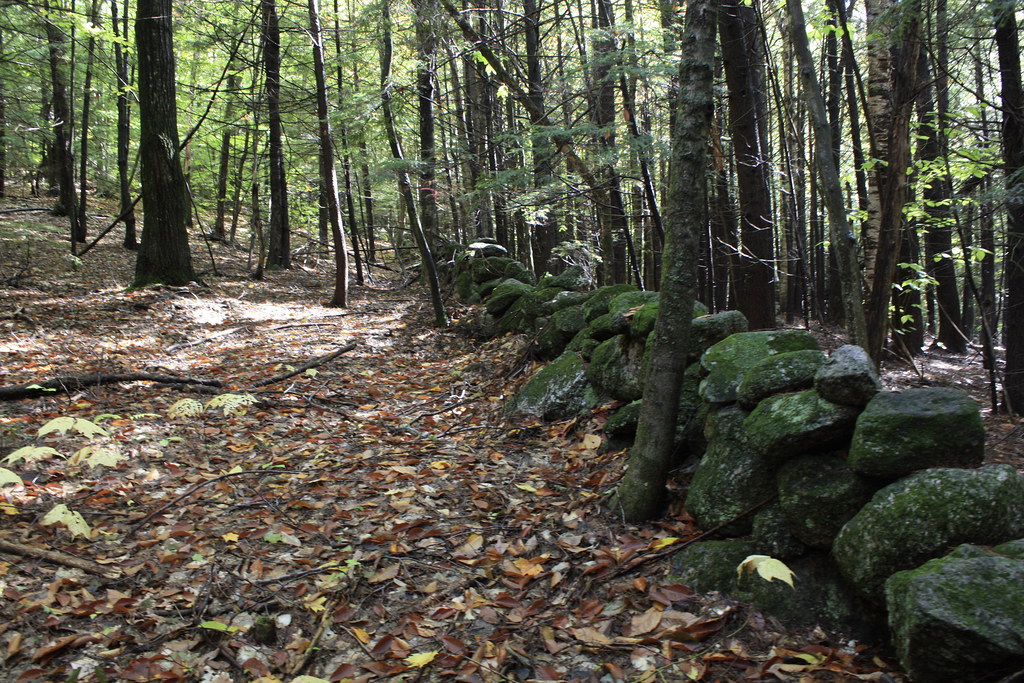 Above is a stone wall that we suddenly came across near the crest of the hill. There was an old pasture here a couple of hundred years ago. It amazes me how the old people withstood the hardships of life in the hills and mountains long ago. It must have been extremely difficult to pasture your dairy herd up here. Nowadays, these ancient walls create wonderful habitat for all sorts of plants and animals.
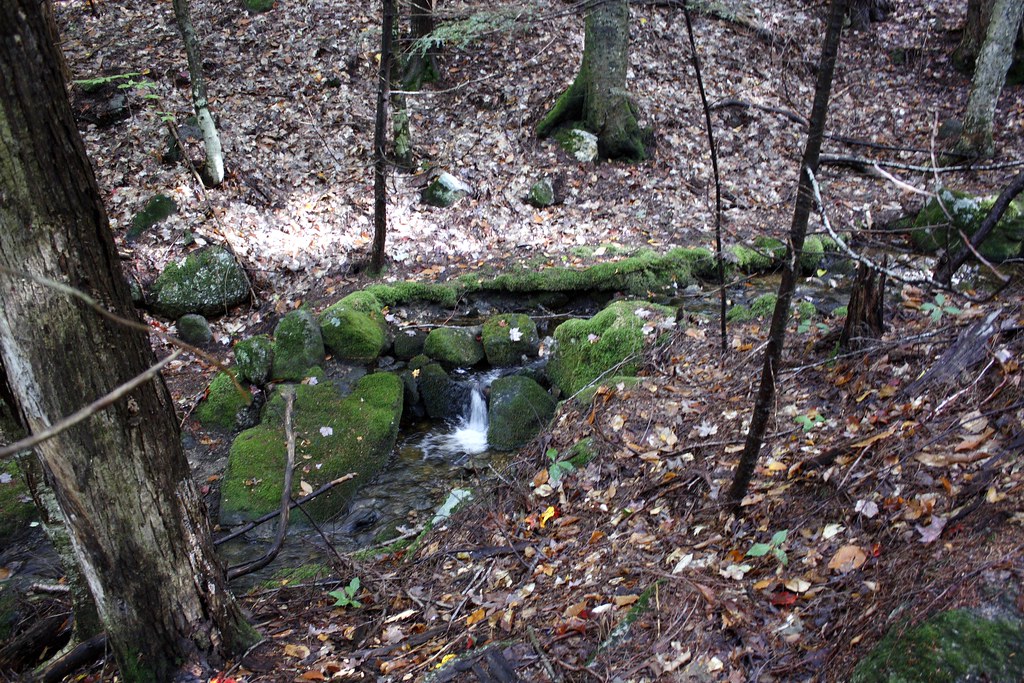 In the photo above, if you are familiar with deer roads, you may just see a deer trail going from the left side of the brook, across it to the right side, and then forward towards the camera on the right. This is a well-used trail the deer use for water and fording.
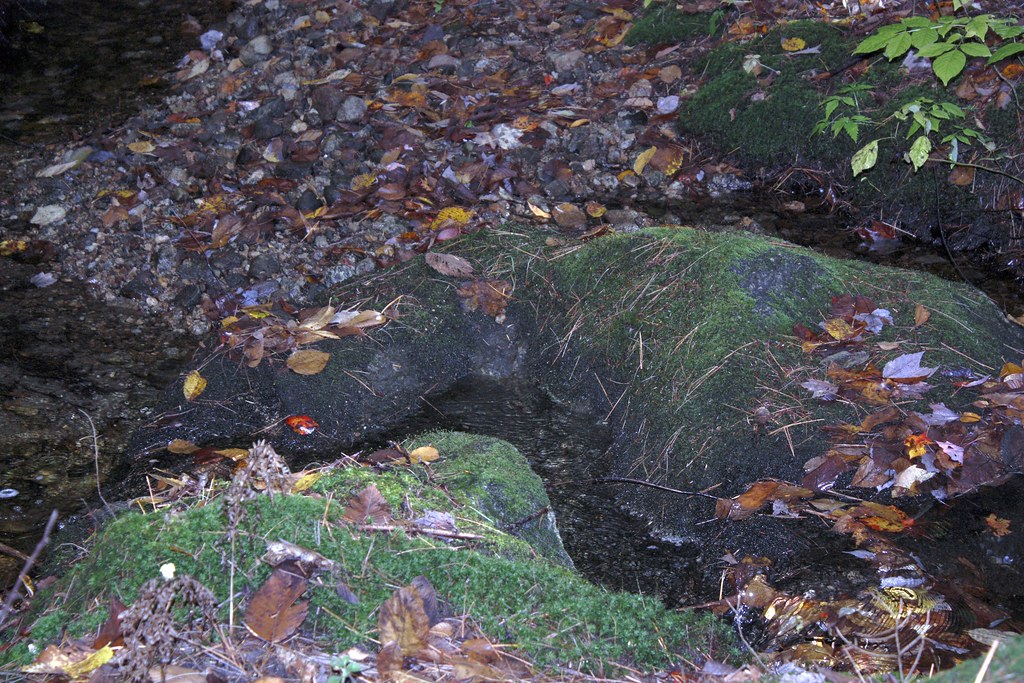 Above is another deer ford across the brook. Another watering spot for them.
 Last we see above, the "idyllic" spot where the sad porcupine lives. The brook falls on the left. To the right of the brook you see a whitish boulder with a small pool in front of it. That boulder (white looking because of the sun) is where the porcupine lives. She has a large den underneath with several entrances all around it. In my Sad Porcupine post you will see the up-close photos of the quills, the pool, and of course, the sad porcupine.

_/\_/\_


