Showing posts with label mathematics. Show all posts

Saturday, September 10, 2022

Chika's Test

Chika Ofili

I've taught mathematics for 32 years this year. Unbelievable. I've taught K-12 and college. 

Every year, I am teaching one class or another the divisibility rules. The rules are important for mental math and for higher mathematics studies. They make life easier. We all know that a number ending in 0 is divisible by 10. There are rules, like that 10 divisibility rule, for all 10 digits. Except 7.  

Every year, I always teach classes that there simply is not a divisibility rule for 7, although I knew there had to be one somewhere. Maybe in higher math? I even found one once, but never used it in a class and have forgotten it. It was too algebraic for my classes and too cumbersome. 

I have wanted to take the time to figure out a 7 rule for myself. But who has the time for that? I'm pretty busy with family, bread making, insect and nature photography, reading, church . . . so if I did not need a 7 divisibility rule, I wasn't going to devise one. 

Chika Ofili, of the UK, did, though. That is his photo above, with the link to the article about his method, which is to multiply the last digit of a number by 5 and then add that sum to the remaining digits of the number: 

• Take the number 532. Its last digit is 2, so the operation prescribed is:
532 |→ 53 + (5 × 2) = 63.
Note that both 63 and 532 are multiples of 7. 
• Take the number 973. Its last digit is 3, so the operation prescribed is:
973 |→ 97 + (5 × 3) = 112.
We can repeat the same operation with the number 112. Its last digit is 2, so the operation
prescribed is:
112 |→ 11 + (5 × 2) = 21.
Note that both 21 and 973 are multiples of 7.

 I'm proud of Chika! He took the initiative to do this and his name will forever be used for this method.

The other divisibility rules are:

  • 0: do not ever ever divide by zero. It is illegal.
  • 1: every number is divisible by 1 and the quotient is the same number.
  • 2: all even numbers are divisible by 2
  • 3: if the sum of the digits is divisible by 3, then the number is divisible by 3
  • 4: If the last 2 digits are divisible by 4, then the number is divisible by 4
  • 5: any number ending in 0 or 5 is divisible by 5
  • 6: if a number is divisible by 2 AND 3, it is divisible by 6
  • 7: see above
  • 8: if the last 3 digits are divisible by 8, then the number is divisible by 8
  • 9: if the sum of the digits is divisible by 9, then the number is divisible by 9
  • 10: any number ending in zero is divisible by 10

So have fun with your math and your puzzles this year! Maybe you can find a divisibility rule for 11, 12, 13, or some other number!

Clue: think multiples and addends. 
_/\_/\_

Thursday, June 09, 2011

Crocheting a Coral Reef

Nearly four years ago I posted a story about knitting Escher inspired shapes and hyperbolic planes. Today in my mailbox I found a post from Let’s Play Math about a Hyperbolic Crochet Coral Reef. I immediately knew I had to share the information. If you don’t know much math, don’t worry — you can still crochet these mathematical objects and be a part of this wonderful project. Watch the video. Margaret Wertheim connects the crochet pieces to the evolution of life on earth, mathematics, history and traditional feminine arts. Through crochet, women have been able to model shapes in nature that have been ignored by mathematicians. This could even be a great after school project for suitably motivated people. If you are interested, I suggest you read all of the links in this post.

Let's Play Math gives simplified directions for crocheting the hyperbolic planes. Here is a link to a pdf file that gives more detailed directions on how to crochet these shapes: http://crochetcoralreef.org/Content/makeyourown/IFF-CrochetReef-HowToHandout.pdf You can even buy a book of instructions at http://theiff.org/publications/index.html

Some fascinating articles about the coral reef project can be found in this article at http://www.math.cornell.edu/~dtaimina/hypplanes.htm

Finally, here is a slide show of the crocheted coral reef:

The Coral Reef Project is from the Institute for Figuring. It is a fascinating group and worth browsing their site.

Happy crocheting!

_/\_/\_

Thursday, April 07, 2011

How to Wreck Your Applesauce

Coxeter's Pippin Experiment (1 of 3).jpg
Two experimental apples — A and B.

Do you remember Coxeter's Pippin? If not, please click that link and go read it. A geometry professor claimed that coring an apple his way was the most efficient way to core apples. His claim has been nagging me for days now, so yesterday, while making applesauce, I decided to test his theory.

I had 8 apples for the applesauce and selected two that were most identical in size. I weighed each on my digital food scale after I peeled them. Then I cut both of them equatorially (see the photo in the link of the original post above). For Apple A, I used Coxeter's method for coring. For Apple B, I used my husband's coring method (which, if you remember, he had taught me before I learned Coxeter's method). Suddenly, I wanted to see how much waste was produced with my own method, so I selected another apple, Apple C. I didn't care what size Apple C was. By this time. I just wanted to get this damn experiment over with and have supper. My method for coring apples is traditional: I cut the apple in half longitudinally and then, using a sharp knife, I cut the core out along with my own skin, nail and sometimes bone, creating a lot of blood. I weighed the stuff that I cut out of each apple and created a chart (below). Then I calculated the percent loss of each apple. If you would check my math I would appreciate it. I was grouchy when I did the numbers this morning, so I probably made a mistake.

Coxeter's Pippin Experiment (2 of 3).jpg
The debris from the Coxeter Pippin Method.

Apple
Method
Apple A
Coxeter Pippin
Apple B
John's Method
Apple C
traditional

Peeled Weight

3.625 oz. 3.5 oz. 3.625 oz.

Cored Weight

3.25 oz. 2.50 oz. 2.125 oz.

Percent Loss

10.3% 28.5% 41.3%

Discussion

The Coxeter Pippin Method resulted in the least waste, therefore it was most efficient. But I didn't like it. It was tedious and time consuming. I had to dig those little skin-like things out of the apple because they did not "fall out" as Coxeter said they would. My back was killing me as I huddled over the pieces of apple. My method was most familiar so I was able to think of other things besides apples and even hum my cooking song. John’s method was comfortable and somewhat enjoyable because I knew I could become expert at it if I tried it enough. It went fairly quickly, too, but not as quickly as my method.

Conclusion

  • I am going to continue using my method for coring apples.
  • Don’t pay attention to cooking advice from geometry professors.
  • Don’t use maple sugar in your applesauce. It tasted awful.

_/\_/\_
Saturday, April 02, 2011

Puzzling Week Returns: Coxeter's Pippin

Apples (1 of 4).jpg
Peeled & equatorially cut apples ready to be cored for making apple slab.
January 24, 2011

John and I peel dozens of apples for pie, sauce, and slab. Depending on the size and quality of the apples, we will either peel and core by hand (with or without a corer) or by crank. John recently taught me that cutting apples equatorially and then coring them takes less time then the traditional cutting and coring. I have often wondered if there was an even easier or better way than all of the methods we have tried. I found a way tonight! But this is a puzzle. Your clue is the photo I took (above) of equatorially cut apples from January when I made two huge slabs for the weekend. By the way, I no longer use the King Arthur slab recipe. I double a pie crust recipe for a double 9” pie, use a 13x9 Pyrex pan, and just make an apple pie (butter, flour, brown sugar, cinnamon, nutmeg, ginger, cloves are all measured by feel and sight) in the rectangular Pyrex.

New Scientist Magazine December 21, 1961

There are many ways of eating an apple. At one extreme is the child who met the request, "Can I have the core of your apple?" with a flat, "There ain't going to be no core!". Various procedures with various implements are designed to remove the core, but probably not one apple in a million is cored in the most efficient fashion possible. How in fact should an apple be cored, to remove all the core with the least possible waste?

Spoiler Alert! The answer is the first comment to this post.

_/\_/\_
Tuesday, March 30, 2010

Mode, Median and Mean


I found this great activity at BBC: Bitesize with the code for the blog. It took me, regrettably, awhile to learn how to manipulate the buildings. Now I'm off to find more more!
diigo it
_/\_/\_
Friday, March 26, 2010

Friday Fractal: Wheat

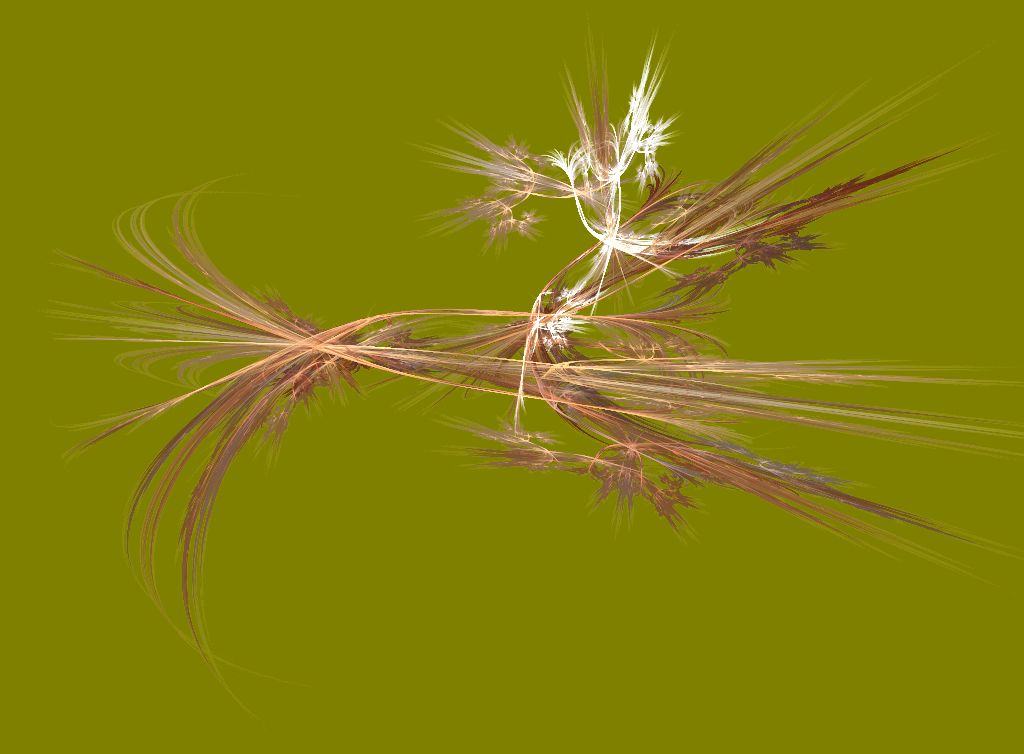
Created with Apophysis 2.09
Reid's fractal creations truly are art. She has lines and curves that glow on wonderful backgrounds. Lately, I've been trying to recreate the look of her fractals. Wheat, above, is the closest I have gotten so far, but it's not even close to what I see in my mind.
 _/\_/\_
Friday, March 19, 2010

The Revised Common Lectionary on Many Eyes

If you click on the image, you will see it full size in a new window.

Apparantly this word cloud visualization of the RCL is based on only one Sunday's reading of Year B (we are now in Year C). I am working on a way to easily create a text file of all of the readings for one year and create another word cloud. Would it be too big? I did a word cloud for this Sunday's readings (you can see it here and play with it yourself). It is fun to compare the two:

Many Eyes is a site I have watched for years and even played with a bit. This is my first attempt making a visualization. It is a fantastic classroom resource and activity. Here is an excerpt from the Many Eyes About page:

Many Eyes is a bet on the power of human visual intelligence to find patterns. Our goal is to "democratize" visualization and to enable a new social kind of data analysis. Jump right to our visualizations now, take a tour, or read on for a leisurely explanation of the project.

All of us in CUE's Visual Communication Lab are passionate about the potential of data visualization to spark insight. It is that magical moment we live for: an unwieldy, unyielding data set is transformed into an image on the screen, and suddenly the user can perceive an unexpected pattern. As visualization designers we have witnessed and experienced many of those wondrous sparks. But in recent years, we have become acutely aware that the visualizations and the sparks they generate, take on new value in a social setting. Visualization is a catalyst for discussion and collective insight about data.

We all deal with data that we'd like to understand better. It may be as straightforward as a sales spreadsheet or fantasy football stats chart, or as vague as a cluttered email inbox. But a remarkable amount of it has social meaning beyond ourselves. When we share it and discuss it, we understand it in new ways.

diigo it
_/\_/\_
Friday Fractal: Warning

Warning

When I am an old woman I shall wear purple
With a red hat which doesn't go, and doesn't suit me.
And I shall spend my pension on brandy and summer gloves
And satin sandals, and say we've no money for butter.
I shall sit down on the pavement when I'm tired
And gobble up samples in shops and press alarm bells
And run my stick along the public railings
And make up for the sobriety of my youth.
I shall go out in my slippers in the rain
And pick flowers in other people's gardens
And learn to spit.

You can wear terrible shirts and grow more fat
And eat three pounds of sausages at a go
Or only bread and pickle for a week
And hoard pens and pencils and beermats and things in boxes.

But now we must have clothes that keep us dry
And pay our rent and not swear in the street
And set a good example for the children.
We must have friends to dinner and read the papers.

But maybe I ought to practice a little now?
So people who know me are not too shocked and
surprised
When suddenly I am old, and start to wear purple.

Jenny Joseph

I just found this wonderful poem today. But since it was written in 1961, you probably already know it. What a delight it is. . .

diigo it
_/\_/\_
Thursday, March 18, 2010

Geometric Solids in Art Class

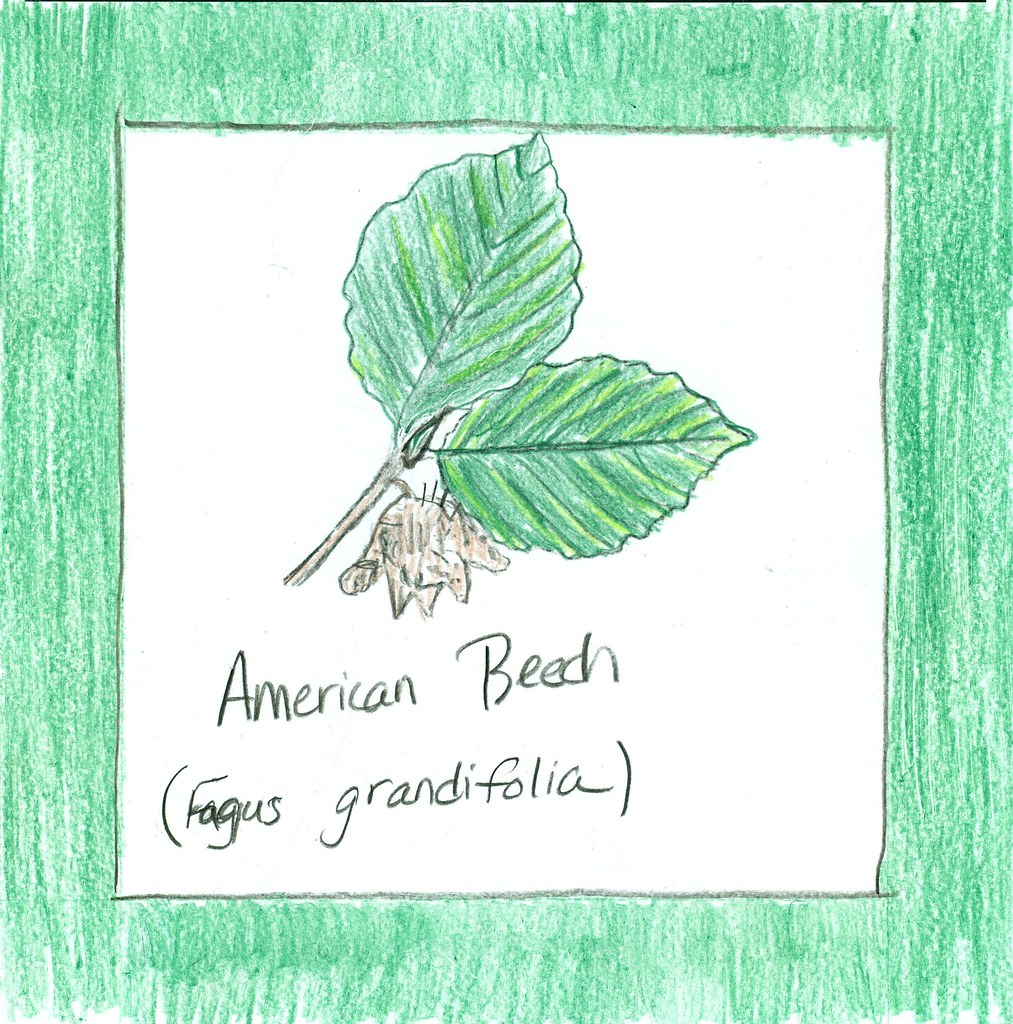
My American Beech stamp

I was taking an art class. I have simply horrible art skills. I wanted to improve them to the point that I could create my own nature sketch book. Nature sketch books are a centuries old tradition for women. Beatrix Potter kept nature sketchbooks and was extremely talented. Another artist, Mary, has a nature sketchbook. Mary's sketchbook was the inspiration for me to take this art class. When you look at her sketches (by clicking the link or her image on the left) you will see why I want to learn how to draw and paint. Summer is coming. My goal was to learn enough about drawing to begin my sketchbook this year.

My American Beech (above) is pretty good. But I messed up the caption of Fagus grandifolia. I couldn't fix it without making a mess. And I also cheated. I used carbon paper with an image I printed from the Internet. Am I ashamed? Not! My philosophy: with art, for me, anything goes.

My gray scale

So then the art teacher, in preparation for drawing lessons, had us make our own gray scale. I loved this project because it is just like the color scales on computers. I know computers. I did rather well. I just wish the art teacher had made her little boxes properly. It looks messy.

Geometric Still Life
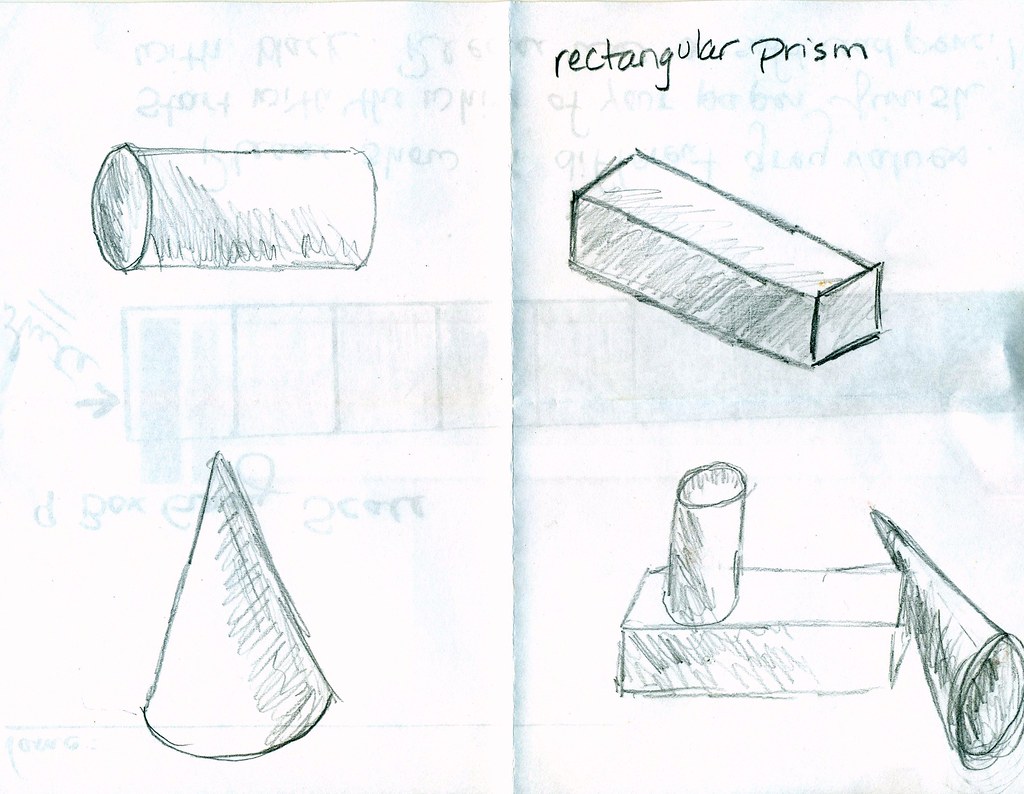
Geometric solids: a right circular cylinder, a right circular cone and a rectangular prism

My favorite work was this still life of geometric solids. With practice I could be excellent with it. Of course, as a mathematics teacher I have drawn geometric solids for years and years and have even instructed children on how to draw them. So what did I do next? I quit art class. The next assignment was to draw these and paint them on canvas with primary colors and blending the colors with white and black for shading. I became overwhelmed and quit. If I were my own student, I would praise, encourage and counsel myself to let this new skill evolve and give myself instruction on relaxation. The art teacher is probably younger than my own daughters, so she didn't counsel me. I wish she had.
diigo it
_/\_/\_
Tuesday, March 16, 2010

Curve-Stitching a Shamrock Update

Back in 2008 I posted my lesson plan for curve-stitching lesson for St. Patrick's Day. Hundreds of teachers have read that post. I am reposting it today so that I could update it. I'm flattered and proud that so many teachers have enjoyed the lesson. I have posted all the materials needed for this lesson at my static site meeyauw's hideout. You can click that link and then click the St. Patrick's Day Activities link or you can click the image above or here. I found that there was one broken link but I have left you search terms to look for new activities online. Thank you again!

Happy St. Patrick's Day!

A three-leafed clover, the shamrock is the national emblem of Ireland. Although it is widely believed that St. Patrick used the shamrock to illustrate the Christian doctrine of the trinity, this idea cannot be proven. In fact the first written mention of this story did not appear until nearly a thousand years after Patrick's death.

The shamrock, which was also called the "seamroy" by the Celts, was a sacred plant in ancient Ireland because it symbolized the rebirth of spring. By the seventeenth
century, the shamrock had become a symbol of emerging Irish nationalism. As the English began to seize Irish land and make laws against the use of the Irish language and the practice of Catholicism, many Irish began to wear the shamrock as a symbol of their pride in their heritage and their displeasure with English rule.

Technorati Tags: Del.icio.us Tags: Flickr Tags:
diigo it
_/\_/\_

Sunday, March 14, 2010

Happy ∏ Day!

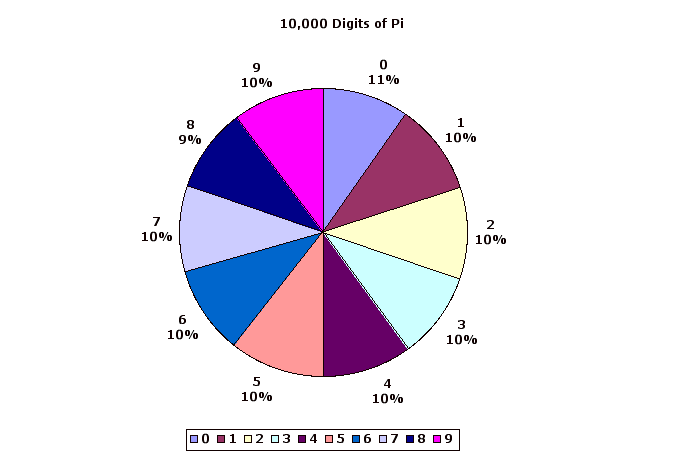
click on the graphic to view it full size in a new window

It's been a rough day in New Hampshire. We lost power most of the day on Saturday because of this big Nor'easter that is going on to the south of us. And today's rain/sleet/ice/snow/wind storm has been wreaking havoc on the Internet connection. Weather like this chills your bones. So I'm making pot roast, watching movies and doing laundry to pass the time while I upload and post material.

I forgot about ∏ Day until this morning (as I also missed church because I never fixed the clocks last night). On this ∏ Day I am presenting an Excel graphing activity I use with older middle school students. All students seem to have a problem grasping the concept that ∏ is a non-repeating, non-terminating decimal. They have an even more difficult time understanding that all of the digits 0-9 occur with the same frequency. Before we do this activity, my students already have a lot of experience with counting occurrences of heads and tails and counting the outcomes of rolling a die. They also have learned how to record their results in a spreadsheet.

I then demonstrate how they can use an Excel spreadsheet to simulate the roll of a die or the toss of a coin and how to count the outcomes using the COUNT function and other formulas. They also learn how to import raw data of a comma- or space-delineated file into Excel.

With all of these new skills, my students are then able to use Excel to count the occurrences of each digit in the decimal portion of ∏, whether it is 1,000 digits or 1 million digits. I encourage them to import different amounts of data. Then they compute the probability of each digit occurring in ∏ and find that the more digits of ∏ that they use, the closer the probabilities of each digit appearing approach 10%. This result is similar to their coin toss experiments.

It took several hours, but I have uploaded the files to my static web pages at meeyauw's hideout. I even included a file that contains the first million digits of ∏. You can study the formulas used in the spreadsheets and see the graphs we created. The graphic above used 10,000 digits of ∏ to find that the probabilities of a digit appearing in the decimal portion of ∏ approach or are at 10%.

* * * * * * * *

Below is my playlist of ∏ Day videos from YouTube. I haven't seen most of them because of the Internet problems.


* * * * * * * *
My last Pi Day contribution today is the ever so much fun site, the Pi Search Page. When students have done their spreadsheets and charts, they are encouraged to play with this site. Hopefully this site reinforces the concepts that I want them to understand. Today I entered the Apple Computer Store telephone number (1-800-MY-APPLE or 1-800-692-7753). There was no result when I entered the entire phone number. But when I entered 6927753, the results were:

The string 6927753 occurs at position 24,791,273 counting from the first digit after the decimal point. The 3. is not counted.
The string and surrounding digits:
51437113655565872488 6927753 92233691772360083137
this query took 0.007674 seconds

HAPPY PI DAY!

funny pictures
moar funny pictures

Technorati Tags: Del.icio.us Tags: Flickr Tags:

diigo it
_/\_/\_

Thursday, March 11, 2010

Friday Fractal: Spirals Part 2

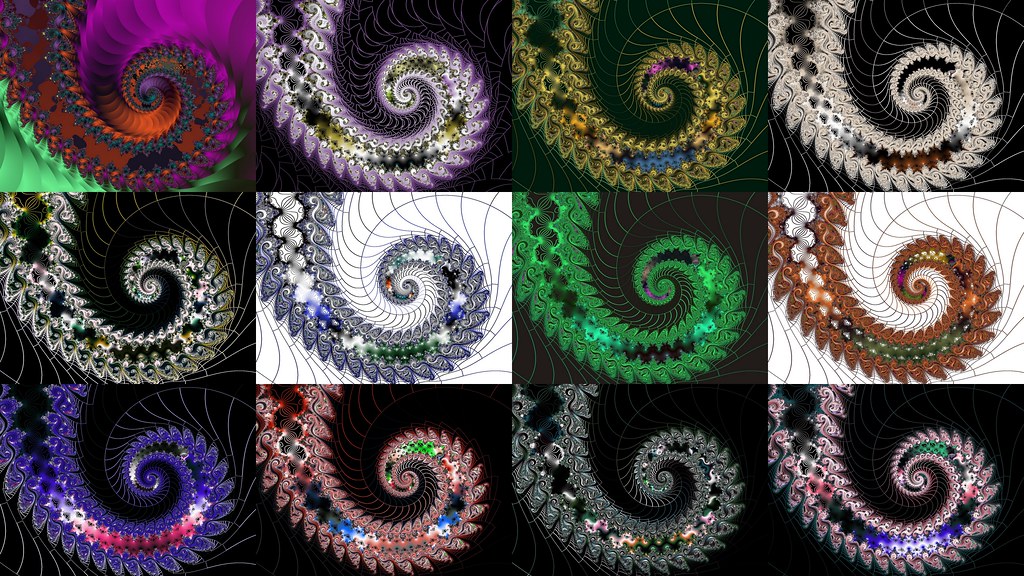
A collage of fractal spirals

In my first spiral (Spirograph) post, I mentioned how much I enjoy spirals. I made this collage of spirals today for my Friday Fractal. Fractal spirals are usually logarithmic spirals. They look like dragon or possum tails. Logarithmic spirals are also called spira mirabilis (miraculous spiral) because the shape of the spiral is unaltered no matter what its size. These spirals appear frequently in nature: in sunflower heads, nautilus shells, the rotation of a low pressure area in the atmosphere and other places.

There are other types of spirals. On the left you see an Archimedean spiral. The "turnings" of the spiral are always the same distance from other turnings. In logarithmic spirals, the turnings are a different distance away from each other and the changes in the distance form a geometric progression. "Many dynamic spirals (such as the Parker spiral of the solar wind, or the pattern made by a Catherine's wheel) are Archimedean." (source: http://en.wikipedia.o. . . ) Old phonograph records also used Archimedean spirals.

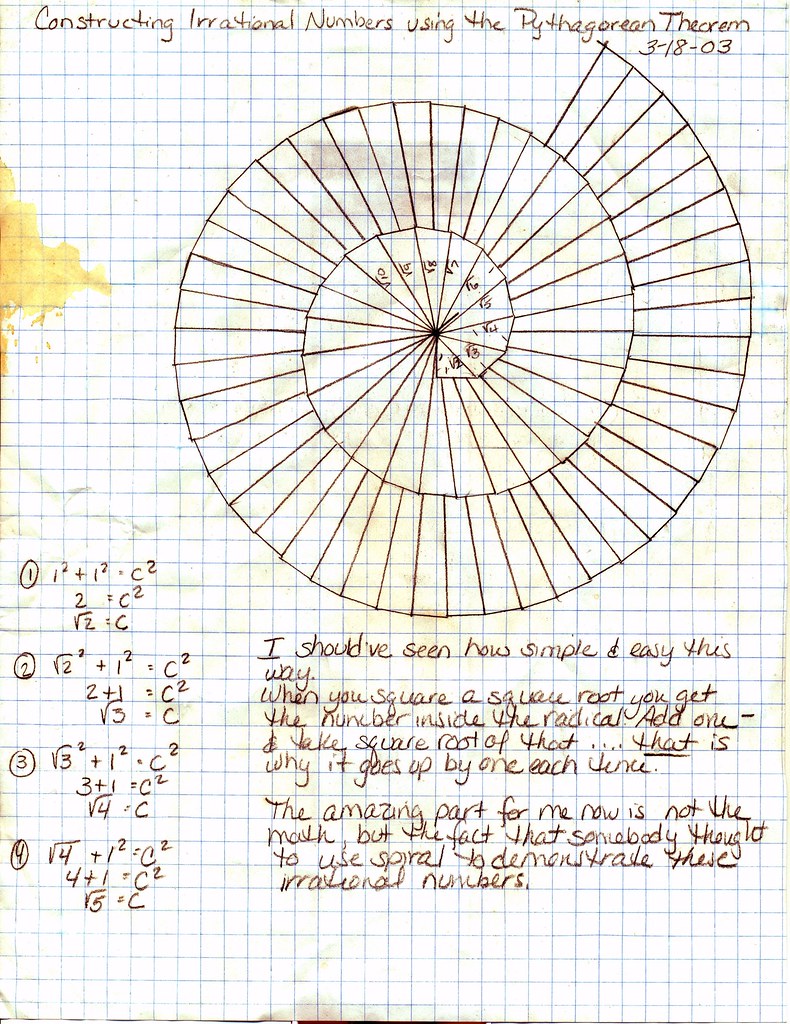
Another spiral is one of my favorites. I drew the spiral on the left a few years ago using the Pythagorean Theorem (the paper has suffered abuse). This square root spiral is also called the Spiral of Theodorus. If you click on the spiral, a new window will open with the full size image that you can read. This spiral is constructed with a series of right triangles. The leg on the "bottom" is always of length 1. The other leg is the same length as the hypotenuse of the previous triangle. And the new hypotenuse is determined by using the Pythagorean Theorem. What is ironic is that you can use this spiral to prove that irrational numbers exist. The ancient Pythagoreans claimed that all numbers were rational. Pythagoras himself believed this. But when one of the members of Pythagoras' secret society, Hippasus of Metapontum, claimed that he had discovered the existence of irrational numbers, he was drowned in the ocean by his fellow mathematicians because of his heresy.

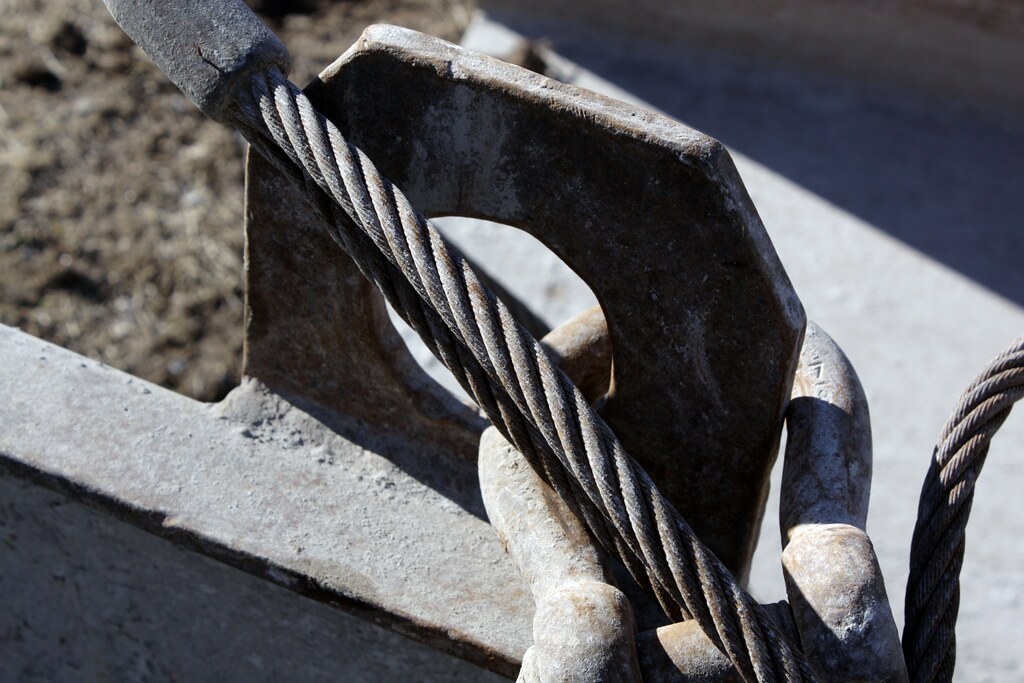
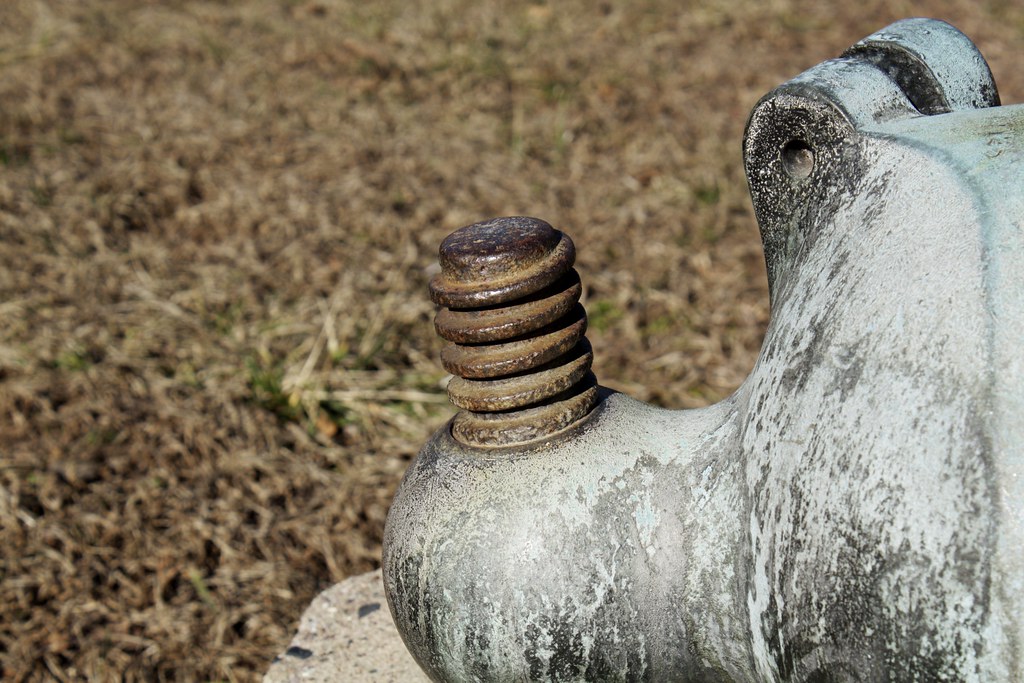
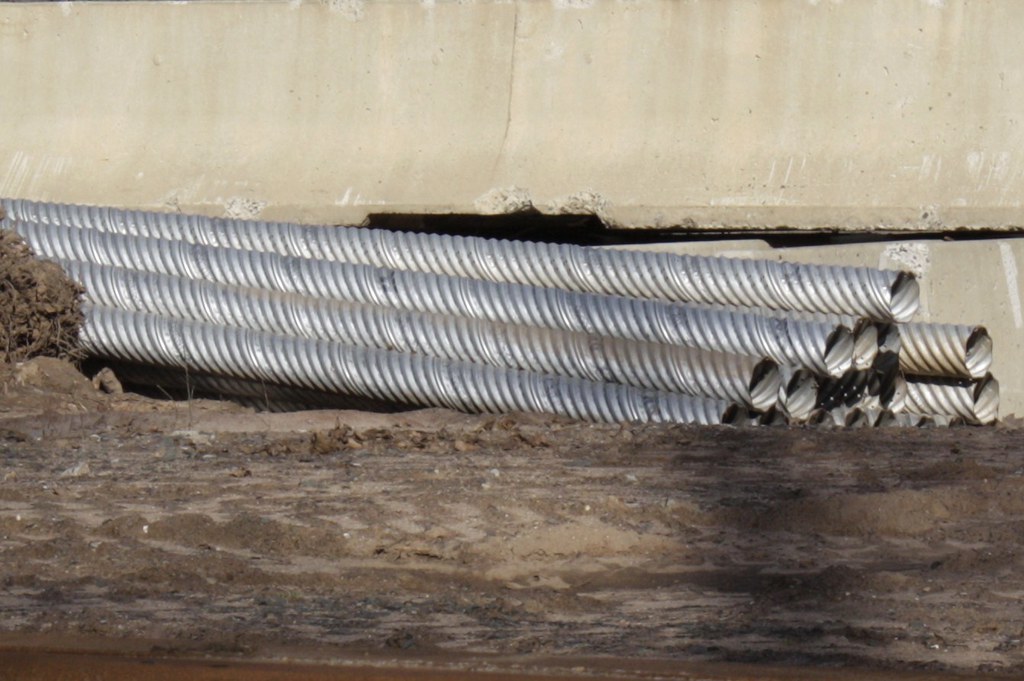
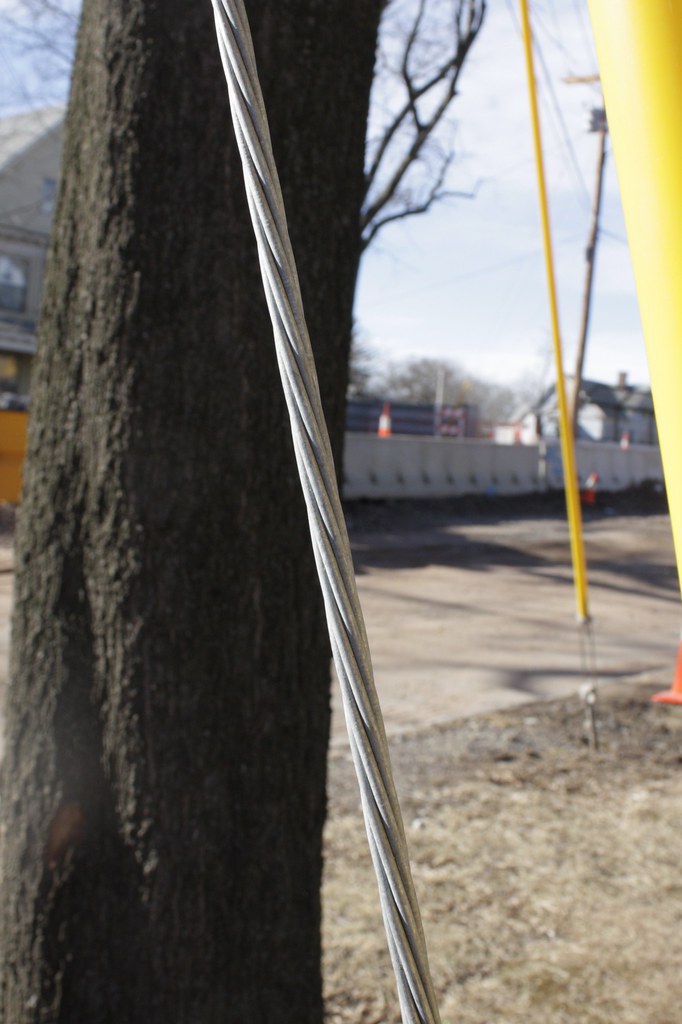
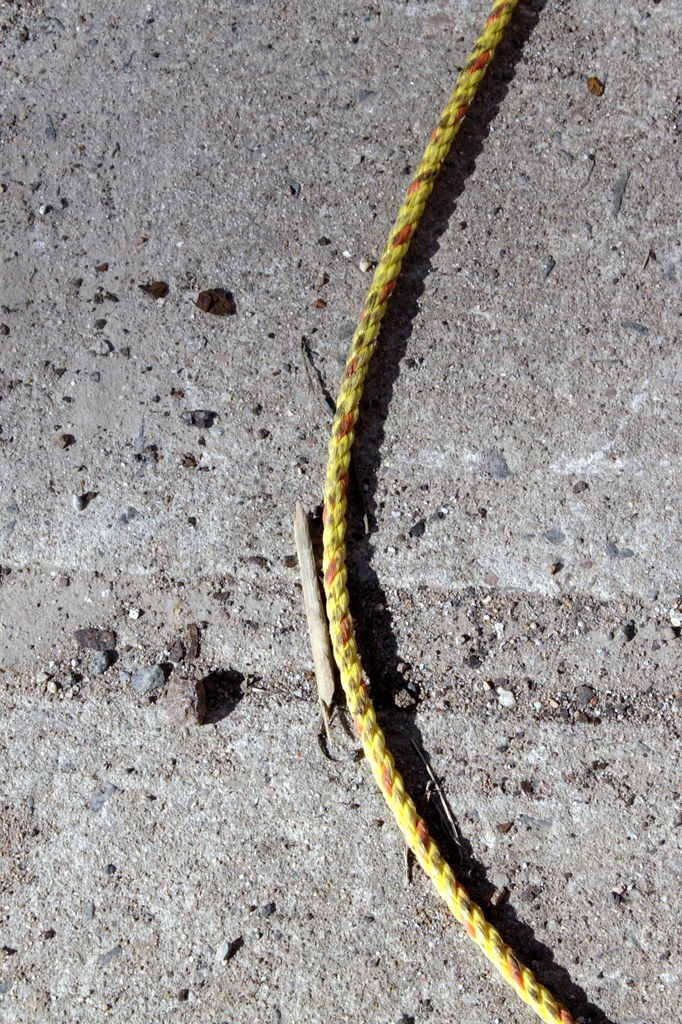
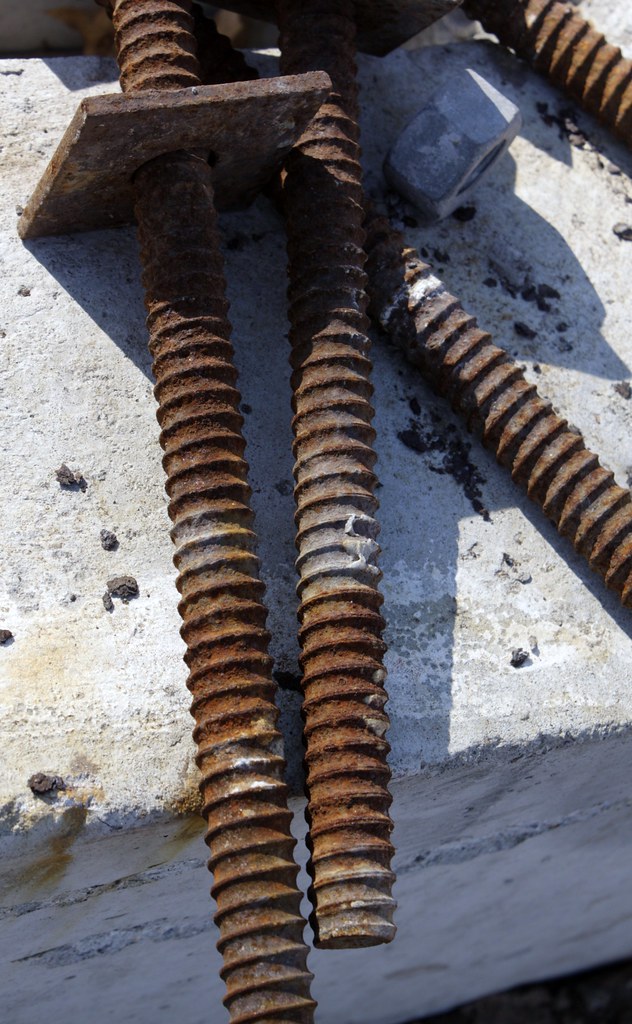
We have already seen one use of spirals: old phonographic records were constructed with Archimedean spirals. When John and I were in New Haven, Connecticut on a photography walk this past weekend, we found more spirals in pipes, bolts, pine trees and cable. Spirals give ropes and cables extra strength. Spirals enable bolts and screws to screw down into wood and metal. And spiral pipes have added strength to prevent them from being severed accidentally if they are buried underground.


Technorati Tags: Del.icio.us Tags: Flickr Tags:

diigo it
_/\_/\_