Showing posts with label poetry. Show all posts

Wednesday, March 01, 2023

Robert Burns: To A Mouse

Oliver and a Meadow Jumping Mouse


To a Mouse
Robert Burns

On Turning her up in her Nest, with the Plough,
November, 1785


Wee, sleeket, cowran, tim’rous beastie,
O, what a panic’s in thy breastie!
Thou need na start awa sae hasty,
          Wi’ bickerin brattle!
I wad be laith to rin an’ chase thee
          Wi’ murd’ring pattle!


I’m truly sorry Man’s dominion
Has broken Nature’s social union,
An’ justifies that ill opinion,
          Which makes thee startle,
At me, thy poor, earth-born companion,
          An’ fellow-mortal!


I doubt na, whyles, but thou may thieve;
What then? poor beastie, thou maun live!
A daimen-icker in a thrave
          ’S a sma’ request:
I’ll get a blessin wi’ the lave,
          An’ never miss ’t!


Thy wee-bit housie, too, in ruin!
It’s silly wa’s the win’s are strewin!
An’ naething, now, to big a new ane,
          O’ foggage green!
An’ bleak December’s winds ensuin,
          Baith snell an’ keen!


Thou saw the fields laid bare an’ waste,
An’ weary Winter comin fast,
An’ cozie here, beneath the blast,
          Thou thought to dwell,
Till crash! the cruel coulter past
          Out thro’ thy cell.


That wee-bit heap o’ leaves an’ stibble
Has cost thee monie a weary nibble!
Now thou’s turn’d out, for a’ thy trouble,
          But house or hald,
To thole the Winter’s sleety dribble,
          An’ cranreuch cauld!


But Mousie, thou art no thy-lane,
In proving foresight may be vain:
The best laid schemes o’ Mice an’ Men
          Gang aft agley,
An’ lea’e us nought but grief an’ pain,
          For promis’d joy!


Still, thou art blest, compar’d wi’ me!
The present only toucheth thee:
But Och! I backward cast my e’e,
          On prospects drear!
An’ forward tho’ I canna see,
          I guess an’ fear!

 _/\_/\_

Billy Collins: The Country


Billy Collins was US Poet Laureate and is one of my favorite modern poets. This poem holds memories of house renovation, horror, and humor for me.
_/\_/\_

Sunday, October 24, 2010

Sunday, June 27, 2010

One Single Impression: Ochre


The Doe

I follow her trail
through a forest of ferns,
over blow-downs,
through brambles of blackberries.

The going is rough on this granite-blanketed mountainside.
She moved silently while I burst through —
huffing and cursing her nimble feet and my awkward feet.

I lose her after the hoof mark in the stream's ochre mud.
This forest has cloaked her and rebuked me.

_/\_/\_

Monday, March 22, 2010

A Servant to Servants

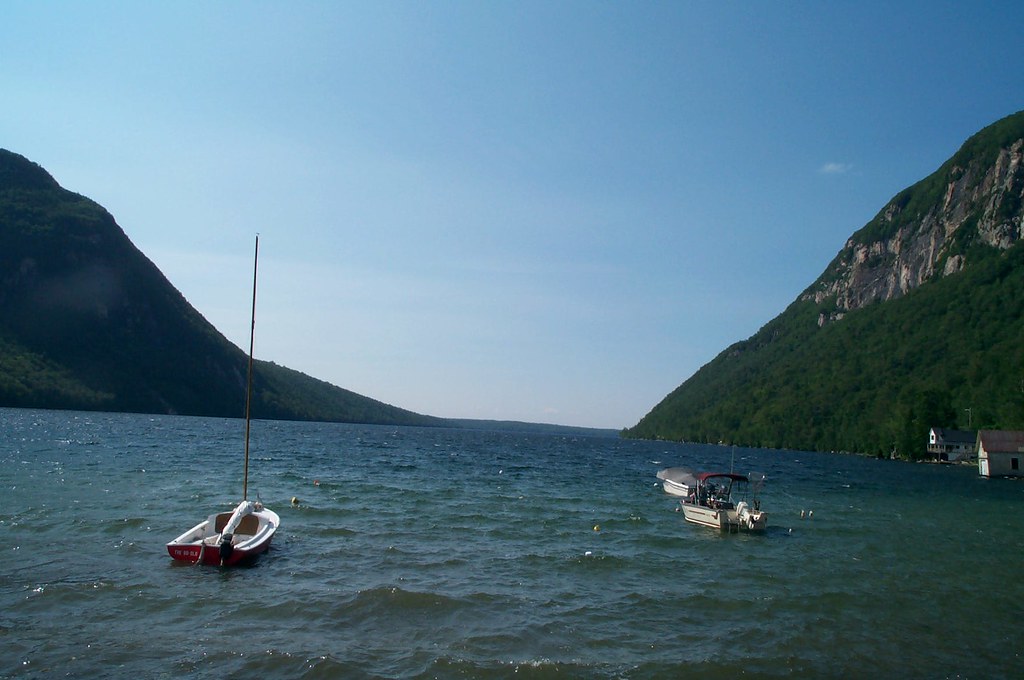
Willoughby Lake, Westmore, Vermont in June 2002
taken at South Beach looking north
Mt. Hor on left; Mt Pisgah on right

Today the Burlington Free Press published an article about Howard Frank Mosher, a novelist that lives in the Northeast Kingdom of Vermont, which is where I am from. Mosher, one of my favorite authors, is quoted: "“The Northeast Kingdom is not the kind of place that someone who’s going to write stories is going to leave,” Mosher said. He names a Robert Frost poem, “A Servant to Servants,” about Lake Willoughby, whose themes of isolation and madness, in Mosher’s words, are recognizable to a longtime Kingdom resident."

On some days it seems that every other town and village in Vermont and New Hampshire claims Frost as its own. But Frost (my favorite poet) did work at a farm on Willoughby Lake (now an expensive inn), and did love the stunningly beautiful area. Willoughby Lake is six miles up the road from our Vermont home in Barton.

The Free Press also published a review of Mosher's newest book, Walking to Gatlinburg.

Here is the poem about which Mosher spoke:

A Servant to Servants

I DIDN’T make you know how glad I was
To have you come and camp here on our land.
I promised myself to get down some day
And see the way you lived, but I don’t know!
With a houseful of hungry men to feed
I guess you’d find…. It seems to me
I can’t express my feelings any more
Than I can raise my voice or want to lift
My hand (oh, I can lift it when I have to).
Did ever you feel so? I hope you never.
It’s got so I don’t even know for sure
Whether I am glad, sorry, or anything.
There’s nothing but a voice-like left inside
That seems to tell me how I ought to feel,
And would feel if I wasn’t all gone wrong.
You take the lake. I look and look at it.
I see it’s a fair, pretty sheet of water.
I stand and make myself repeat out loud
The advantages it has, so long and narrow,
Like a deep piece of some old running river
Cut short off at both ends. It lies five miles
Straight away through the mountain notch
From the sink window where I wash the plates,
And all our storms come up toward the house,
Drawing the slow waves whiter and whiter and whiter.
It took my mind off doughnuts and soda biscuit
To step outdoors and take the water dazzle
A sunny morning, or take the rising wind
About my face and body and through my wrapper,
When a storm threatened from the Dragon’s Den,
And a cold chill shivered across the lake.
I see it’s a fair, pretty sheet of water,
Our Willoughby! How did you hear of it?
I expect, though, everyone’s heard of it.
In a book about ferns? Listen to that!
You let things more like feathers regulate
Your going and coming. And you like it here?
I can see how you might. But I don’t know!
It would be different if more people came,
For then there would be business. As it is,
The cottages Len built, sometimes we rent them,
Sometimes we don’t. We’ve a good piece of shore
That ought to be worth something, and may yet.
But I don’t count on it as much as Len.
He looks on the bright side of everything,
Including me. He thinks I’ll be all right
With doctoring. But it’s not medicine—
Lowe is the only doctor’s dared to say so—
It’s rest I want—there, I have said it out—
From cooking meals for hungry hired men
And washing dishes after them—from doing
Things over and over that just won’t stay done.
By good rights I ought not to have so much
Put on me, but there seems no other way.
Len says one steady pull more ought to do it.
He says the best way out is always through.
And I agree to that, or in so far
As that I can see no way out but through—
Leastways for me—and then they’ll be convinced.
It’s not that Len don’t want the best for me.
It was his plan our moving over in
Beside the lake from where that day I showed you
We used to live—ten miles from anywhere.
We didn’t change without some sacrifice,
But Len went at it to make up the loss.
His work’s a man’s, of course, from sun to sun,
But he works when he works as hard as I do—
Though there’s small profit in comparisons.
(Women and men will make them all the same.)
But work ain’t all. Len undertakes too much.
He’s into everything in town. This year
It’s highways, and he’s got too many men
Around him to look after that make waste.
They take advantage of him shamefully,
And proud, too, of themselves for doing so.
We have four here to board, great good-for-nothings,
Sprawling about the kitchen with their talk
While I fry their bacon. Much they care!
No more put out in what they do or say
Than if I wasn’t in the room at all.
Coming and going all the time, they are:
I don’t learn what their names are, let alone
Their characters, or whether they are safe
To have inside the house with doors unlocked.
I’m not afraid of them, though, if they’re not
Afraid of me. There’s two can play at that.
I have my fancies: it runs in the family.
My father’s brother wasn’t right. They kept him
Locked up for years back there at the old farm.
I’ve been away once—yes, I’ve been away.
The State Asylum. I was prejudiced;
I wouldn’t have sent anyone of mine there;
You know the old idea—the only asylum
Was the poorhouse, and those who could afford,
Rather than send their folks to such a place,
Kept them at home; and it does seem more human.
But it’s not so: the place is the asylum.
There they have every means proper to do with,
And you aren’t darkening other people’s lives—
Worse than no good to them, and they no good
To you in your condition; you can’t know
Affection or the want of it in that state.
I’ve heard too much of the old-fashioned way.
My father’s brother, he went mad quite young.
Some thought he had been bitten by a dog,
Because his violence took on the form
Of carrying his pillow in his teeth;
But it’s more likely he was crossed in love,
Or so the story goes. It was some girl.
Anyway all he talked about was love.
They soon saw he would do someone a mischief
If he wa’n’t kept strict watch of, and it ended
In father’s building him a sort of cage,
Or room within a room, of hickory poles,
Like stanchions in the barn, from floor to ceiling,—
A narrow passage all the way around.
Anything they put in for furniture
He’d tear to pieces, even a bed to lie on.
So they made the place comfortable with straw,
Like a beast’s stall, to ease their consciences.
Of course they had to feed him without dishes.
They tried to keep him clothed, but he paraded
With his clothes on his arm—all of his clothes.
Cruel—it sounds. I ’spose they did the best
They knew. And just when he was at the height,
Father and mother married, and mother came,
A bride, to help take care of such a creature,
And accommodate her young life to his.
That was what marrying father meant to her.
She had to lie and hear love things made dreadful
By his shouts in the night. He’d shout and shout
Until the strength was shouted out of him,
And his voice died down slowly from exhaustion.
He’d pull his bars apart like bow and bow-string,
And let them go and make them twang until
His hands had worn them smooth as any ox-bow.
And then he’d crow as if he thought that child’s play—
The only fun he had. I’ve heard them say, though,
They found a way to put a stop to it.
He was before my time—I never saw him;
But the pen stayed exactly as it was
There in the upper chamber in the ell,
A sort of catch-all full of attic clutter.
I often think of the smooth hickory bars.
It got so I would say—you know, half fooling—
“It’s time I took my turn upstairs in jail”—
Just as you will till it becomes a habit.
No wonder I was glad to get away.
Mind you, I waited till Len said the word.
I didn’t want the blame if things went wrong.
I was glad though, no end, when we moved out,
And I looked to be happy, and I was,
As I said, for a while—but I don’t know!
Somehow the change wore out like a prescription.
And there’s more to it than just window-views
And living by a lake. I’m past such help—
Unless Len took the notion, which he won’t,
And I won’t ask him—it’s not sure enough.
I ’spose I’ve got to go the road I’m going:
Other folks have to, and why shouldn’t I?
I almost think if I could do like you,
Drop everything and live out on the ground—
But it might be, come night, I shouldn’t like it,
Or a long rain. I should soon get enough,
And be glad of a good roof overhead.
I’ve lain awake thinking of you, I’ll warrant,
More than you have yourself, some of these nights.
The wonder was the tents weren’t snatched away
From over you as you lay in your beds.
I haven’t courage for a risk like that.
Bless you, of course, you’re keeping me from work,
But the thing of it is, I need to be kept.
There’s work enough to do—there’s always that;
But behind’s behind. The worst that you can do
Is set me back a little more behind.
I sha’n’t catch up in this world, anyway.
I’d rather you’d not go unless you must.
Robert Frost (1874–1963). Poem is from North of Boston (1915)


diigo it
_/\_/\_

Friday, March 19, 2010

Friday Fractal: Warning

Warning

When I am an old woman I shall wear purple
With a red hat which doesn't go, and doesn't suit me.
And I shall spend my pension on brandy and summer gloves
And satin sandals, and say we've no money for butter.
I shall sit down on the pavement when I'm tired
And gobble up samples in shops and press alarm bells
And run my stick along the public railings
And make up for the sobriety of my youth.
I shall go out in my slippers in the rain
And pick flowers in other people's gardens
And learn to spit.

You can wear terrible shirts and grow more fat
And eat three pounds of sausages at a go
Or only bread and pickle for a week
And hoard pens and pencils and beermats and things in boxes.

But now we must have clothes that keep us dry
And pay our rent and not swear in the street
And set a good example for the children.
We must have friends to dinner and read the papers.

But maybe I ought to practice a little now?
So people who know me are not too shocked and
surprised
When suddenly I am old, and start to wear purple.

Jenny Joseph

I just found this wonderful poem today. But since it was written in 1961, you probably already know it. What a delight it is. . .

diigo it
_/\_/\_

Thursday, March 04, 2010

Friday Fractal: Fire & Ice

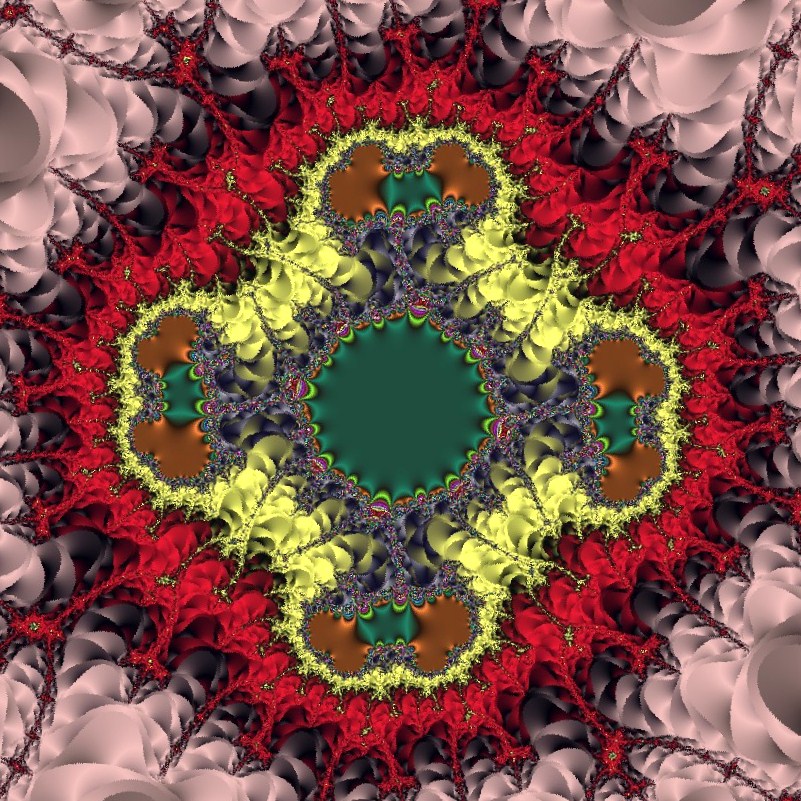
Fractal flame rendered in Apophysis
Fire and Ice
Some say the world will end in fire, Some say in ice. From what I've tasted of desire I hold with those who favor fire. But if it had to perish twice, I think I know enough of hate To say that for destruction ice Is also great And would suffice.
Many of us need to be reminded of the danger of hate and anger.
 _/\_/\_

Wednesday, March 03, 2010

Haiku Bones: Sleep

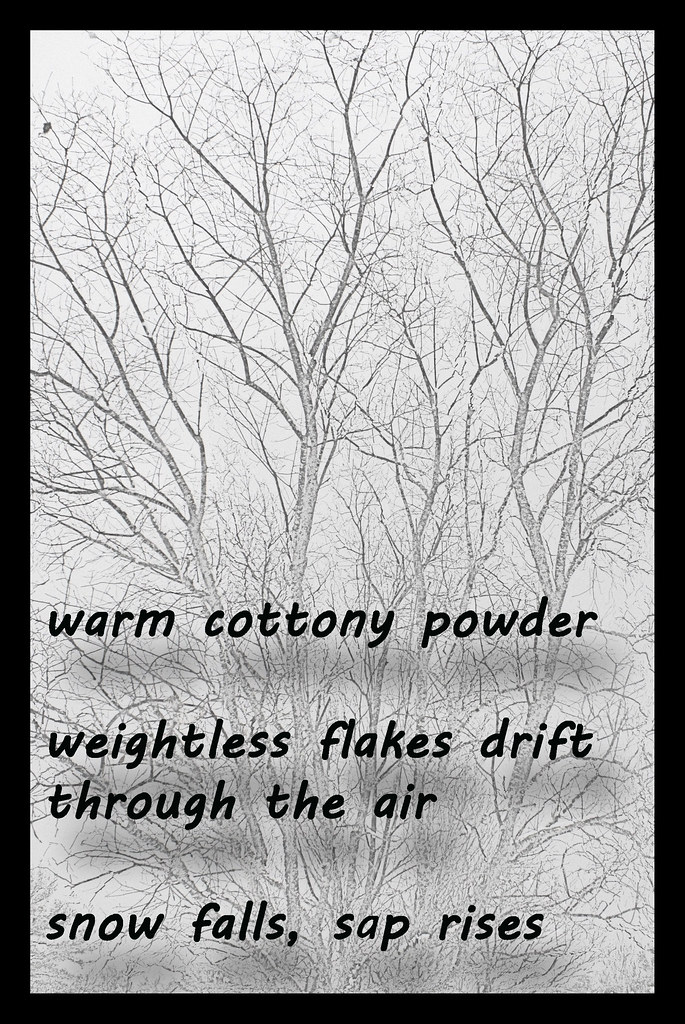
This is my first submission to Haiku Bones. I welcome gentle suggestions. I continue to get conflicting advice about punctuation. I felt I needed it here. I also am not convinced that "powder" is the word I want. Thank you for visiting and reading.
Read more amazing haiku at Haiku Bones.
diigo it
_/\_/\_

Monday, February 22, 2010

Centering Thought of the Week from Mary Oliver

Each Sunday, our minister publishes a Centering Thought of the Day in the bulletin. I try to focus on the thought for the week. The photograph is of a hay field behind Barton Mountain in Vermont. It is illustrative of the places where I find meditation easiest.

The centering thought for this week is:
Tell me, what is it you plan to do with your one wild and precious life?

The line is from The Summer Day by Mary Oliver. Poetry 180 writes that this poem "holds that the act of attention is a form of prayer." Paying attention to the needs and hopes of others is vital in our lives. Paying attention to nature brings us closer to God.

I hope you find the poem valuable.
May you have a peaceful and attentive week.

The Summer Day

Who made the world?
Who made the swan, and the black bear?
Who made the grasshopper?
This grasshopper, I mean —
the one who has flung herself out of the grass,
the one who is eating sugar out of my hand,
who is moving her jaws back and forth instead of up and down —
who is gazing around with her enormous and complicated eyes.
Now she lifts her pale forearms and thoroughly washes her face.
Now she snaps her wings open, and floats away.
I don't know exactly what a prayer is.
I do know how to pay attention, how to fall down
into the grass, how to kneel down in the grass,
how to be idle and blessed, how to stroll through the fields,
which is what I have been doing all day.
Tell me, what else should I have done?
Doesn't everything die at last, and too soon?
Tell me, what is it you plan to do
with your one wild and precious life?


Technorati Tags: Del.icio.us Tags: Flickr Tags:

diigo it
_/\_/\_

Sunday, January 31, 2010

One Single Impression: Blowing the Curve

Don't do what I did: keep both feet on the ground!

To read more poetry, click the graphic or

Thank you for visiting!
diigo it

_/\_/\_

Sunday, March 08, 2009

Robins and Sugaring

I saw my first robin of the year on Saturday in Wilmot, New Hampshire. According to New England tradition, March 7 was then my lucky day. And it was. The first robin also means that sugaring season has begun —

It is the first mild day of March:
Each minute sweeter than before,
The redbreast sings from the tall larch
That stands beside our door.

– William Wordsworth (1770–1850)
_/\_/\_

Monday, February 09, 2009

Heads or Tails: Love Story

Mama never forgets her birds,
Though in another tree —
She looks down just as often
And just as tenderly
As when her little mortal nest
With cunning care she wove —
If either of her "sparrows fall,"
She "notices," above.

Emily Dickinson
c. 1860
To see more participants click or Heads or Tails
Thank you so much for visiting.

Technorati Tags:
_/\_/\_

Thursday, June 26, 2008

Emily Dickinson: I lived on dread

I lived on dread; to those who know
The stimulus there is
In danger, other impetus
Is numb and vital-less.

As ’t were a spur upon the soul,
A fear will urge it where
To go without the spectre’s aid
Were challenging despair.

Technorati Tags:
_/\_/\_

Saturday, June 07, 2008

One Single Impression: Pets

Ginger tabby drops in
from the woods and stays —
uneasy truces

What's this guy's name? We still don't know!
I say Ozzie, Amy says Louie.
One thing we know: after living in the
woods for who knows how long,
he will no longer go outside voluntarily.

UPDATE (6/9/08): I have decided to keep the word "truces" because this cat has to negotiate a seperate truce with each cat in the house. That is quiet a complicated task because of the power that the matriarch, Mouse, holds, and the aggression of the males. The "minor" cats (I call them minor because of their lack of power in the cat hierarchy — not because of their esteem in my heart) are no problem. They accept every cat that moves in. Also, I enjoy the sound of the word "truces."

And thank you to Zazzy for the suggestion of naming this guy George. Amy and I finally agreed that George is his name!

Thank you for visiting.
When clicked, this photo will open, full size, in a new window.
To read more poetry, click or One Single Impression
_/\_/\_

Saturday, May 10, 2008

Blog Your Blessings: The Art of Haiku by Gerald England

I began to write poetry for the first time a few months ago. I have been able, at times, to express myself more than in the past. But I barely understood what haiku is until I read The Art of Haiku 2000 by Gerald England (Ackworth Born). This slim book is a compilation of fourteen articles that England commissioned from poets. The topics range from the history of Japanese poetry to the form of haiku to, of all things, science education. Each article is followed by beautiful examples of what was discussed. This book has become my reference book for haiku and other forms of Japanese poetry such as senryu, tanka and haibun.

Geoffrey Daniel, in his essay "Unfreezing the Moment" in The Art of Haiku, quotes The Haiku Society of America when he writes that haiku records "the essence of a moment keenly perceived." The Haiku Society defines haiku as "a short poem that uses imagistic language to convey the essence of an experience of nature or the season intuitively linked to the human condition."

I observe nature every day at my home in northern Vermont, which brings pleasure and companionship to my life. You must be a patient observer of nature in order to see. You must also be a slow reader, and re-reader, of haiku in order to feel. Nature is lonely and often sad — as is haiku. This sadness of haiku has a name: sabi — "the lonely quality which each thing has in its singular existence when observed from a state of detachment." This quality of haiku has attracted me as I try to express with poetry my loneliness, sadness and pleasures. According to Jean Kahler, haiku describes a moment in nature — a "fleeting image" that celebrates "the importance of a tiny bit of the universe." This is familiar to me because of Emerson's and Thoreau's essays on nature that are so important in the history and culture of New England. The Buddhists may have begun writing haiku but I know that Emerson would have enjoyed and understood them.

The rules of haiku are both simple and complex: you must have the correct number of syllables, proper punctuation, kireji (or "cutting word") and seasonal words. There are special dictionaries of seasonal words called "saijiki" for poets to reference. While looking for an online saijiki, I found that many people are making regional seasonal dictionaries. I found them for Europe, India, Japan, the North American prairie and Alaska. I was unable to find a saijiki for New England, which was disappointing. I have been considering beginning one and asking other New Englanders to contribute as they observe the seasons pass. (Cherry blossoms are a seasonal word for spring for us in northern Vermon as in Japan. The wild cherry trees began to blossom this past week, as you can see in the photo for this post.) Observation is not just the hallmark of haiku. It is the hallmark, also, of science. I finally understand how the simple observation of nature and the simple writing of haiku can express the deep and complex emotions of our lives.

I urge any person who wants to understand haiku to buy The Art of Haiku, mark it with notes thoroughly and use it constantly for reference. Then go outside and observe the gift we have all been given.


To read more blessings click
or Blog Your Blessings

Technorati Tags:
_/\_/\_

Friday, May 02, 2008

The Robin by Emily Dickinson


The robin is the one
That interrupts the morn
With hurried, few, express reports
When March is scarcely on.

The robin is the one
That overflows the noon
With her cherubic quantity,
An April but begun.

The robin is the one
That speechless from her nest
Submits that home and certainty
And sanctity are best.

Technorati Tags:
_/\_/\_

Sunday, April 27, 2008

Emily Dickinson: Yellow


XXXI.

Nature rarer uses yellow
Than another hue;
Saves she all of that for sunsets, --
Prodigal of blue,

Spending scarlet like a woman,
Yellow she affords
Only scantly and selectly,
Like a lover's words.
_/\_/\_