Showing posts with label teaching. Show all posts

Sunday, January 15, 2012

Gingerbread Houses

On the day before Christmas break, the 8th grade made gingerbread houses. It was a fun class (even if it did not have too much to do with math!). We could have calculated the volume of each house, but we ran out of time. Good memories!

_/\_/\_

Thursday, June 09, 2011

Crocheting a Coral Reef

Nearly four years ago I posted a story about knitting Escher inspired shapes and hyperbolic planes. Today in my mailbox I found a post from Let’s Play Math about a Hyperbolic Crochet Coral Reef. I immediately knew I had to share the information. If you don’t know much math, don’t worry — you can still crochet these mathematical objects and be a part of this wonderful project. Watch the video. Margaret Wertheim connects the crochet pieces to the evolution of life on earth, mathematics, history and traditional feminine arts. Through crochet, women have been able to model shapes in nature that have been ignored by mathematicians. This could even be a great after school project for suitably motivated people. If you are interested, I suggest you read all of the links in this post.

Let's Play Math gives simplified directions for crocheting the hyperbolic planes. Here is a link to a pdf file that gives more detailed directions on how to crochet these shapes: http://crochetcoralreef.org/Content/makeyourown/IFF-CrochetReef-HowToHandout.pdf You can even buy a book of instructions at http://theiff.org/publications/index.html

Some fascinating articles about the coral reef project can be found in this article at http://www.math.cornell.edu/~dtaimina/hypplanes.htm

Finally, here is a slide show of the crocheted coral reef:

The Coral Reef Project is from the Institute for Figuring. It is a fascinating group and worth browsing their site.

Happy crocheting!

_/\_/\_

Tuesday, March 30, 2010

Mode, Median and Mean


I found this great activity at BBC: Bitesize with the code for the blog. It took me, regrettably, awhile to learn how to manipulate the buildings. Now I'm off to find more more!
diigo it
_/\_/\_

Friday, March 19, 2010

The Revised Common Lectionary on Many Eyes

If you click on the image, you will see it full size in a new window.

Apparantly this word cloud visualization of the RCL is based on only one Sunday's reading of Year B (we are now in Year C). I am working on a way to easily create a text file of all of the readings for one year and create another word cloud. Would it be too big? I did a word cloud for this Sunday's readings (you can see it here and play with it yourself). It is fun to compare the two:

Many Eyes is a site I have watched for years and even played with a bit. This is my first attempt making a visualization. It is a fantastic classroom resource and activity. Here is an excerpt from the Many Eyes About page:

Many Eyes is a bet on the power of human visual intelligence to find patterns. Our goal is to "democratize" visualization and to enable a new social kind of data analysis. Jump right to our visualizations now, take a tour, or read on for a leisurely explanation of the project.

All of us in CUE's Visual Communication Lab are passionate about the potential of data visualization to spark insight. It is that magical moment we live for: an unwieldy, unyielding data set is transformed into an image on the screen, and suddenly the user can perceive an unexpected pattern. As visualization designers we have witnessed and experienced many of those wondrous sparks. But in recent years, we have become acutely aware that the visualizations and the sparks they generate, take on new value in a social setting. Visualization is a catalyst for discussion and collective insight about data.

We all deal with data that we'd like to understand better. It may be as straightforward as a sales spreadsheet or fantasy football stats chart, or as vague as a cluttered email inbox. But a remarkable amount of it has social meaning beyond ourselves. When we share it and discuss it, we understand it in new ways.
diigo it
_/\_/\_

Thursday, March 18, 2010

Geometric Solids in Art Class

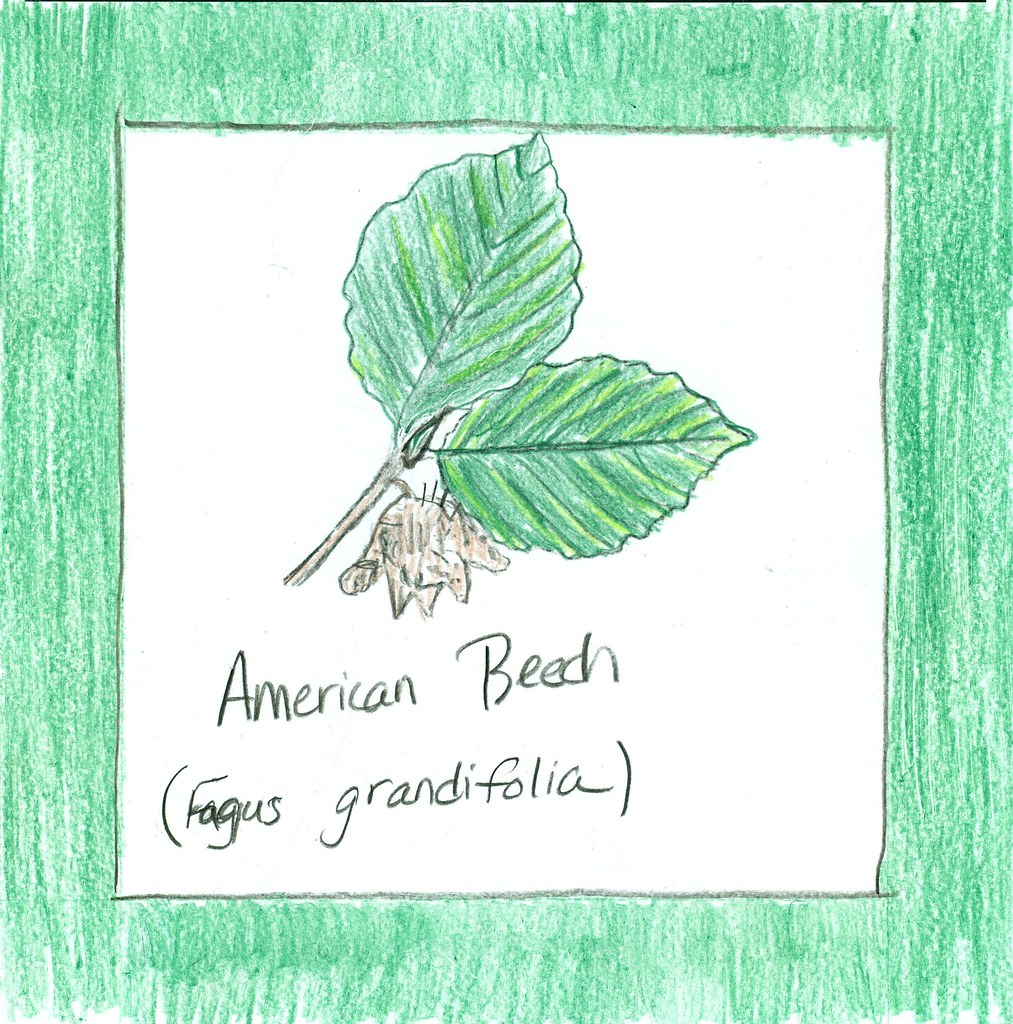
My American Beech stamp

I was taking an art class. I have simply horrible art skills. I wanted to improve them to the point that I could create my own nature sketch book. Nature sketch books are a centuries old tradition for women. Beatrix Potter kept nature sketchbooks and was extremely talented. Another artist, Mary, has a nature sketchbook. Mary's sketchbook was the inspiration for me to take this art class. When you look at her sketches (by clicking the link or her image on the left) you will see why I want to learn how to draw and paint. Summer is coming. My goal was to learn enough about drawing to begin my sketchbook this year.

My American Beech (above) is pretty good. But I messed up the caption of Fagus grandifolia. I couldn't fix it without making a mess. And I also cheated. I used carbon paper with an image I printed from the Internet. Am I ashamed? Not! My philosophy: with art, for me, anything goes.

My gray scale

So then the art teacher, in preparation for drawing lessons, had us make our own gray scale. I loved this project because it is just like the color scales on computers. I know computers. I did rather well. I just wish the art teacher had made her little boxes properly. It looks messy.

Geometric Still Life
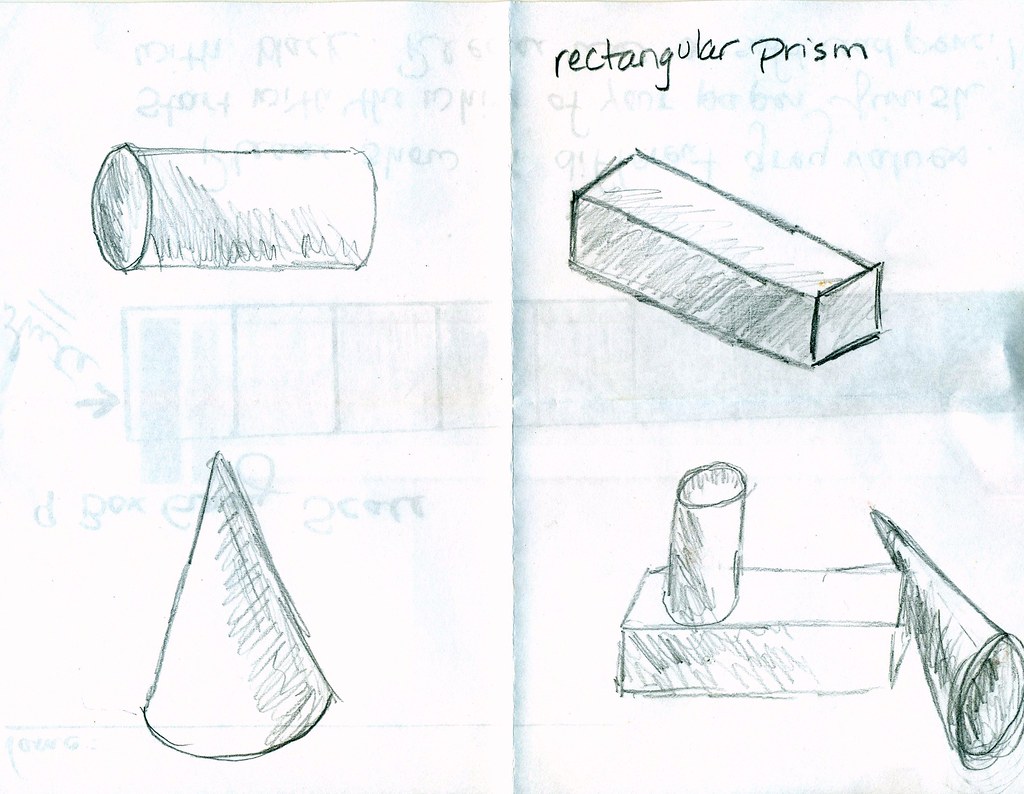
Geometric solids: a right circular cylinder, a right circular cone and a rectangular prism

My favorite work was this still life of geometric solids. With practice I could be excellent with it. Of course, as a mathematics teacher I have drawn geometric solids for years and years and have even instructed children on how to draw them. So what did I do next? I quit art class. The next assignment was to draw these and paint them on canvas with primary colors and blending the colors with white and black for shading. I became overwhelmed and quit. If I were my own student, I would praise, encourage and counsel myself to let this new skill evolve and give myself instruction on relaxation. The art teacher is probably younger than my own daughters, so she didn't counsel me. I wish she had.
diigo it
_/\_/\_

Tuesday, March 16, 2010

Curve-Stitching a Shamrock Update

Back in 2008 I posted my lesson plan for curve-stitching lesson for St. Patrick's Day. Hundreds of teachers have read that post. I am reposting it today so that I could update it. I'm flattered and proud that so many teachers have enjoyed the lesson. I have posted all the materials needed for this lesson at my static site meeyauw's hideout. You can click that link and then click the St. Patrick's Day Activities link or you can click the image above or here. I found that there was one broken link but I have left you search terms to look for new activities online. Thank you again!

Happy St. Patrick's Day!

A three-leafed clover, the shamrock is the national emblem of Ireland. Although it is widely believed that St. Patrick used the shamrock to illustrate the Christian doctrine of the trinity, this idea cannot be proven. In fact the first written mention of this story did not appear until nearly a thousand years after Patrick's death.
The shamrock, which was also called the "seamroy" by the Celts, was a sacred plant in ancient Ireland because it symbolized the rebirth of spring. By the seventeenth
century, the shamrock had become a symbol of emerging Irish nationalism. As the English began to seize Irish land and make laws against the use of the Irish language and the practice of Catholicism, many Irish began to wear the shamrock as a symbol of their pride in their heritage and their displeasure with English rule.

Technorati Tags: Del.icio.us Tags: Flickr Tags:
diigo it
_/\_/\_

Sunday, March 14, 2010

Happy ∏ Day!

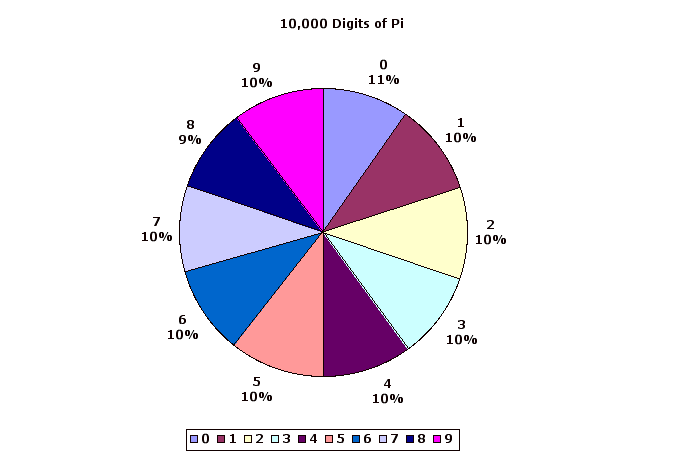
click on the graphic to view it full size in a new window

It's been a rough day in New Hampshire. We lost power most of the day on Saturday because of this big Nor'easter that is going on to the south of us. And today's rain/sleet/ice/snow/wind storm has been wreaking havoc on the Internet connection. Weather like this chills your bones. So I'm making pot roast, watching movies and doing laundry to pass the time while I upload and post material.

I forgot about ∏ Day until this morning (as I also missed church because I never fixed the clocks last night). On this ∏ Day I am presenting an Excel graphing activity I use with older middle school students. All students seem to have a problem grasping the concept that ∏ is a non-repeating, non-terminating decimal. They have an even more difficult time understanding that all of the digits 0-9 occur with the same frequency. Before we do this activity, my students already have a lot of experience with counting occurrences of heads and tails and counting the outcomes of rolling a die. They also have learned how to record their results in a spreadsheet.

I then demonstrate how they can use an Excel spreadsheet to simulate the roll of a die or the toss of a coin and how to count the outcomes using the COUNT function and other formulas. They also learn how to import raw data of a comma- or space-delineated file into Excel.

With all of these new skills, my students are then able to use Excel to count the occurrences of each digit in the decimal portion of ∏, whether it is 1,000 digits or 1 million digits. I encourage them to import different amounts of data. Then they compute the probability of each digit occurring in ∏ and find that the more digits of ∏ that they use, the closer the probabilities of each digit appearing approach 10%. This result is similar to their coin toss experiments.

It took several hours, but I have uploaded the files to my static web pages at meeyauw's hideout. I even included a file that contains the first million digits of ∏. You can study the formulas used in the spreadsheets and see the graphs we created. The graphic above used 10,000 digits of ∏ to find that the probabilities of a digit appearing in the decimal portion of ∏ approach or are at 10%.

* * * * * * * *

Below is my playlist of ∏ Day videos from YouTube. I haven't seen most of them because of the Internet problems.


* * * * * * * *
My last Pi Day contribution today is the ever so much fun site, the Pi Search Page. When students have done their spreadsheets and charts, they are encouraged to play with this site. Hopefully this site reinforces the concepts that I want them to understand. Today I entered the Apple Computer Store telephone number (1-800-MY-APPLE or 1-800-692-7753). There was no result when I entered the entire phone number. But when I entered 6927753, the results were:

The string 6927753 occurs at position 24,791,273 counting from the first digit after the decimal point. The 3. is not counted.
The string and surrounding digits:
51437113655565872488 6927753 92233691772360083137
this query took 0.007674 seconds

HAPPY PI DAY!

funny pictures
moar funny pictures

Technorati Tags: Del.icio.us Tags: Flickr Tags:

diigo it
_/\_/\_

Friday, March 05, 2010

Visualization of Algebraic Surfaces with Free Software


The SURFER program is a unique realtime raytracer of algebraic surfaces with an intuitive user interface. Watch the video to learn more. This is free software and if you like manipulating images such as fractals, flames, or chaos images, try this. I'll be playing with this software and you know I'll be posting my creations. If you are also a mathematics teacher, you'll want to get this into your school.
Download at http://www.imaginary2008.de/
Newsletter subscription requests at http://www.imaginary20 . . .

diigo it
_/\_/\_

Monday, February 09, 2009

Saturday, February 07, 2009

Blog Your Blessings: Good, Good, Good, Good, Bad


Good: The innernets came back last Friday. Very late on Friday because Comcast did not know they had sent me a new modem and had the old modem on record and accused me of buying a third party modem. So the confusion and paperwork literally took hours to unravel. But it's done and it's working well. I can blog again!

Good: Vermont Public Radio has two stations: VPR and VPR Classical. VPR went to talk radio a year and a half ago, leaving me without my tunes. They had plans to build a transmission station in Island Pond and finally it began broadcasting this fall. But I couldn't get the signal here between mountains. When Matt moved in, he brought a stereo with him, and even the new stereo couldn't get the signal. A week ago, I went to Radio Shack down in St. Johnsbury and bought a $7 antenna and now my music is back! My Saturday Afternoon at the Opera (from the Met Opera) is back. Rigoletto was last Saturday's performance.

Good: My Carpenter Pump Reed Organ was finally delivered last Saturday (above photo)! This is eleven months after I bought it. I broke some of the decorative trim on it. And it doesn't play. But I have it.

Good: After being sick with colds, bouts of bronchitis, and laryngitis since October 1, I am now healthy. My voice occasionally disappears still, and at night it is very weak. But every day sees improvement. This has been a tough winter so far.

Bad: My teaching position is being cut 50% when my contract ends on August 1. I have six months to find another 0.5 FTE position or simply another 1.0 FTE position. The depression is here: unemplyment in the Northeast Kingdom is now at 10% (source: The Barton Chronicle).

I admit that I was knocked off balance when I was told about the cut. But I am still very fortunate and as I work myself back, I will continue to count my blessings, keep my faith, and imagine the possibilities for my future.

Thank you for visiting.

To read more blessings click


Technorati Tags:
_/\_/\_

Friday, February 06, 2009

Friday Fractal: Nova: Hunting the Hidden Dimension

The Basic GraphNow that I have the Internet again, I have a lot of blogging to do. That's why there are two Friday Fractal posts tonight. Hunting the Hidden Dimension is the perfect introduction to fractals. You can watch this PBS video online now by clicking the link on the title. There is another PBS site, the Hunting the Hidden Dimension homepage, where you can explore fractals with an interactive applet and even create your own (as I did, above).

If you are a teacher, you will find a teacher's guide with an interesting classroom activity. You can stream the program for free on a projector at school, do the activities, let your students lose with free fractal software and see what happens! I'm going to suggest this as an After School Program at school.


Technorati Tags:
_/\_/\_
Blogged with the Flock Browser

Sunday, September 21, 2008

Blog Your Blessings: Extrinsic Motivators

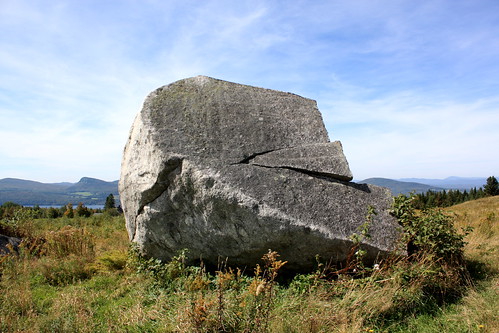
The weather has been beautiful this weekend and I have been stuck inside studying (and moaning about it) — although I did get outside for some great photos yesterday morning; this photo is Sentinel Rock, a glacial erratic in Westmore. I took a class this summer (Teaching Mathematics to ADD/ADHD/LD Students, paid by my contract) and am now taking two six week workshops (Tools for Building Math Concepts and Algebraic Reasoning at the Math Forum, both paid for by the National Science Foundation). Instead of doing my homework during the rainy season in August, I am forced to do it now. I love doing the assignments — so why didn't I? 

This year we are required to write professional goals for ourselves at school. I am going to read Knowing and Teaching Elementary Mathematics by Liping Ma and Fostering Algebraic Thinking by Mark Driscoll. I've had these books for ages and have not read them. Books such as these energize and enrich my teaching and I find them fascinating. So why didn't I read them? 

My final blessing is my camera — an intrinsic motivator. Over the years, the camera has become a comforting companion for me. Behind the view finder I find focus and purpose beyond my professional life. This week I was finally published in Humanities (September/October 2008, page 19) — the magazine of the National Endowment for the Humanities.  The photo is of the round barn at the Shelburne Museum that I took on a school field trip a year and a half ago. The photo is not in the online edition of the magazine, but the print edition has my name on it. I think I want to subscribe to this beautiful magazine out of thanks, but it costs $24 a year. I want to thank Maria Biernik at NEH for finding and using the photo.

My motivators — extrinsic and intrinsic — enrich my life.

To read more blessings click
or Blog Your Blessings
_/\_/\_

Tuesday, July 01, 2008

Teacher Potluck Carnival: Summer Edition

Welcome to the Summer Edition of Teacher Potluck Carnival! This was supposed to be posted in June? I am so full of excuses! There are a great bunch of submissions for this summer edition. And then, like all good teachers, we shall rest until September. That means no more potlucks!

The recipes are especially great this time . . . be sure to check them out!

education

Heather Johnson presents 10 Free Online Award Generators - guest post by Heather Johnson posted at Stepping Stones for teachers.

David Cassell presents College Credit Transfer posted at selectcoursesblog.com.

Sheila Danzig presents What Makes Online Nursing Degrees So Popular? posted at The Degree Blog.

Terry Dean presents From a Sale to An Experience posted at Integrity Business Blog by Terry Dean.

George L Smyth presents One Minute How-To - How To Avoid My Cooking Mistakes posted at George L Smyth, saying, "George L Smyth has become quite expert at making cooking mistakes, and outlines five of the most common, and easily corrected." hmmmm . . . education or food . . .

Meg presents Simpson's Paradox My English Name Is Voldemort posted at Simpson's Paradox.

Alvaro Fernandez presents Cognitive and Emotional Development Through Play posted at SharpBrains, saying, "We sometimes neglect to mention a very basic yet powerful method of cognitive and emotional development, for children and adults alike: Play. Dr. David Elkind, author of The Power of Play: Learning That Comes Naturally, discusses the need to build a more "playful culture"."

Fiona King
presents 100 Best Resources and Guides for ESL Teachers posted at Teaching Tips.

Sally Thompson presents The Ultimate Guide to Special Needs Teaching: 100+ Resources and Links posted at Teaching Tips.

food

Eric Koshinsky presents Dry Rub for Ribs posted at Meat Smoking.

Jasmine presents Flower shaped chicken pie posted at Skill Clue, saying, "A nice and tasty chicken pie recipe coming from Eastern Europe."
SeanBissell
presents 7 Layer Salad Recipe | (Video Recipe Inside) posted at Yummy Fitness | Fitness For Fun People, saying, "Thanks for reviewing this recipe and video! This is a great potluck recipe, and Lindsey (in the video) is also a paraeducator at an elementary school. So I think this submission may fit in quite nice. Thanks! -Sean"

Jennifer presents redrocksunrise - June 10th, 2008 posted at Famous Restaurant Recipes.

Vera & Serge presents Vegetarian Frugal Housewife: Miss Lilac's Bean Chili posted at Vegetarian Frugal Housewife, saying, "Healthy, vegetarian chili: passed on to me from my friend Lilac, a high-school Spanish teacher."

Bobby
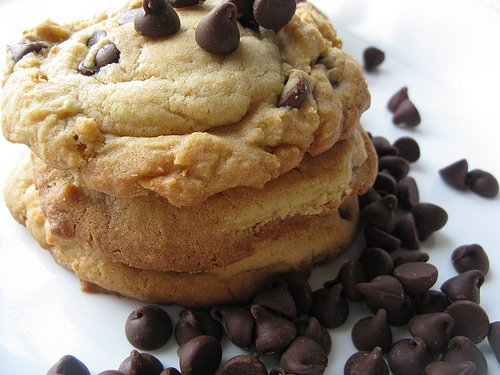
presents Chocolate Chip Cookies Recipe posted at Free Online Recipes | Free Recipes, saying, "The best Chocolate Chip Cookies?"

Jessica
presents Chicken Caprese posted at Simply Scrumptious.

Kelly the Kitchen Kop presents Kelly the Kitchen Kop: Healthy Salad Recipes posted at Kelly the Kitchen Kop, saying, "This post has many variations for delicious salads. Once I took the salad under "garlic vinaigrette" to a teacher potluck and it was a huge hit!"

MyEpikorean presents Bebop for Kimbap... California Style (닭고기김밥) posted at My Epikorean - A Korean Recipe Journal, saying, "Bebop for Kimbap... California Style (닭고기김밥) The healthy, organic version of Korean fast food sushi"

That concludes this edition. Keep an eye on this
blog for the next edition in the fall.

WHERE THERE ARE TEACHERS, THERE IS FOOD!

Technorati tags: , .

_/\_/\_

Wednesday, March 12, 2008

Teacher Potluck Carnival: The Pi Day Edition

Welcome to the Irrational Teacher Potluck Carnival for Pi Day 2008!
Pi Day and Pi Approximation Day are two holidays held to celebrate the mathematical constant π (pi). Pi Day is observed on March 14 (3/14 in American date format), due to π being equal to roughly 3.14. Sometimes it is celebrated on March 14 at 1:59 p.m. (commonly known as Pi Minute). If π is truncated to seven decimal places, it becomes 3.1415926, making March 14 at 1:59:26 p.m., Pi Second (or sometimes March 14, 1592 at 6:53:58 a.m.). Pi Approximation Day may be observed on any of several dates, most often July 22 (22/7 (European date format) is a popular approximation of π). March 14 also happens to be Albert Einstein's birthday.

The first Pi Day celebration was held at the San Francisco Exploratorium in 1988, with staff and public marching around one of its circular spaces, and then consuming fruit pies; the museum has since added pizza pies to its Pi Day menu.[1] The founder of Pi Day, the "Prince of Pi", is Larry Shaw,[2] now retired from the Exploratorium, but still helping out with the celebrations. They have also recently added the first Pi Day celebrations in Second Life.

The Massachusetts Institute of Technology often mails out its acceptance letters to be delivered to prospective students on Pi Day.
See Wikipedia, Pi Day, http://en.wikipedia.org/wiki/Pi_Day (as of Mar. 14, 2008, 00:26 GMT).

Tomorrow we are celebrating ∏ Day with our ∏ Memorization Contest, a ∏ Day Sudoku, and, of course, pies! Chocolate pudding pie seems to be the kids' favorite, with blueberry and pumpkin coming in second.

But don't worry! Our recipes and education links are very rational. In fact, at least one is green for St. Patrick's Day. All our recipes are circular. Happy Pi Day!

FOOD

Let's start off with St. Pat's Pistachio Cookies. I got this recipe from my weekly mailing from King Arthur Flour. You get green cookies, which is fun! They suggest you use the Jell-o brand of Pistachio pudding for the best color.

I spent this past Saturday making my Apple Crumble Pie from cooks.com. I love pies. They are my favorite breakfast food. But making them? A mess! The crust I make is terrific but makes me too tense. Luckily, our store in the village now has a local frozen organic pie crust available. Amy has used two shells for a two crust pie. Still too much work for me. This apple pie has an easy crumble topping that works beautifully just as the recipe says it will. The crumble topping feels skimpy but trust the recipe and it will work. I love the sheen that the raw apples have with the flour and lemon water mixture. The last photo is of the first piece of pie from the pie tin. The flour and lemon juice mixture made a beautiful gel that was completely natural. Click on the image to see it full size.

Finally, my Amy has granted me permission to publish her "perfected" chocolate chip cookies. What does "perfected" mean? I don't get anymore cookies because she has no need to further test her recipe. She is in search of another recipe to perfect. It had better be something chocolate. Sorry, no photos. I ate the cookies.

2 sticks unsalted butter
2 cups flour
1 cup whole wheat flour (or just use all regular flour)
1 teaspoon salt
1 teaspoon baking soda
1 teaspoon baking powder
1/4 cup sugar
1 1/4 cups brown sugar
1 egg
1 egg yolk
2 tablespoons milk
1 1/2 teaspoons vanilla extract
2 cups semisweet chocolate chips
about 2 cups of toasted walnuts or pecans

Hardware:
Ice cream scooper (#20 disher, to be exact)
Parchment paper
Baking sheets
Mixer

Heat oven to 375° F.
Melt the butter in a heavy-bottom medium saucepan over low heat. Sift together the flour, salt, and baking soda and set aside.
Pour the melted butter in the mixer's work bowl. Add the sugar and brown sugar. Cream the butter and sugars on medium speed. Add the egg, yolk, 2 tablespoons milk and vanilla extract and mix until well combined. Slowly incorporate the flour mixture until thoroughly combined.
Stir in the chocolate chips and nuts.
Chill the dough, (I did not do this.)

Scoop cookie onto parchment-lined baking sheets, 6 cookies per sheet. Bake for 14 minutes or until golden brown, checking the cookies after 5 minutes. Rotate the baking sheet for even browning. Cool completely and store in an airtight container.

EDUCATION

Jean Mosher presents More American Children Educated Online posted at Always in Motion. I read the article and it raises important questions about public funding, for-profit educational corporations, credentials and regulation. We have to be aware of the issues because they could affect us sooner than we know.

With that in mind, consider Mark Monaghan's post The need for eLearning posted at eLearning. If you have not seen this video, you must. It will put the eLearning debate into focus.

Despite a district-wide rule prohibiting cell phones in our schools, students have them. Cell phones have audio, still photo and video capabilities. What would you do if suddenly you appeared on YouTube in a cell phone video? Greg Laden presents Greg Laden's Blog : Teachers Gone Wild posted at Greg Laden's Blog. I think this is another article that you must read.

Are you planning on buying pronunciation software for your students? Eric Koshinsky presents Pronunciation Software to Improve English Pronunciation posted at Teachers Call. There are more criteria to consider than I had ever realized.

That's it for this edition of the Potluck Carnival. Please submit your recipe, story or article for the next carnival here.

HAPPY PI DAY!

funny pictures
_/\_/\_

Monday, March 10, 2008

Heads or Tails: Curve-Stitching The Green

St. Patrick's Day Mathematics Lesson
Suggested to me by Multicultural Mathematics: Teaching Mathematics from a Global Perspective by David Nelson, George Gheverghese Joseph and Julian Williams

OBJECTIVES:
Develop number sense
Introduce number theory
Practice sums of ten

MATERIALS:
Worksheets
History of the Shamrock
pencils
markers
video about the history of St. Patrick's Day
Richard Phillips: Numbers: Facts, Figures and Fiction
D. G. Wells: The Penguin Dictionary of Curious and Interesting Numbers

LESSON:
Read History of the Shamrock
Watch "The Story of St. Patrick's Day" video
Curve-stitch a shamrock (St. Patrick's Day worksheet).
Investigate the number 3 with information from Phillips and Wells.

EXTENSION:
What other shapes might you get by using other sums?

LINKS:
Search The Math Forum and enter "curve stitching" in the text field.
Google for more info about: Lissajous Figures, String Art Lissajous. JAVA sites.

To see more Heads or Tails participants, visit Skittles
or click .
Thank you so much for visiting.
_/\_/\_

Monday, January 14, 2008

A Fun Arithmetic Game That Sparks Exploration >> Fun Math Blog

Unplugged Project: Puzzles: I missed Puzzle week for the project so I offer my work now.

A fun arithmetic game that sparks exploration >> Fun Math Blog
Here’s a game that’s easy and leads to a nice exploration of number theory for those so inclined. Two people play. All you need is a sheet of paper and a pencil or pen. Here’s how to play:
  • Each person thinks of a number between 1 and 50 without telling the other person what the number is. Then, each person writes their number on the sheet of paper.
  • Decide who is going to go first, by tossing a coin or in some other mutually agreeable way.
  • Players take turns writing down the positive difference between any two numbers on the sheet of paper.
  • Numbers cannot appear more than once on the paper.
  • The player who cannot write down a unique positive difference loses.
I have used this game in two 5th/6th grade mathematics classes so far. As simple as this game appears on the surface, I suggest that you read the rest the original post to learn its importance to your child's mathematics education. It is a rich and valuable game for them to puzzle over. 

I have posted, as a comment at the original post, what my classes have learned in forty minutes of playing. I won't repeat the observations here in hope that you will play and reach your own conclusions first. But we have not even scratched the surface of the extensions of this game. I need to do some independent study about Euclid's Algorithm before I use it with my older students. I am even considering using it with my college classes. 

If, after learning this game with your child, you find that there is a time when you cannot play with her, you will be interested in this quote from Wild About Math!:
This game is related to Euclid’s algorithm and to the greatest common divisor of two integers. At Cut the Knot there’s a Java version of this game, Euclid’s Game, that you can play alone against the computer. In the computer game the computer picks the two starting number but you can practice determining who should go first.
I use the Cut The Knot site often as a problem solving tool. There are many Java applets there for many classes of problems. We especially use it with the Josephus Flavius problem (which also has extentions and applications to many other problems) but with a far less gruesome problem. 

Here are three screen grabs of Euclid's Game. In the first image, I have chosen to go first because the computer generated numbers are 29 and 18:

In the next image, I purposefully made a subtraction error to demonstrate the feedback that the applet provides:


And finally, I won!


Thank you for visiting. 
To view other projects please click  
or the links above.

Sunday, December 16, 2007

Carnival of Mathematics #22 » Fun Math Blog

Carnival of Mathematics #22 » Fun Math Blog

My binary card number trick is there. There are 15 other excellent articles and it will take me about two weeks to get through all of them. Which reminds me: I have information that should have gone into my binary cards post that I forgot about. I'll post it after my Mac is home. After Christmas. Be sure to submit your article for the next Carnival of Mathematics #23, which will be on December 28th at The Math Less Traveled.

Technorati tags: Technorati Tags:

_/\_/\_

Sunday, October 07, 2007

Carnival of Math #18: JD2718

Carnival of Math #18: JD2718

Infinity, fractal patterns in the Kalahari, the problems with calculators, T3 conferences (an idea that I always suspected!), college math instruction, the Fundamental Theorem of Arithmetic in sixth grade (I've done that!), the crossing number inequality (I have to do that), gifted and talented education (I went from Connecticut, where GAT was important, to Vermont, where GAT is ignored), a LOLCat?, NCLB assessments (my post!), polyhedra paper folding (a blogging friend), Diophantine equations and the products of digits (I participated!), another Pythagorean Theorem proof (got to check out that one), why is the US outta TIMSSA (we all know, right?), and many many other wonderful topics.

Click here now!
_/\_/\_

Wednesday, September 26, 2007

NCLB Assessment Quality

The following problem is a released test item for fifth grade students, assessing their fourth grade achievement. It is from the New England Common Assessment Program (NECAP) Student Practice Test Booklet for Grade 5 Mathematics. Can you find the problem that I have with it? I used this problem with my fifth grade class today for their review. Testing begins next week. What are the standards for testing validity for high stakes tests?

Technorati tags:
_/\_/\_