 |
| This is what happens when a tree falls on you. |
_/\_/\_
Carpinus caroliniana
We have quite a few hornbeam trees in the woods. I didn't know this. I thought they were all little beech trees. After reading about hornbeams, it isn't surprising that I thought they were beech: another name for hornbeam is blue beech. But the bark is smaller grained, flakier and grayer than beech. The leaves of a hornbeam are even similar to beech leaves. Since it is winter, I have no photographs of either leaves to compare. And apparently I have photographed every part of a beech tree (leaves, buds, seeds and seed hulls) except the bark. One difference between the trees is that hornbeams, but not beech, have catkins (male and female).
Hornbeam is also called ironwood. It is very hard wood, used for things like axe handles, soles of shoes, piano actions and other object that require a very hard wood. But the most fascinating thing about hornbeam is how it is grown to make hardwood poles and parquet flooring.
Coppicing is an ancient way to manage woodlots. A tree is cut down almost to the ground at the beginning of winter. In the next spring, many shoots will grow out of the stump (which is called a stool). These shoots are allowed to grow for several years after which they are harvested for poles and other uses. These poles can also be used to make dowels. Below is a public domain diagram of the coppicing cycle from Wikipedia:
Dowels are of interest to me because John and I have frequently discussed their use in the construction of the new kitchen. So far, John has made his own dowels to create plugs to cover certain nails on the cookbook bookcase and in an ancient piece of Douglas fir that he used over the kitchen window. When I learned, on an early spring walk that we took on top of the deep, crusted snow in the woods, that we have trees up there that could be used to make dowels, you can imagine my interest!
_/\_/\_
One of our elm trees.
Ulmus americana
When I was a child in Connecticut, Dutch Elm Disease caused the death and/or destruction of thousands of elm trees in New England. It was thought that if the elms, even healthy elms, were cut, the spread of the disease could be stopped. That didn't happen, and trees that may have had natural immunity to the disease were destroyed. I thought that every elm in New England was extinct.
When John began pointing out elms in our forest here in Vermont, I was thrilled. Now I find elms in the woods in many places. Wild elms do exist. There are also cultivated and hybrid elms that are being developed to resist Dutch Elm Disease.
_/\_/\_
January
Out past our house, on Route 16, is this ice tree. The owners of the tree, I heard, wondered what it would look like caked in ice. So they ran a hose from the pond to the tree and this is the beautiful ice formation that developed. This photograph was taken in January. We are all wondering if the tree will survive the weight of the ice. I can't answer that yet, but you can see, below what it looks like now. It seems like they may have reinforced the tree, also.
April
_/\_/\_
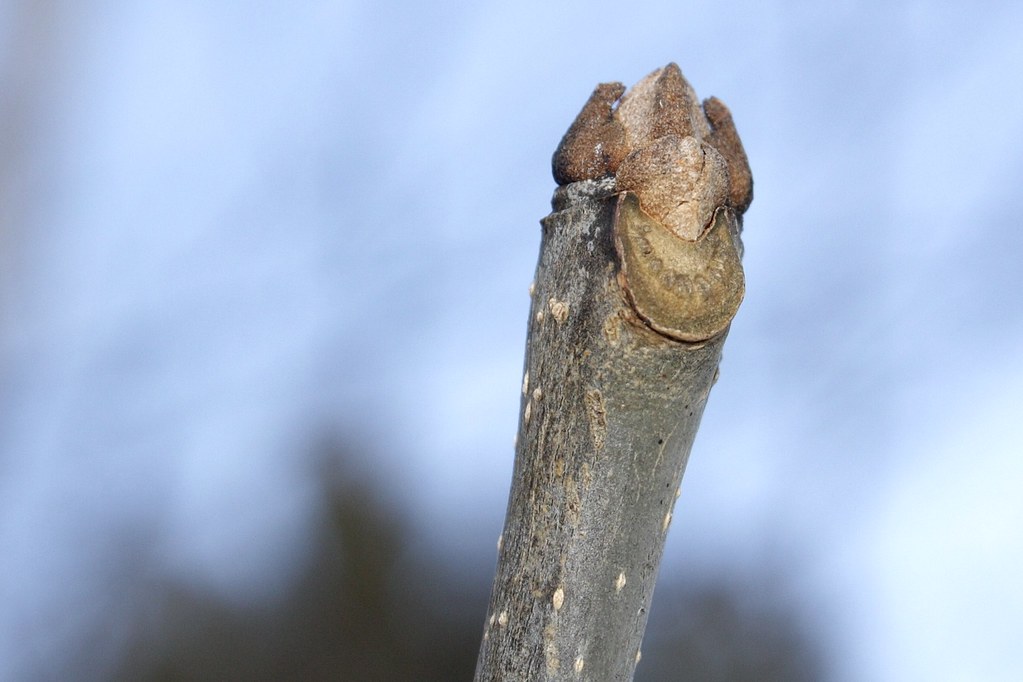 I couldn't identify the brush or trees that these buds were on. But I know where they are and when they bloom in the spring, I will find out. I've been enjoying photographing buds this winter and following their growth. To see more and better photos of buds, go to my Photo A Day blog.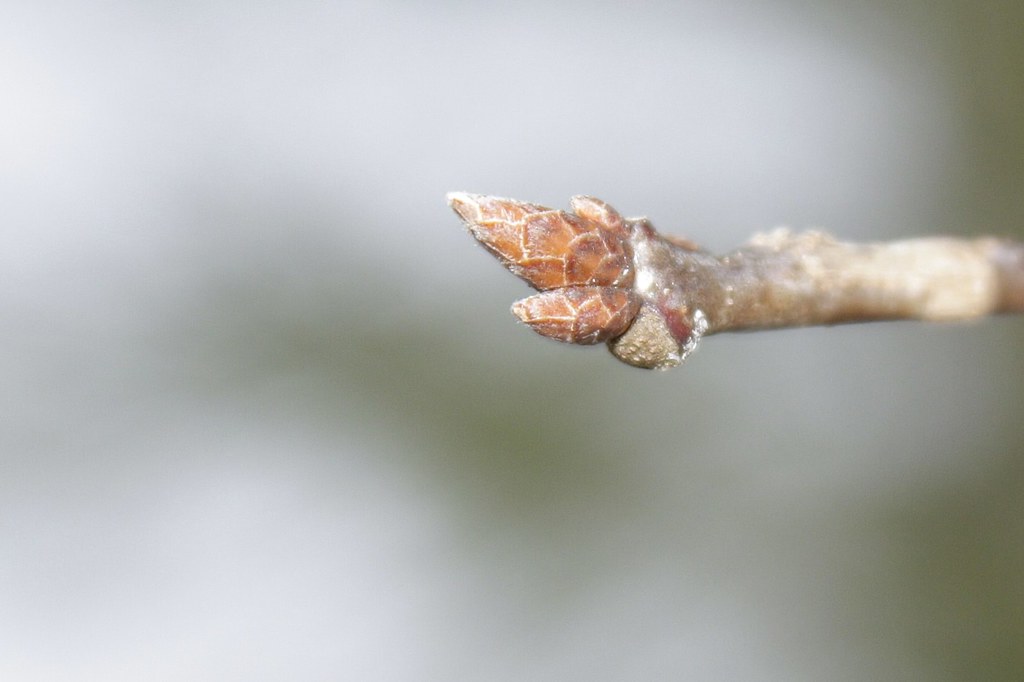

 Above: a white pine. These huge, straight trees were cut down by British forces while they colonized North America. They made masts for their ships. This ravaging of our forests was one of many irritations that led us to revolution.
 Above: a geometer moth warming on a rock
 Above: the top of a tall tree. The tree has been cut in two by the woodpecker activity that you see here. Below: the rest of the tree from which this fell.
 Above: an animal (probably squirrel or chipmunk) has excavated this dead tree for its lair.
 Above: a hemlock tree. The difference between it and white pine is that the hemlock has small dead branches on the trunk as it rises into the forest.
 Above: a midden — probably chipmunk, maybe squirrel.
 Above: John and Amy have left the woods and are entering the fields of the main house.
 The Main House at the Fells
 Above: Originally a stone barn at the Fells, this is now a private residence.
 The John Hay Forest Ecology Trail Hike
 Hackmatacks
But it's in the Northeast Kingdom, that wild, lonely upland northeast of Montpelier, where the tamarack really comes into its own. This stands to reason - the closer to the arctic treeline you go, the more the tamarack likes it. Every year about the time that maple tree down on our common sheds its last leaf, I take my family on an overnight drive along the back roads of the region, enjoying not only the golden tamaracks and the spare, craggy beauty of the landscape, but the luxury of having it virtually all to ourselves.Visit other participants of the Unplugged Project here. Next week's project is open-ended and the theme is RED.


