Showing posts with label beaver bog. Show all posts

Monday, March 26, 2012

Beavers on the Move

Clearing Out a New Beaver Dam  (1 of 9).jpg
What you would have seen when walking in from the road.

Last October the beaver from the bog had some sort of population explosion. The kids had to move out and make their own house. They chose to move across the road to our side. There is a huge culvert that drains water from a low lying grove of tamarack and apple trees. It is less than a quarter mile from the house. John noticed in October that the area was flooded. Deeply flooded. So he went to check it out. That's when he found the new beaver dam across the culvert. The new pond was about four feet deep and filling quickly. We would have a huge problem if there was a heavy rain or if the future finished dam broke. It could wash out our driveway, the culvert and the road..

Clearing Out a New Beaver Dam  (8 of 9).jpg
John manually clears out the dam from the culvert.
He is standing on top of the new dam.
Note those 6 foot tall fence posts marking the culvert.

Clearing Out a New Beaver Dam  (6 of 9).jpg
The new beaver pond.

John spent a lot of time and effort in clearing the dam from the culvert. He did it one Sunday morning and for a few weeks after that, once a week, because the beaver kept repairing the damage. The beaver seemed to give up at that point and did not rebuild.

But after nearly six weeks of quiet, they rebuilt the dam. This time, they built it deep inside the culvert, under the road, where neither John nor his tractor could reach it. John then called the town road agent, Clem, who had installed our culvert. Clem sent the town road crew that very day. They used the town's huge backhoe and hauled out the new, heavily fortified dam. Then they installed a heavy road grate to prevent the beaver from ever entering the culvert again.

The Remains of the Dam (2 of 6).jpg
The new heavy grate blocking the culvert. Note those same fence posts from above.

Below are some photographs of the damage in the same area. We returned on a hike in December to see what was going on. The damage was quite extensive. The area was trashed (in a nice, beaver sort of way):

The Remains of the Dam (1 of 6).jpg

The Remains of the Dam (4 of 6).jpg
This is what that new beaver pond looks like now. It is drained.

The Remains of the Dam (3 of 6).jpg
The remains of a lodge that was being built behind the dam.

The Remains of the Dam (5 of 6).jpg
Many trees were only partially cut or were being considered for cutting. This tree will die.

The beaver may have been discouraged. They may even have despaired. But they were never threatened. After the town blocked the culvert, they continued to cut down trees on both sides of the road and built a new lodge where it should have been built: in the beaver bog. This is the fourth lodge across the road now. It has new canals and trails, and new log slides going into the water. I'm glad the trees, such as they were, are gone, because now the view of the bog is clearer.

The New Lodge (1 of 1).jpg
The new lodge. Where it should be.

The funniest tale of these beaver has not yet been told. In January, I went for my monthly hair appointment and heard the strangest story from my hairdresser, who frequently drives by on her way into town. She was driving by one day about noon and saw by the side of the road a big beaver. He was waiting for her to drive by, looking both ways before he crossed. And what did he have in his mouth? A reflective road side marker that marks the culvert so that the town road crew does not damage it with the plows. The beaver had cut it down and was taking it home to decorate his lodge!

_/\_/\_

Thursday, June 09, 2011

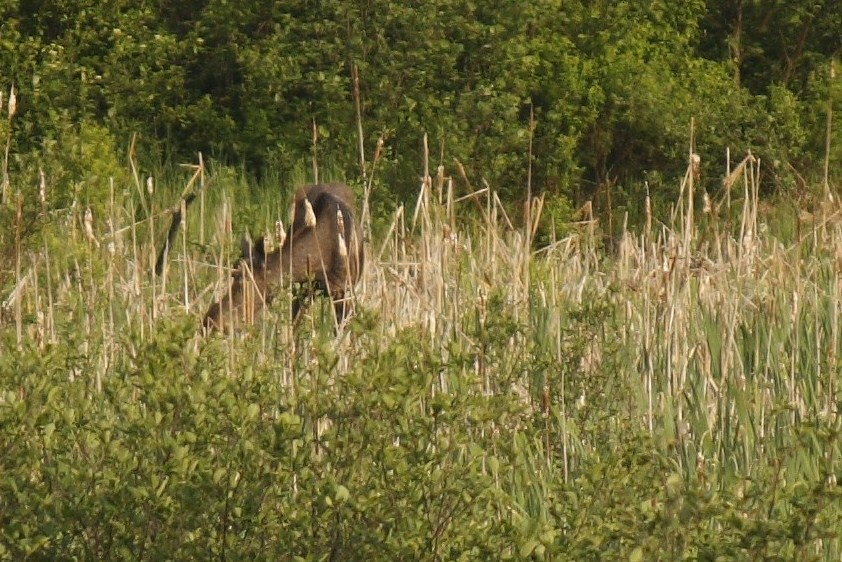
Our Moose of Beaver Bog

Moose in the Beaver Bog-13.jpg
Our moose has returned

Last summer we had a female moose in residence in the bog that we saw regularly three times a day for weeks. She appears to be back, bigger than ever. I don't know how to identify individual mooses, but animals usually return to spots that they have enjoyed in the past. So I say this is her. You can judge for yourself by clicking here and comparing.

Moose in the Beaver Bog-8.jpg
Here, she is munching cat tails.

The moose is in her "molt," so she looks pretty scruffy and three-toned. But soon she'll be looking fine and will only have two tones.

Moose in the Beaver Bog-14.jpg
She doesn't like her photo being taken

This is a cross-post from meeyauw's Photo A Day blog (where the photos are larger).

_/\_/\_

Tuesday, May 10, 2011

Broken Promises

Skunk cabbage (Symplocarpus foetidus) (1 of 6).jpg
Skunk cabbage (Symplocarpus foetidus)

John and I visited the mill ruins on April 28 and I promised myself that I would return to photograph the skunk cabbage before a week was out. It's been 3 weeks and they are too old now. I have read and seen photographs of a stage of skunk cabbage growth that is so gorgeous I wanted to make a special hike to capture it. You can view photographs from Ontario that show this.  And now, writing this, I realize that by April 28 I had already missed the beautiful purple stage. Next year!

Horse Tail (1 of 2).jpg
Field Horsetail Equisetum arvense)

Every single spring, I promise myself to document the life cycle of field horsetail. There is this brown stage and then there is a green stage. I don't understand how horsetail morphs from one stage to the other. This year I shall!

Bluebead Lily fruit (3 of 3).jpg
Fruit of the blue-bead lily (Clintonia borealis)

It took me years to identify this blue fruit in the woods that I saw every summer. Two summers ago we identified it and I promised myself, last summer, that I would find the tiny yellow lily that produces this blue bead. This year!

Interrupted Fern fiddleheads  April 28 2011 (2 of 2).jpg
Interrupted fern fiddleheads (Osmunda claytoniana)

In 2008 I published almost the complete life cycle of the interrupted fern. You can click here to see the series. I promised myself to finish it. I never did. This year!

Dead apple tree in the bog (1 of 1).jpg
Dead apple tree in the beaver bog.

Last summer I promised myself that I would get out into the bog more often to explore. I never did. And I have even more urgent needs to go this year. Hawks were eating birds in the bog near where this tree is. John, using binoculars, said they ate a red-winged blackbird. I worry that they ate the mallard hen because just before the hawk perched on a dead tree and began ripping the bird up, the mallard drake chased the hawk out of the water. It was a violent flight for both of the birds. I have not seen mother duck since that morning. This year, I will go exploring more often!

That's a lot of broken promises. If I were to spend some time going through photographs, I would find more. It's time I fulfilled those promises. This year!

_/\_/\_
Thursday, May 05, 2011

Dam 5

Beaver Pond 5 (13 of 45).jpg
The beaver dam a half mile from home.

This beaver dam used to be a mill. The old millhouse is still there, as is the human dam. The beaver no maintain the dam. I walked over there in April to get photographs of spring and to see how the beaver and the bog were doing. An lodge that was in the side of the pond was destroyed, perhaps by fisher cats. There were new trees chewed and down. But otherwise, all was calm and quiet as before. I'm thinking I should drop by the town clerk office and see exactly what this area is called. I call it Dam 5 because it is the fifth dam on May Pond Brook that Amelia and I counted when we hiked the brook years ago. Dam 4 is across the road from the house and Dams 1 through 3 are upstream of Stone Flume.

Beaver Pond 5 (18 of 45).jpg

Beaver Pond 5 (25 of 45).jpg

Beaver Pond 5 (32 of 45).jpg

Beaver Pond 5 (34 of 45).jpg

Beaver Pond 5 (41 of 45).jpg

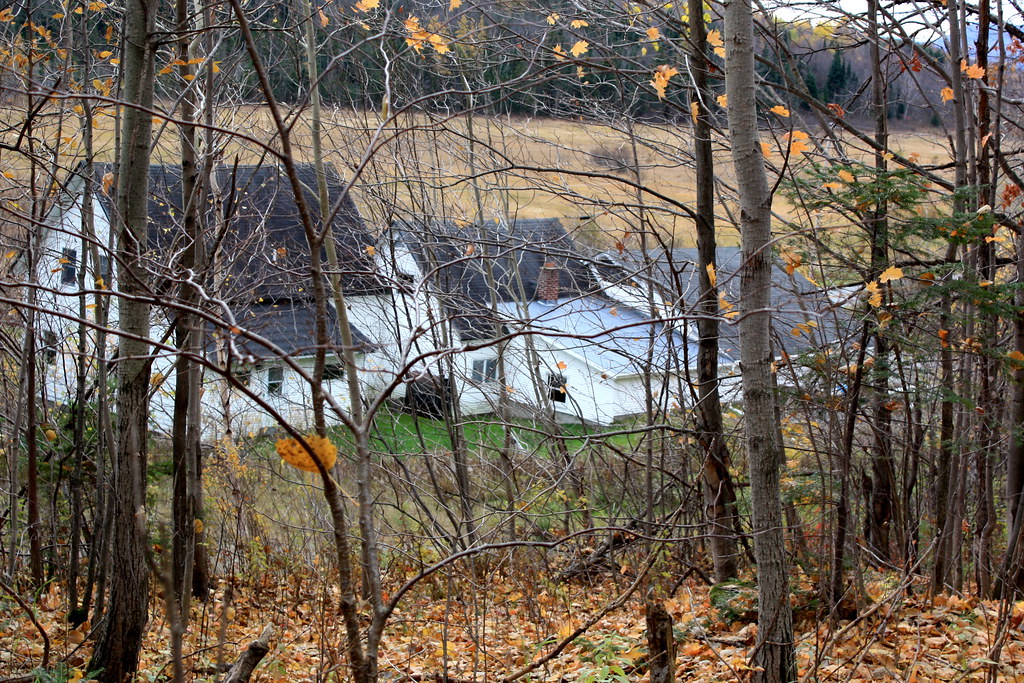
View of Home from Beaver Dam 5 (2 of 4).jpg
Our home, 1/2 mile away, as seen from the dam.

Beaver Pond 5 (1 of 45).jpg

Beaver Pond 5 (4 of 45).jpg

Beaver Pond 5 (8 of 45).jpg

Goldenrod gall fly (Eurosta solidaginis) (1 of 3).jpg

Shortly after I took the photo of the goldenrod gall (above), I found some fresh bear scat. I finished up the photos and left soon thereafter, making sure I stayed in wide open spaces with lots of room to run to the road.

_/\_/\_

Thursday, April 28, 2011

VIDEO: Stone Flume

This is the flume across the road at the top of the beaver bog. May Pond Brook runs into the bog over this flume. The kids slide down it in summer. At one point, you will see our white house with Barton Mountain behind it. I started the video on the bluff at home, at rush hour, and unfortunately a car went by. Then you see the swollen brook rushing out of the woods and down the flume into the bog. You will hear John suggests I slide down the flume with the camera for a better angle. Sure I will!

_/\_/\_
Saturday, April 02, 2011

VIDEO: The Geese of My Beaver Bog


Canada Geese Defend Their Nesting Site
March 31, 2011

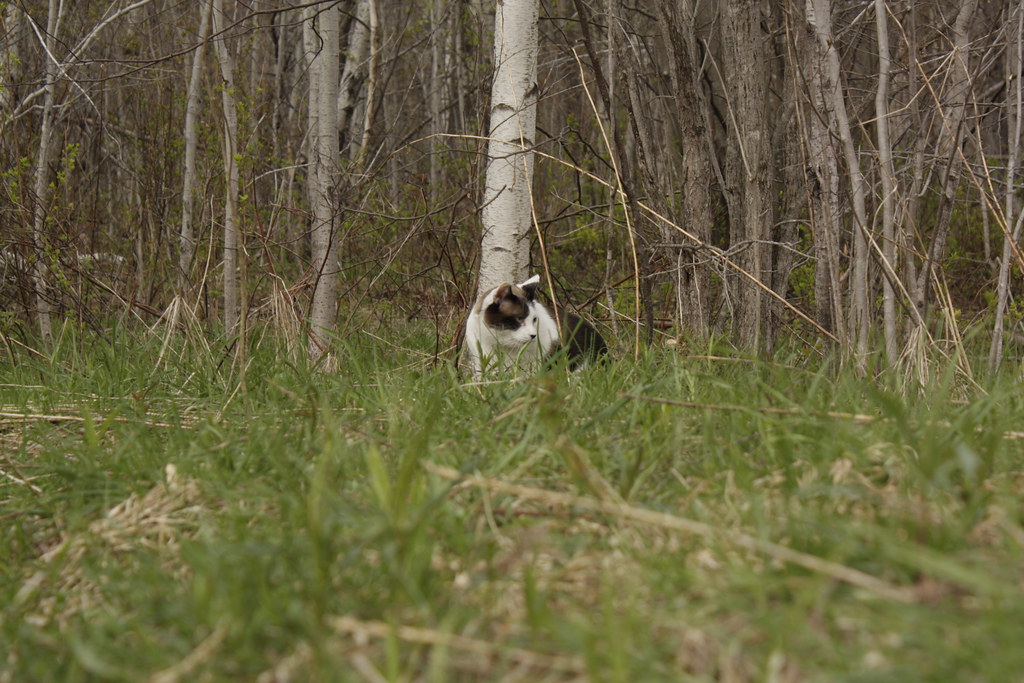
Canada geese did not nest here until about three years ago. They would fly through on their way north to Canada. Many ducks did, too. I have photos of mergansers and wood ducks that rested here on their way north. However, once the Canada geese decided to nest here, only mallard ducks have dropped in and/or nested here. I have gotten used to them and now actually enjoy watching the geese court, brood, and finally, raise their chicks. I have even seen their eggs when the mother rearranges herself on the nest.

But before they make a nest, the geese have a lot of work to do. Geese don’t necessarily mate for life. They lose spouses, just like people do, to death and infidelity. They don’t pine away forever if either happens, but they may lose the breeding season and have to wait until the next year. They usually, but not always, return to the same pond each year for breeding.

We had several geese for about three weeks stop in the afternoon and then leave at dawn the next day. But last week, “our” geese returned and stayed. They serenely walk side by side about the beaver bog, occasionally swim, sleep on the ice, and just take it easy. And every year, a solitary male challenges the mated male. This lone male may be a youngster or a widower, But he wants to entice the mated female to be his mate. The mated male will attack the unmated male and drive him off a safe distance. The female may join her partner in attacking the stranger. Eventually, the lonely male will take off and cruise other ponds for women. It could be one hour to a few days before he decides to try his luck somewhere else. The slide show above shows you the attacks that the mated pair makes on a solitary male. On many slides, you can just see the head of the mated male on the left side of the photo as he runs or flies in for his attack.

The other problem that the resident geese have is another couple that wants the same nesting site. The arguments between the two couples are often more violent than the arguments between a mated pair and an interloper male. Males and females will fight and I have even seen them tag team other couples. The male will attack, hands the fight off to the female, and if the strange couple is not scared off, he will go back in. We had a skirmish like this today.

The new geese arrived yesterday. Yesterday they stayed far away from our geese on the other side of the bog in the back pond although at times they would stroll a bit closer to the front pond and our geese would begin to pay attention. The new geese then returned to the back pond without a confrontation.

Today, the new couple tried to come into the pond that our geese are considering for a nest (there is no telling where they will, or if they will, build their nest).. We watched as our geese attacked the newcomers. They were sly. They walked side by side just as the do in peaceful times. But their necks would begin to extend as they got closer to the new geese. And suddenly, our male would run full tilt for the new male. After a few seconds of chasing the other male, our male would break off the attack and step aside. Then our female, who had stayed still during the attack, would run in and chase the other male. Sometimes, as our male chased the new male, our female chased the new female. But either way they decided to attack, our mated geese would reconnoiter after their attack and then extend their necks, bob their heads at each other and repeatedly touch their bills together. This cracked me up. The geese were giving each other high-fives!

If you would like to learn more about the geese in your ponds, read The Geese of Beaver Bog by Bernd Heinrich With some knowledge of goose behavior, you can enjoy observing them much more. Heinrich, my favorite nature writer, is a professor at the University of Vermont. His writing engages you. You won’t put the book down. Heinrich wrote the book after he observed his own geese on his pond for a season or two.

As I mentioned above, this slide show shows the confrontations between a mated pair of geese and a solitary male. The action was taken with a very long lens on an extremely overcast day. The photo quality if poor, but the messages of the geese is clear. This is the first time that I have made a slide show in Lightroom. I have no idea where the first couple of frames flash a bright light. There is no audio track. I hope you enjoy it!

_/\_/\_
Tuesday, March 15, 2011

Gotcha!

Otters in the Beaver Bog   -3.jpg
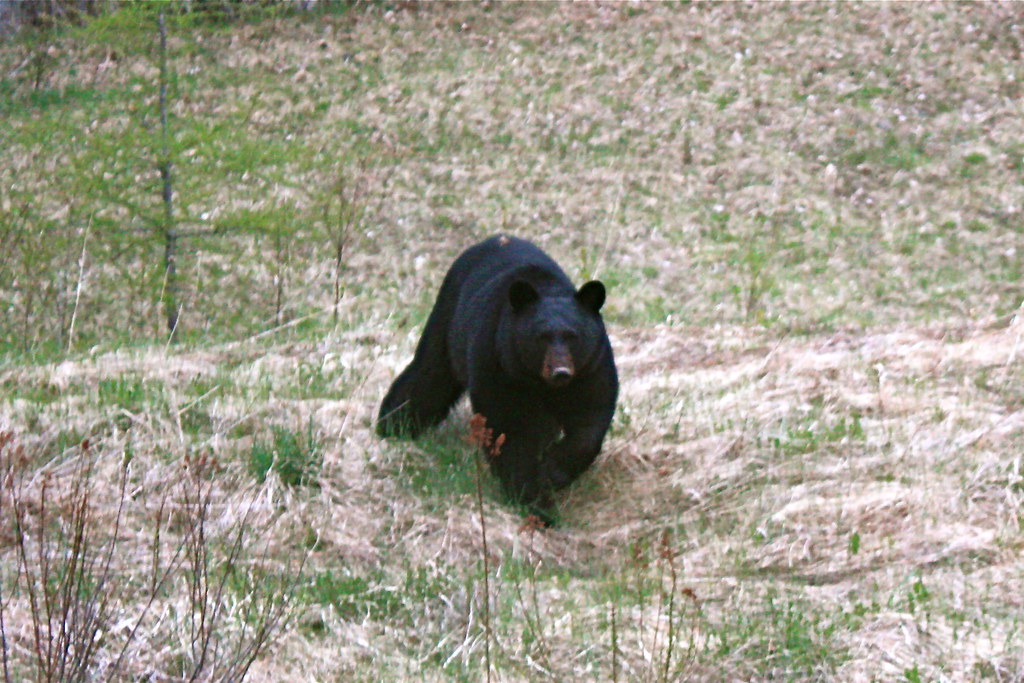
Back of the otter is above the surface as he dives.

To view larger photos, click the photo to go to the photo page on Flickr.
Then click “Actions” above the photo,
and then select “View all sizes.”

Otters in the Beaver Bog   -12.jpg
When he surfaces, I finally photographed his head and face!

John saw the otter in the bog on November 5, 2010, and once again, I went down to the road with the camera and tripod to try to get better otter photos. This time it worked! I not only got photos of the otter's head, but also of it floating on its back, eating and rolling. This coming summer, I hope to be able to photograph the otters better. But for now, I'm just thrilled that I finally got my otter photos. When you view the large versions of these photos you can see the otter whiskers.

Otters in the Beaver Bog   -19.jpg
The otter swam for quite awhile, giving me more opportunities.

I've pretty much accepted that, like all wild animals, otters will do whatever they need to do to survive and eat. I shudder when I think of what they do to turtles in the winter, but I am accepting it.There are no "innocent" creatures in Nature.

Otters in the Beaver Bog   -20.jpg
On his back, eating!

Otters in the Beaver Bog   -21.jpg
He's having a great time, and so am I!

Otters in the Beaver Bog   -22.jpg
Swimming again.

_MG_9975.jpg
The otter began rolling.

otter (16).jpg
My last photograph with the otter's head barely visible.

_/\_/\_
Tuesday, October 05, 2010

Clearing Out the Loosestrife

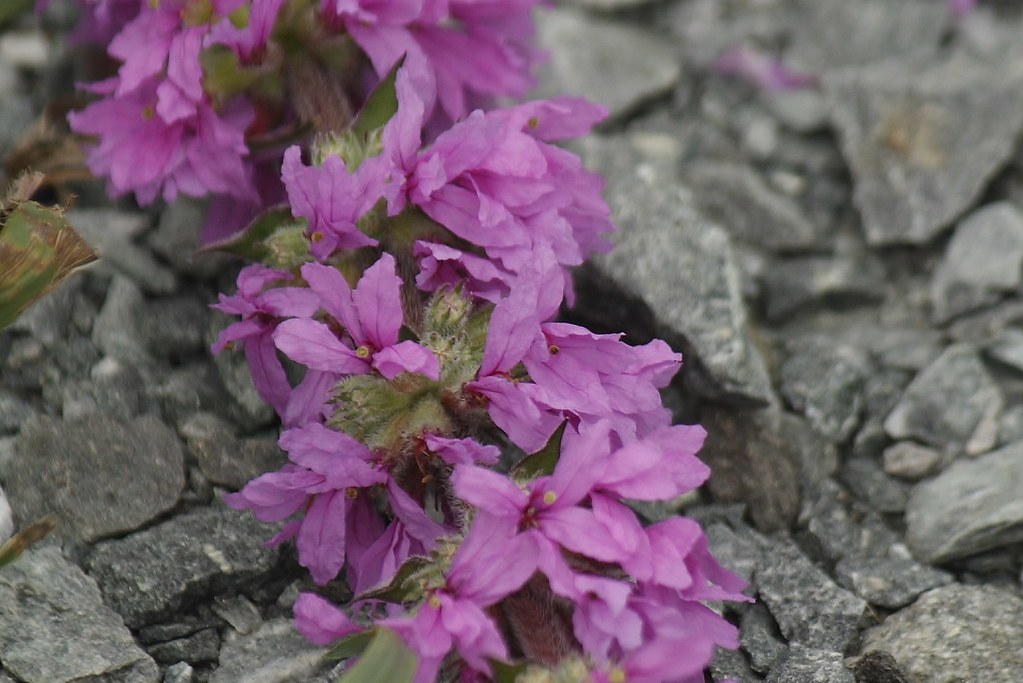
Purple loosestrife
Purple loosestrife is a very invasive plant. In fact, you are supposed to notify the State of Vermont when you get an infestation. I don't know why you are supposed to notify them, because I did, and nothing happened.

We have developed an infestation of loosestrife in the beaver bog. A large patch blossomed right across the road in July. So on July 13, after celebrating my sister's birthday, Amelia, Nate and I took large black garbage bags and knifes and cut down enough loosestrife to fill two fifty-gallon bags. You never take loosestrife to a landfill or dump because it can grow. But you can kill it by cutting it and denying it light. The seeds will rot. And if you do this every year, you can quickly get rid of it. The problem is that there is more loosestrife in the bog than I ever thought. You can't get to some areas without disturbing the habitat. And my neighbors are not interested in cleaning it up. Purple loosestrife is a beautiful flower and many people don't realize that something so beautiful can be so dangerous. It is not used for food or housing by any animal in Vermont and it chokes out native food and housing plants. I remember seeing a thousand acre bog in Michigan that was completely purple with loosestrife. It was a beautiful nightmare: gorgeous color with all life in the bog choked out.

A couple of weeks after we cut the loosestrife, we saw a young woman drive by, stop and pick more that had blossomed. We called down to her that it was invasive and she should not pick it. But she was giving a lecture that afternoon at Northwoods Stewardship Center in East Charleston on loosestrife control and needed a sample to show people. She also told us of an agency that would help us get the loosestrife in the unreachable parts of the bog. Apparently they will pay people to eradicate it. That's the government way: pay people instead of mobilizing them! Both John and I have since forgotten the name of the agency, but we will continue to cut as much down as we can every July.

Lythrum salicaria
_/\_/\_

Tuesday, August 03, 2010

Hummingbirds, Goldfinches, Bears and Buddy

Our home with the bog in autum.
The grasses around the beaver bog now are tall enough to hide a white-tailed doe. I think they have their fawns in the meadow because the red-winged blackbirds call the alarm if anything dangerous trespasses in the bog. But the red-wings are gone now. They have nested, raised their young, and left, as they do every year, to congregate for the long flight south. I wish I knew where they congregated. It must be a raucous time wherever it is. Now I know that summer is heading into autumn. The tall grasses glow golden in the sun. Their seed heads are ready to plant more grass for next year. In the past, hundreds of starlings have moved into the meadow grasses after the red-wings have left. They are quite raucous themselves when they settle down for the night. But they have not come the past two summers.


great blue heron mobbed by blackbirds - 2
A heron mobbed by blackbirds.
The great blue herons have returned. The red-winged blackbirds won't let the herons in the ponds when they are here. But now that they are gone, the herons are free to fish. We have two herons this year. Every morning and afternoon they fly over the ridge from May Pond and circle overhead. I think they are looking over the chickens. The hens run under a car or into the woods when the herons fly over. I suppose herons are capable of eating a hen but I wonder if they would seriously try. The chickens recognize that huge birds overhead, or shadows of birds racing over the fields, mean danger and they instinctively hide.


Every morning now I walk behind on the house, on the mountainside, to try and photograph woodland birds in the choke cherry trees. It's a beautiful time of day with the mist rising from the warm bog water into the colder air. The sun is perfect for bird photography. This is something new that I am learning now, how to photograph birds in trees in the summer. I've been learning and growing in technique. Some mornings the cats walk with me, which means I may not get a photograph at all. But I won't run the cats off from walking with me.


Buddy hunts field's edge
The other morning, Buddy caught a shrew and brought it into the garage. He lost it in a woodpile, and it quickly eluded Buddy by running across the garage floor to another woodpile. It was badly injured and only had the use of three legs. The fourth, hind leg, dangled uselessly behind it. I probably should have mercifully killed it but that is out of the question. I can't. Zorro saw it escape Buddy and chased it for a few more minutes. Buddy and I left and went on a bird walk.


Since he lost that first catch of the day, Buddy returned to the trees at the edge of the field that he likes to hunt. I watched patiently as he first sat, alert, listening for mouse sounds in the grass. The dew was heavy on the field and the sun lit the water drops up like millions of diamonds. Buddy heard a sound, crouched, lifted himself up in the air and landed a foot ahead of where he had been sitting. He poked the grasses with his muzzle and lifted another shrew into the air. He carried it to a clear area nearby, sat down and ate it immediately. He wasn't going to risk losing more of his breakfast by carrying it home.


I heard a goldfinch and watched as it flew the familiar bouncy flight pattern in the air. It was making a great circle around the apple trees around the barn. His call became more distressed or angry and he began to fly straighter. A hummingbird was chasing it. The chase continued for over five minutes and followed the same path over and over again. Occasionally the goldfinch tried to hide in a tree or would dive erratically. But the hummingbird was like a heat seeking missile and never lost the finch. What had the goldfinch done to so thoroughly anger the hummingbird?


Bear in the yard
John and I sat outside one morning this week. It was very early. This is the best time for observing life in the bog. No other humans were up. Even the cats had not yet begun to hunt but were sitting nearby pondering their plans for the morning. John noticed movement in the grasses behind the beaver ponds. Something was raising its head and doing something to the trunk of a dead, drowned birch tree. It was a black bear getting either bees or ants from the dead tree. We were quiet, we thought, but it heard us in the morning air and disappeared into the grass and the woods beyond.


Otter in the beaver pond
The mother moose that was living on the edge of the bog for weeks is no longer here. A mother otter and four to six babies are visiting the bog this week. I haven't even tried to photograph them because they are more skittish than usual. There is a new, large deer yard in the apple orchard. This summer is rich in life and drama in the bog and the woods.  We have been working hard on the house. Hiking, church and library are taking a lot of time, also. I am over six weeks behind on editing photographs and blogging. Our first married summer is rich beyond reason.
_/\_/\_
Enhanced by Zemanta

Wednesday, June 30, 2010

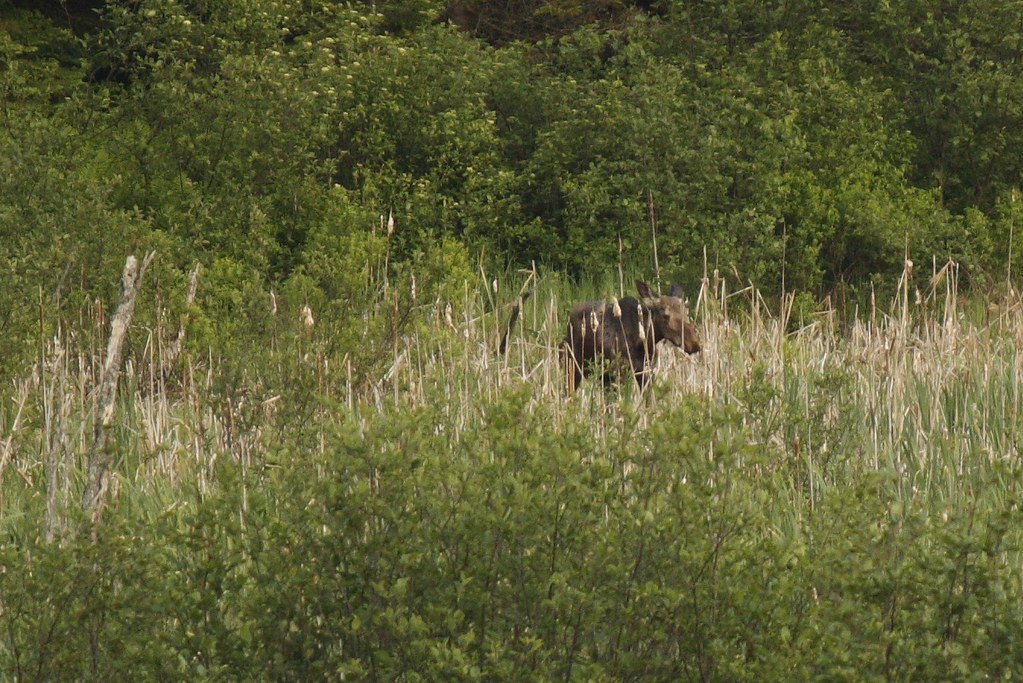
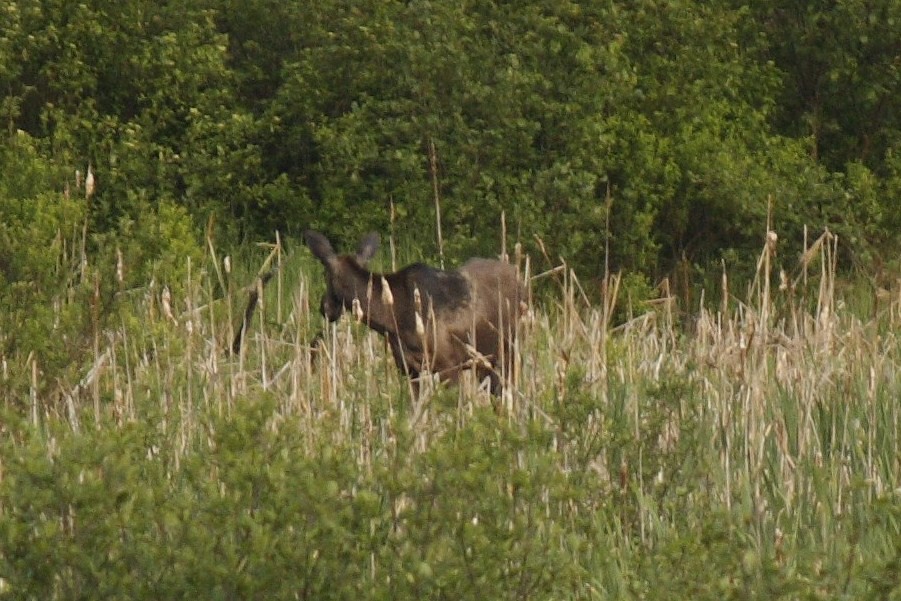
Mother Moose Is Still Here

The moose cow is still staying on the other side of the beaver bog.

We still haven't seen a calf.

Sometimes we see movement in the woods behind her.

Click any photo to view it large.

_/\_/\_
Wednesday, May 19, 2010

In The Beaver Bog

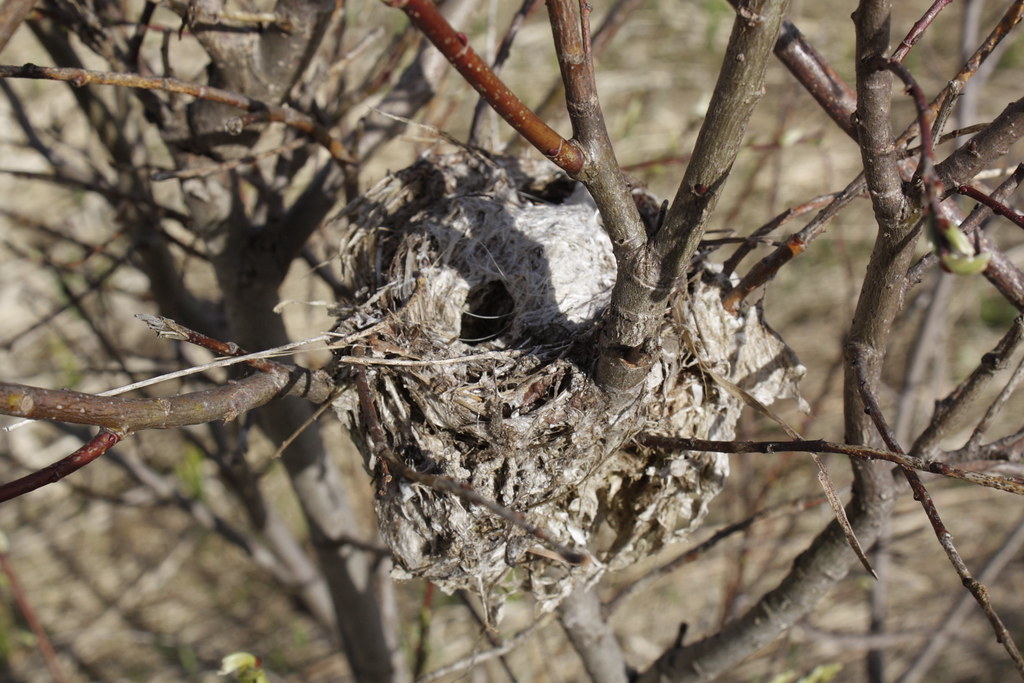
I found an unidentified bird nest when I entered the bog.

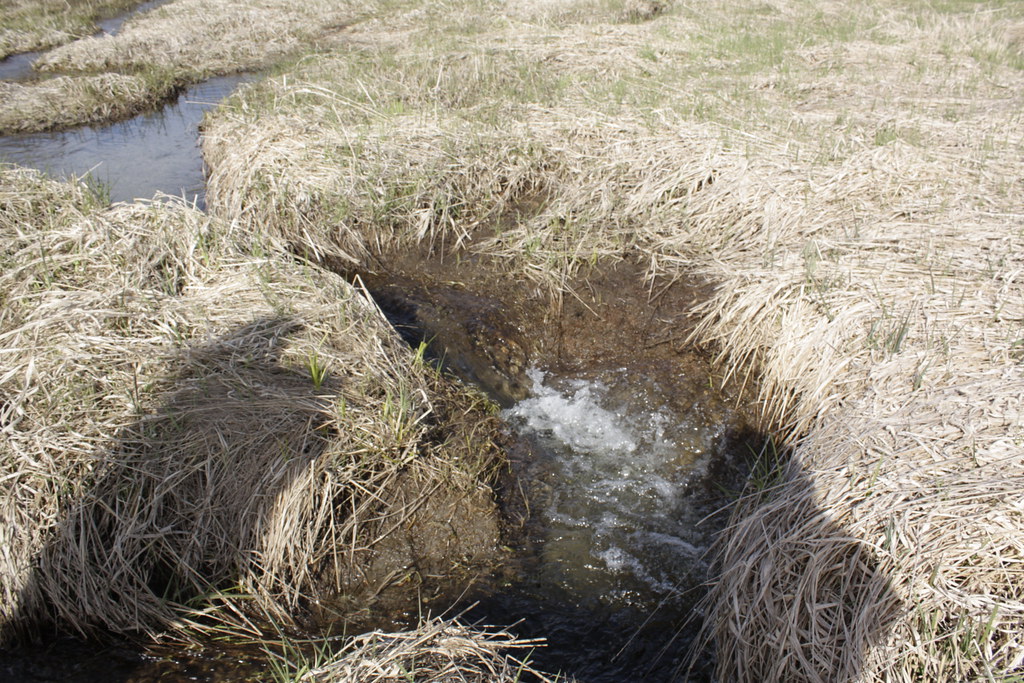
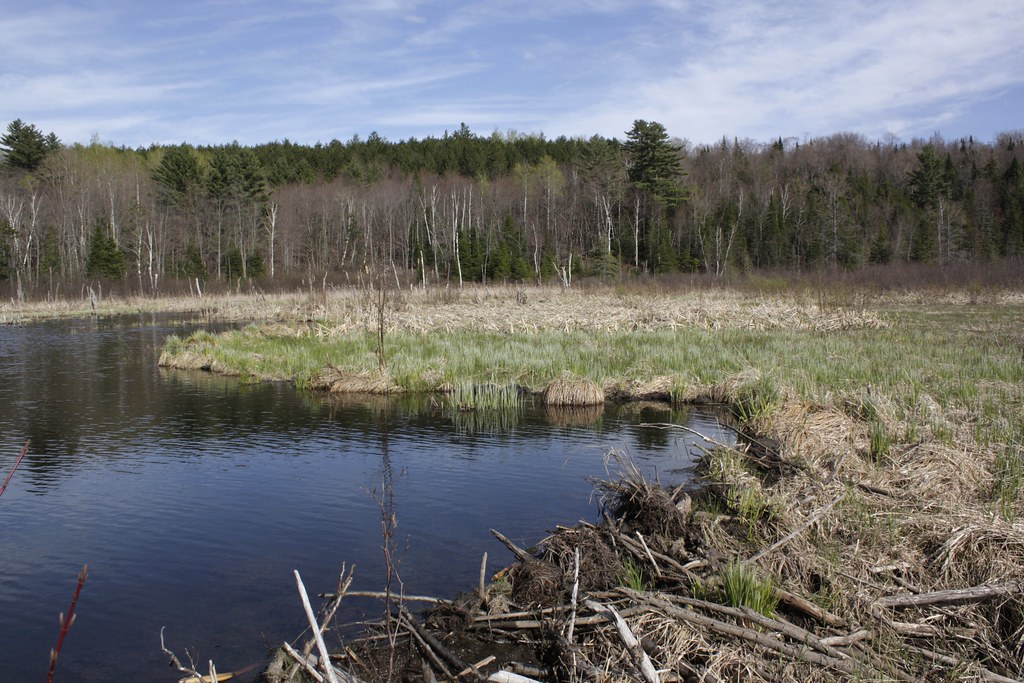
May Brook runs deep in the meadow. There are places where the water is five feet deep! It runs very clear and cold. The meadow is riddled with beaver canals that run straight out of the beaver pond. The brook has curves and deep banks.

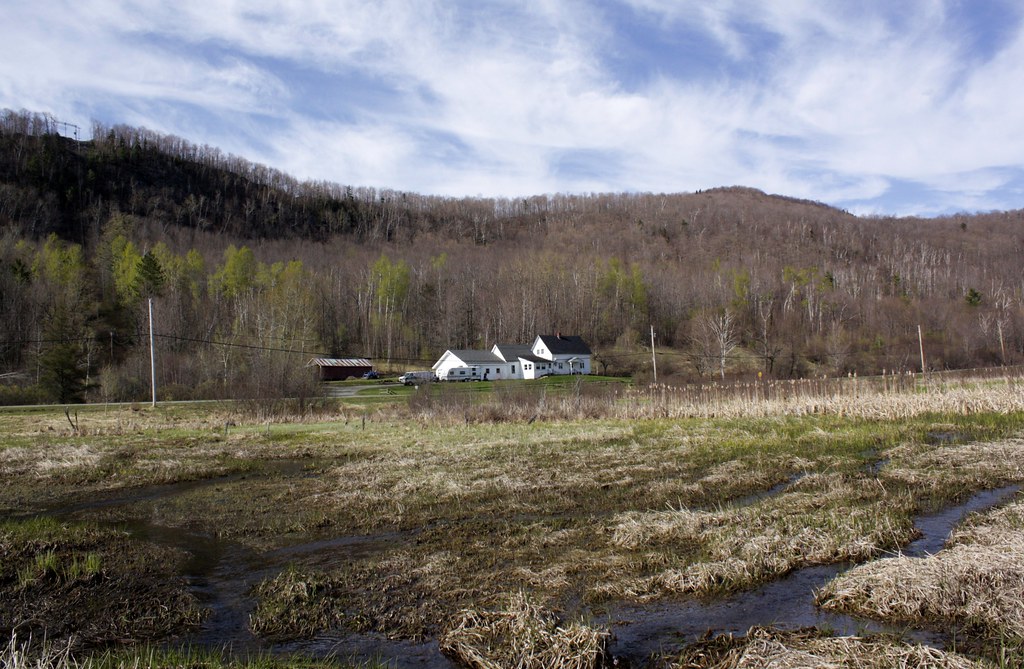
Our house on the side of Barton Mountain as seen from the bog. On the top left of the ridge, you can see the clear cut for the old Unicel tower. That tower was invisible until they cut the trees from around it.

In the photograph above, and even better below, you can see that the beaver pond is five feet above the level of the meadow. You will see how in the following photographs. The mare’s tail clouds (cirrus clouds) were the incoming snowstorm that we had most of the week after these photographs were taken. It was beautiful on the day we were in the bog. But it was ugly the rest of the week!

I hope that you can clearly see that the surface of the beaver pond is higher than the meadow. It is a full five feet higher!

Here is the beaver dam. The dam has stopped the water of May Brook so that the meadow floods.

Above, you see a wider shot of the meadow, pond and dam. The ridge behind the meadow will lead you to May Pond, where May Brook originates.

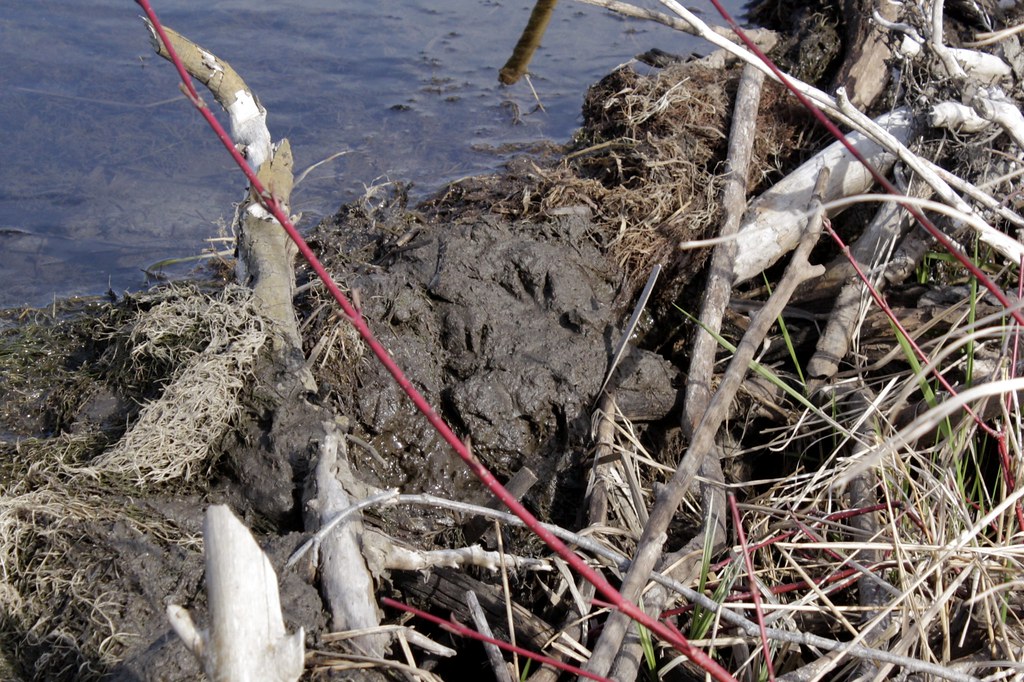
For me, the most fascinating part of the day was seeing the mud walls of the pond. After damming May Brook, the beavers made mud walls all around the pond. They scoop the mud from the pond bottom, and then pat the mud so that it makes a thick, solid wall. You can see their paw prints in the mud. This mud wall makes the pond five feet higher than the surface of the surrounding meadow.

In the center of the photograph above, you can see a beaver turd in the pond water. It is solid so that it does not contaminate the water.

I have always wanted to explore the bog. I am braver with John by my side. He knows the legalities of entering a wetland and he can read the animal and plant signs about him. We plan on going frequently in the future to learn more about the fish, mammals, birds and insects in the bog. See my previous post Vermont’s Class 1 & 2 Wetlands to learn more about your wetland area.

I love taking photographs of our house from all sorts of vantage points.

_/\_/\_