Showing posts with label May Brook. Show all posts

Monday, May 09, 2011

The Ruins of Stevens Mill at Stone Flume

Stone Flume (1 of 1).jpg
Stone Flume as viewed from our house.

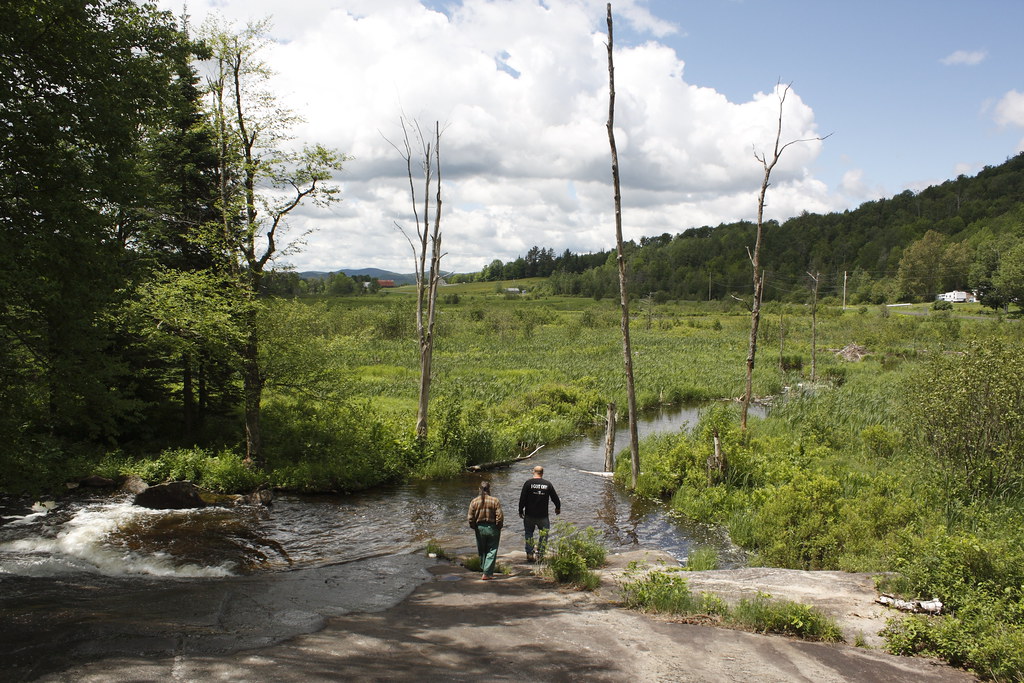
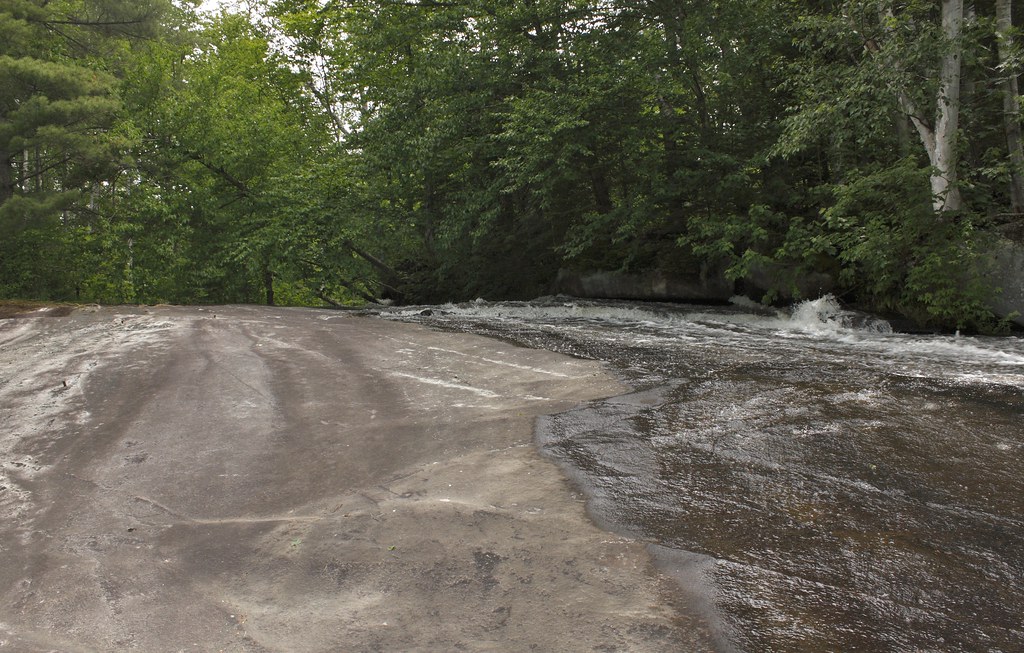
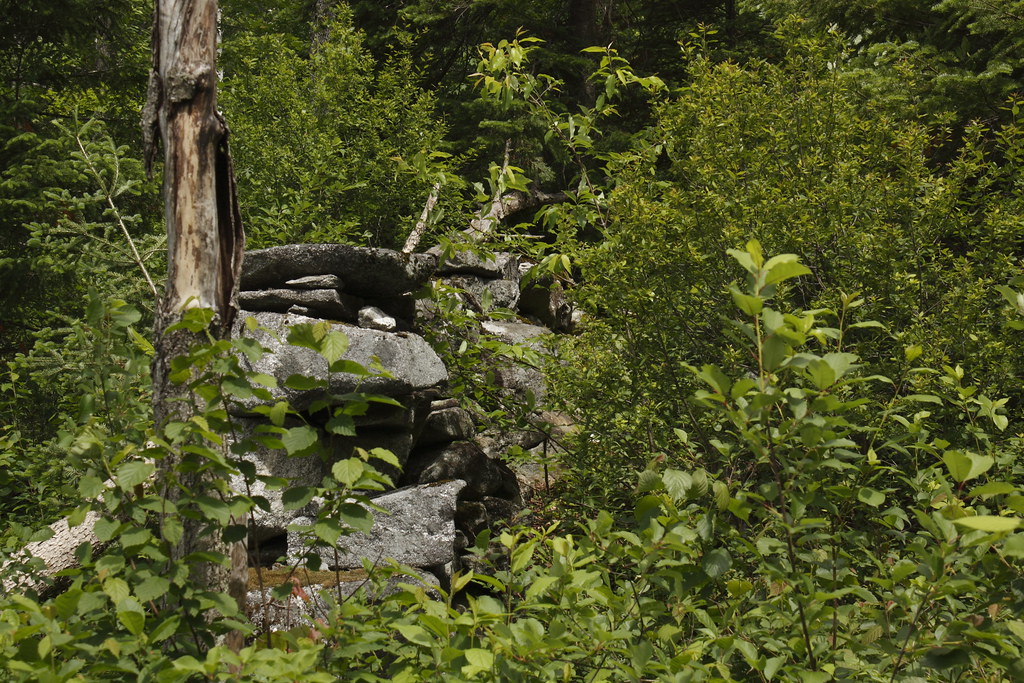
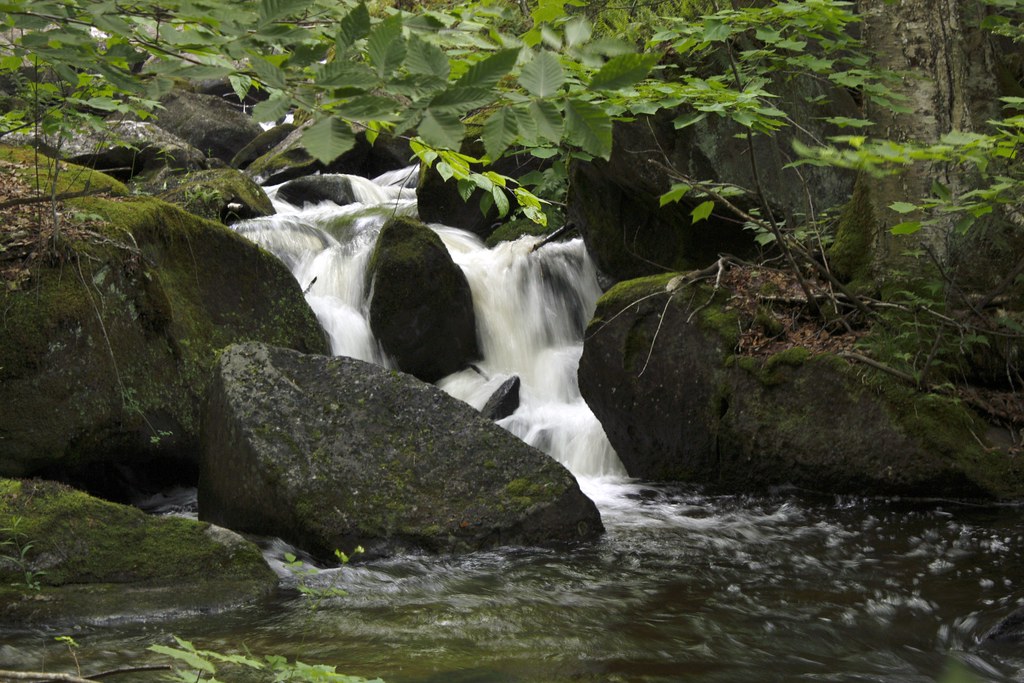
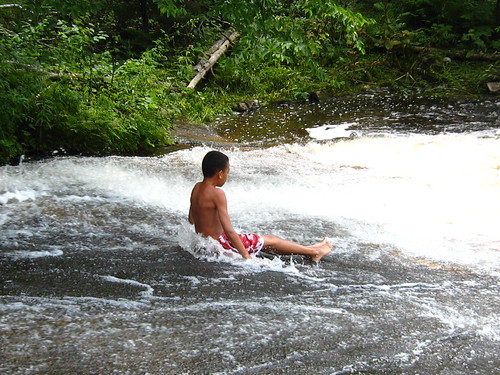
Across the road, at the top of the beaver bog, is Stone Flume. I found the name on an old town map. May Brook flows from May Pond and down the flume, through the beaver bog and over Dam #5 on its way to Crystal Lake. The kids like to go and slide down the flume in the summer. But there is another attraction there: ruins of an old mill. There are still iron spikes in the granite ledge of the flume where the mill was attached to the rock. There are stone walls and a foundation that you can explore. This is the best time of year to see the ruins because the foliage hasn't grown up and buried it. Here are some photos of the ruins that I took on May 1 when we walked over to visit.

Mill Ruins at Stone Flume (1 of 16).jpg
A deep crack in the granite ledge created by the expansion of winter ice.

On old maps this mill is called Stevens (or Steven’s) Mill. I haven't been able to find out why, but when I do I'll post the information. I assume that a family named Stevens lived in the house closest to the mill. I don't know if they milled grain or sawed lumber.

Mill Ruins at Stone Flume (3 of 16).jpg
The west side of the mill's stone wall.

Mill Ruins at Stone Flume (12 of 16).jpg
The other, east side, of the wall.

_/\_/\_

Thursday, May 05, 2011

Dam 5

Beaver Pond 5 (13 of 45).jpg
The beaver dam a half mile from home.

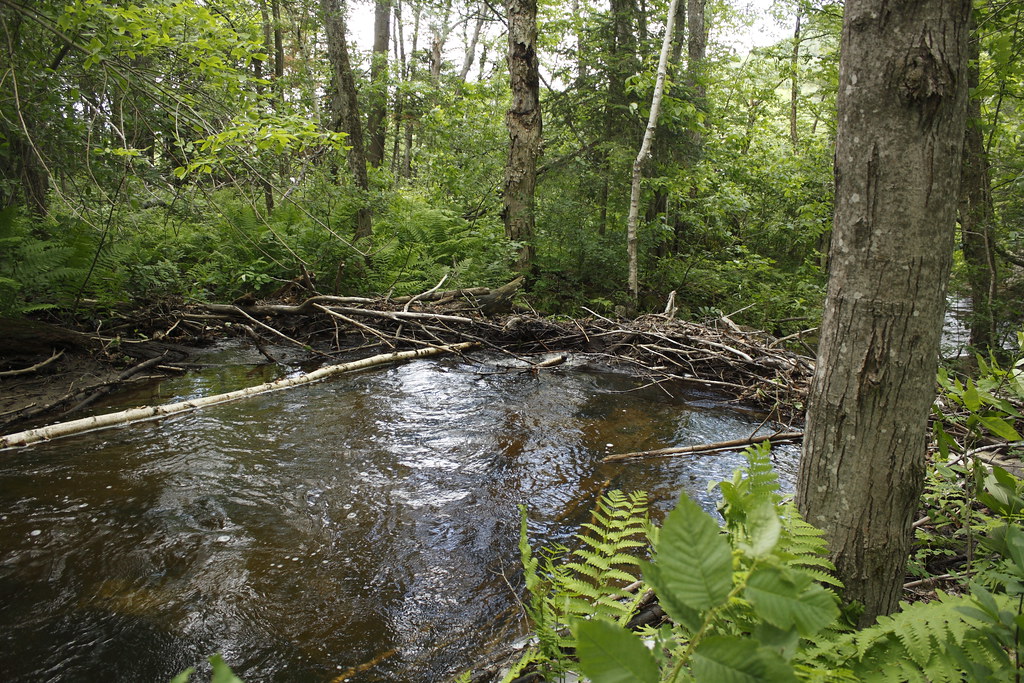
This beaver dam used to be a mill. The old millhouse is still there, as is the human dam. The beaver no maintain the dam. I walked over there in April to get photographs of spring and to see how the beaver and the bog were doing. An lodge that was in the side of the pond was destroyed, perhaps by fisher cats. There were new trees chewed and down. But otherwise, all was calm and quiet as before. I'm thinking I should drop by the town clerk office and see exactly what this area is called. I call it Dam 5 because it is the fifth dam on May Pond Brook that Amelia and I counted when we hiked the brook years ago. Dam 4 is across the road from the house and Dams 1 through 3 are upstream of Stone Flume.

Beaver Pond 5 (18 of 45).jpg

Beaver Pond 5 (25 of 45).jpg

Beaver Pond 5 (32 of 45).jpg

Beaver Pond 5 (34 of 45).jpg

Beaver Pond 5 (41 of 45).jpg

View of Home from Beaver Dam 5 (2 of 4).jpg
Our home, 1/2 mile away, as seen from the dam.

Beaver Pond 5 (1 of 45).jpg

Beaver Pond 5 (4 of 45).jpg

Beaver Pond 5 (8 of 45).jpg

Goldenrod gall fly (Eurosta solidaginis) (1 of 3).jpg

Shortly after I took the photo of the goldenrod gall (above), I found some fresh bear scat. I finished up the photos and left soon thereafter, making sure I stayed in wide open spaces with lots of room to run to the road.

_/\_/\_

Thursday, April 28, 2011

VIDEO: Stone Flume

This is the flume across the road at the top of the beaver bog. May Pond Brook runs into the bog over this flume. The kids slide down it in summer. At one point, you will see our white house with Barton Mountain behind it. I started the video on the bluff at home, at rush hour, and unfortunately a car went by. Then you see the swollen brook rushing out of the woods and down the flume into the bog. You will hear John suggests I slide down the flume with the camera for a better angle. Sure I will!

_/\_/\_

Friday, July 09, 2010

Hiking Up May Brook with Arthur

Arthur (l) and John (r) at the bottom of the flume.
Our house is the white speck on the right.
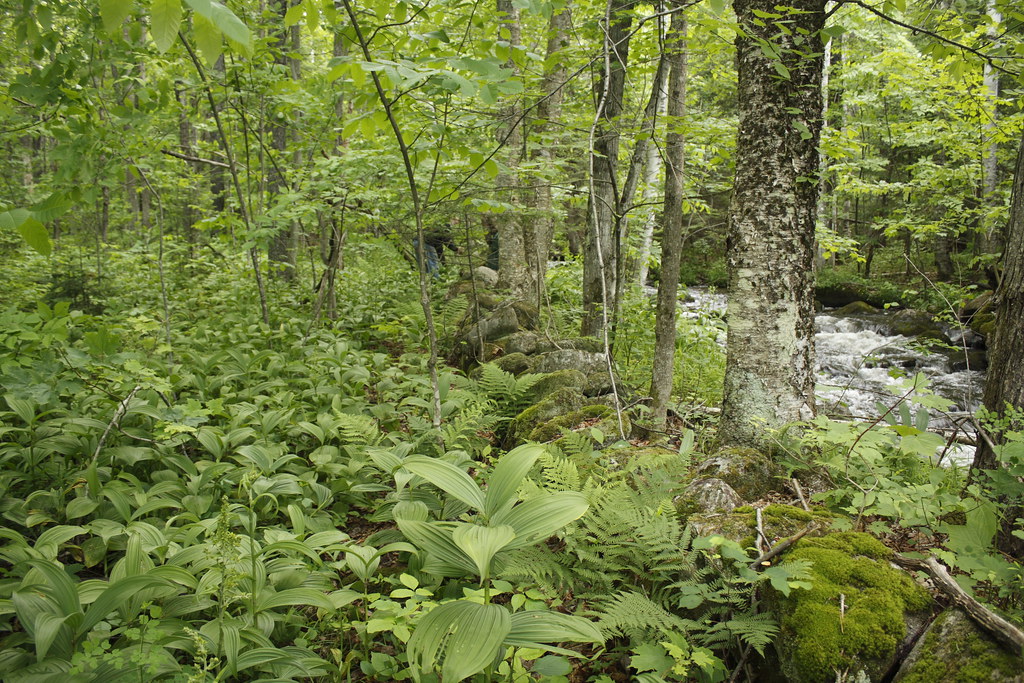
When our friend Arthur visited in early June, we took a short hike up May Brook. May Brook begins from May Pond and goes by the house, flowing into the beaver bog. It was a rather short hike because Arthur had to return to New Hampshire early. Arthur never wears shoes, so he hiked barefoot! He is so used to going barefoot that he never gets hurt. These are some of my favorite photos of this tramp we took.  All the photos will open large in a new window if you click on them.

Looking up the flume.
John and Arthur were standing at
the bottom of the flume in the photo above.

Old stone foundation of an old mill at the flume.
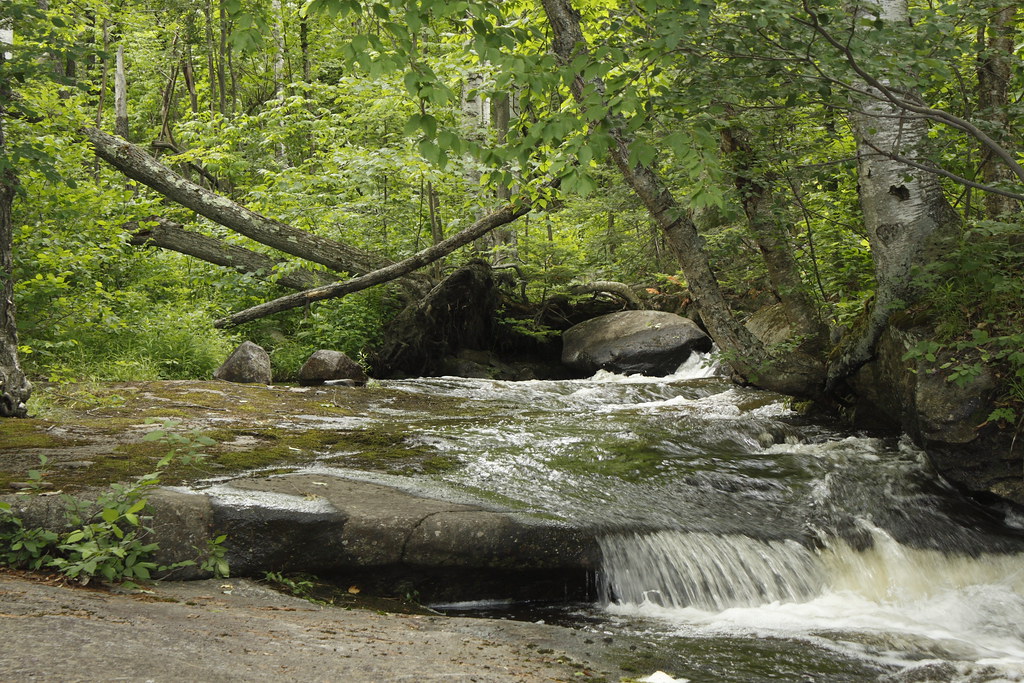
May Brook just before it slides down the flume.
A dam that kids made for a swimming hole
has been taken by beaver who built their own, bigger dam.
The swimming hole above the new beaver dam.
An ancient stone wall follows May Brook.
I played with shutter speeds to get the water effect I wanted.
John points out something to Arthur.
Another waterfall.
A little yellow spider eats a bug.
_/\_/\_

Sunday, April 26, 2009

Activity at Beaver Pond 5

We climbed down Willoughby Lake Road to look at the new beaver activity on pond 5 of May Brook. They have cut down trees on both sides of the brook, enlarged the dam, and even built a new lodge right on the river bank! Above you see the lodge from the side and below you see it from behind.

Here is the old mill house at the top of an abandoned human mill and cement dam that the beavers have dammed up. The water was high the weekend of April 4.

Above you see the pond above the millhouse as seen from the beaver lodge.

This photo above is of beaver teeth marks on a standing tree.
Below you see examples of trees that are no longer standing.


Above: the grove on the brook is being systematically logged by the beaver on both sides of the brook.

John found this folding ruler by the side of the new lodge. The ruler was metric. Which confirms what we all suspected: these are Canadian beaver!
Technorati Tags:
_/\_/\_

Wednesday, July 30, 2008

Matt & Wingnut at Stone Flume

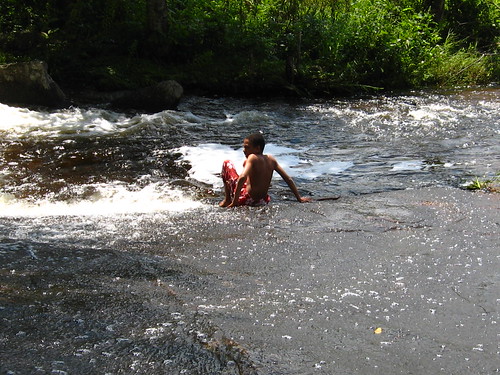
Photos by Matt of Wingnut enjoying sliding down the flume across the road on a hot summer day after a hike.

I learned the name of this flume from the Barton Town Map, page 5, found at the Town Clerk office. A gentleman named Barnard used to have a grist mill here. The ruins are still visible.

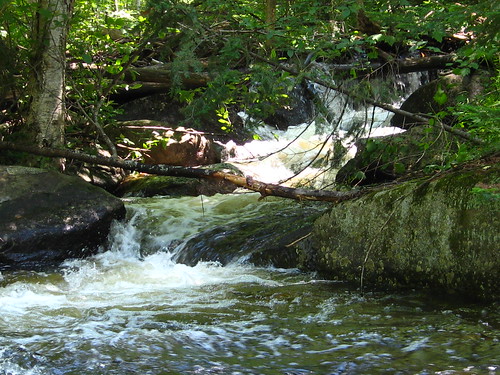
Above: May Brook as it enters the flume.
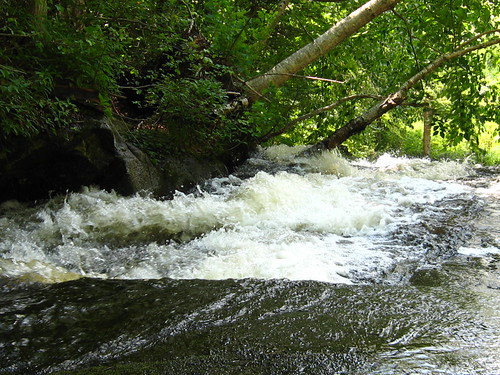
Below: May Brook as it starts down the flume.

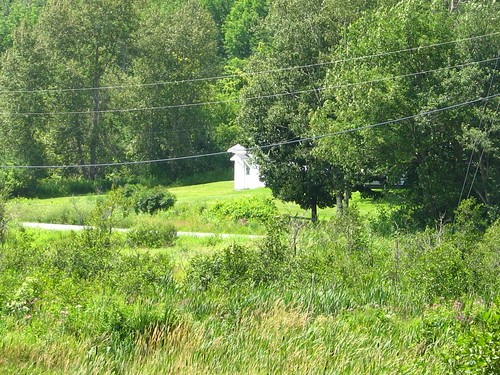
Below: my house as viewed from the flume with zoom lens.


And finally, a video that Matt made of the flume.


Technorati Tags:
_/\_/\_

Sunday, January 20, 2008

Book Review: The Geese of Beaver Bog by Bernd Heinrich

On April 22, 2007, I noticed a pair of nesting geese on the beaver ponds across the road. I was disappointed that they choose to nest here because I had been told they were aggressive and would make the ponds their own, chasing out other water fowl. That seemed to be confirmed when I saw that no mallards, wood ducks or mergansers nested here as they had before. I decided that I may as well take advantage of the presence of these birds and photograph their young when they hatched. These photos in this review were taken at 10x zoom.

I saw the three goslings soon after they hatched (but was never able to photograph them), but only for a day or two. The family quickly disappeared. I was concerned that they had been eaten by fox or coyote. Then in July, Wingnut and I went to Crystal Lake State Park to swim and there was my goose family. They had integrated into life at the park and were eating and pooping very well. The goslings were nearly as big as the parents.

The park staff was asking people to not feed the geese, but were ignored. A ranger told me that they had to clean fifty pounds of geese droppings a day and it was becoming tiresome. It was impossible to walk barefoot as we usually do. But the geese were pleasant, not aggressive, and enjoyable to observe, especially since I knew that they were "mine."

I have always wondered how the family got to Crystal Lake, a mile down the road and over at least one beaver dam and a huge falls at the Barton Waterworks. Why did they leave? Was the water at the beaver pond polluted in some way? Did the food supply in the ponds suddenly become scarce? Did the goslings walk or were they carried?

Heinrich wrote the amazingly personal and engaging book, The Geese of Beaver Bog, about his observations of a group of geese from 1997 - 2003. Heinrich is a professor of biology at the University of Vermont. I have read his book Mind of the Raven: Investigations and Adventures with Wolf-Birds (after observing ravens rolling in fresh snow) and have heard him talk about bees and other topics on Vermont Public Radio and National Public Radio.

This book is a wonderful resource for me. Heinrich's experiences with his geese and beaver pond are remarkably similar to mine. We are both in Vermont, so the plants and animals are the same, and the bird populations are similar. Reading this book was like sharing experiences with a friend who doesn't only know the pond, but understands the excitement and sadness that I see here. He would feel as badly as I did when a crow stole a young redwing blackbird. Or when I heard the killing of a deer one night. He would chuckle at the scene of the coyote meeting a beaver face to face on the ice.

Canadian geese are precocial: they are able to be independent after hatching. The goslings are not fed by the parents. They mimic the parent's behavior and quickly learn what wisdom they need to continue surviving. And the parents do take the goslings to other ponds and lakes after hatching. The beaver pond, with its mink, weasels, foxes and coyotes, is not safe for the youngsters. Heinrich's geese walked two miles through cow pastures to a new pond. Mine walked through the woods where there were many dangers from predators that could not be easily seen by the parents.

Geese will try to return to nest where they are born. So I will most likely be seeing geese here for some years to come. Geese pairs do not necessarily mate for life. They tend to be monogamous but life interferes with our plans: mates are killed, or are chased away. I learned about different groups of geese in North America ("races") and about their migration.

We tend to categorize animals as cute, smart, companions, pests, killers, unimportant — there is no end to how we judge which animals are worthy of living. But once we understand their complex behaviors and how they interact, we begin to identify with them and judge them worthy of living on earth with us. We are now concerned about the survival of mountain gorillas, wolves and other animals because of books and movies that personalize their lives. The Geese of Beaver Bog personalized the natural lives of geese for me. It demystified their behaviors, asked questions that I would like answered, and removed the "pest" stigma from them.

I believed geese were nuisances but now that I know them better, I will protect their right to survive in the beaver ponds. I won't be hoping that they never return. I will be re-reading this book in the spring so that I am prepared to better observe, and enjoy, the behaviors of the geese.

All of these photos will open, full-size, in a new window when clicked.


Technorati Tags:
_/\_/\_