Showing posts with label Missisquoi River. Show all posts

Sunday, August 03, 2008

Orleans County Quests: Troy River Road Quest (Wingnut Photos)

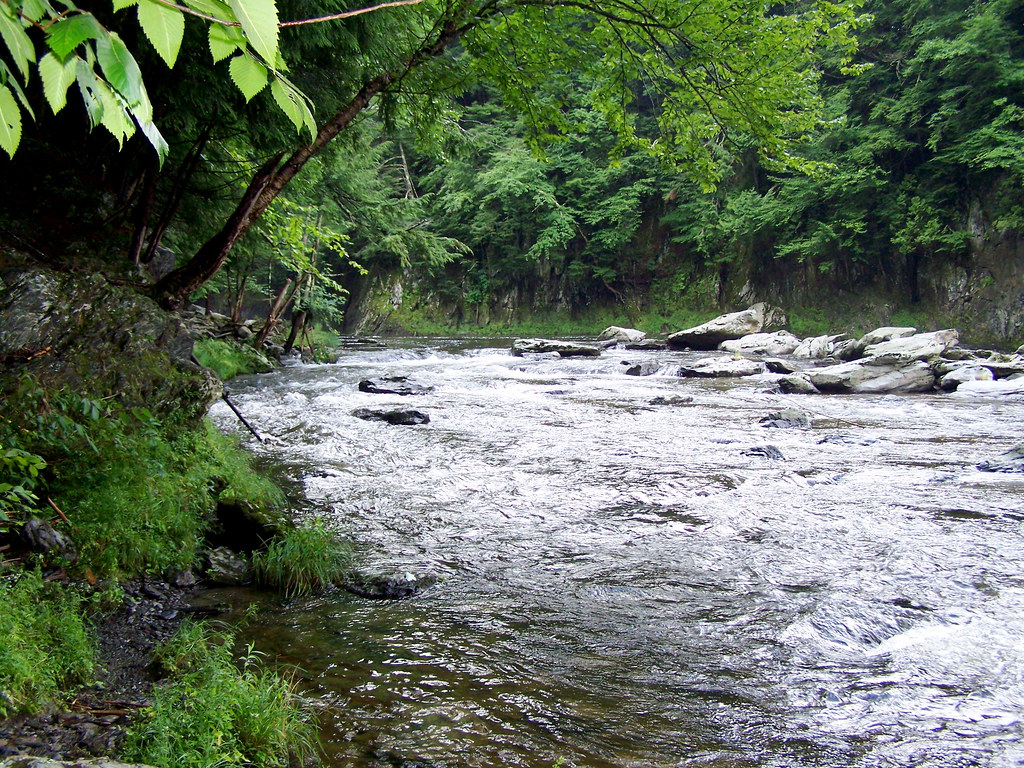
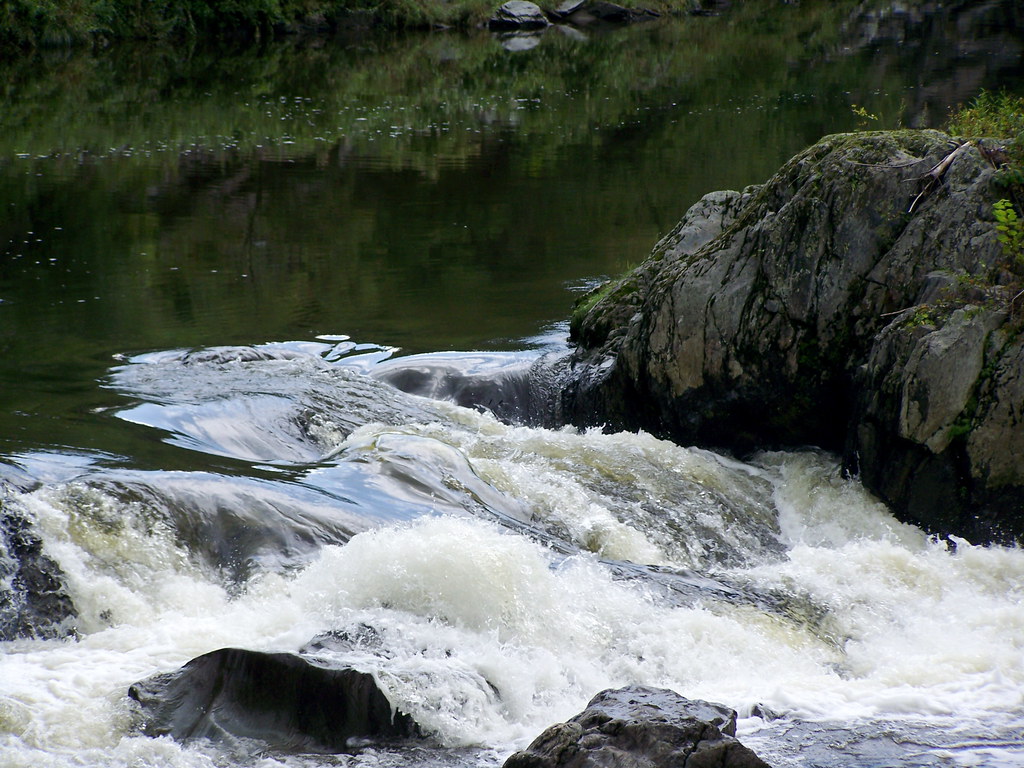
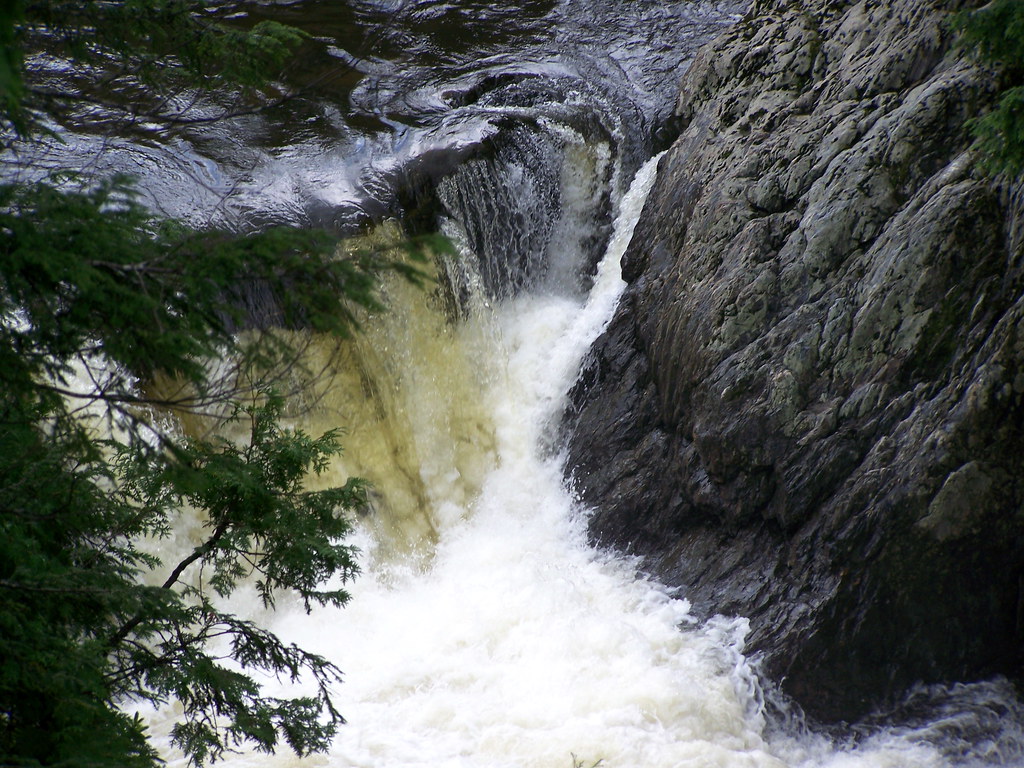
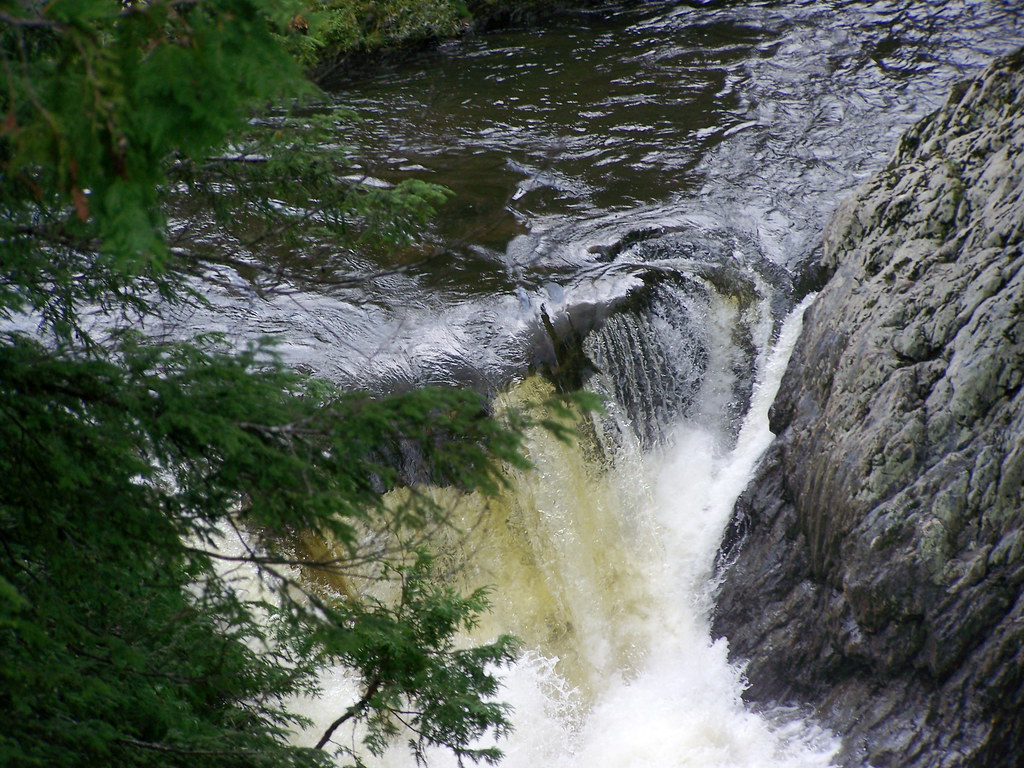
As the Missisquoi River flows north to Canada it comes to an 80 foot gorge in North Troy. This is where Big Falls State Park is and was the site for our Friday quest. Wingnut took the trail down the gorge to the river to find the treasure box, which was not there. Above and below you see the rapids at the top of the gorge.
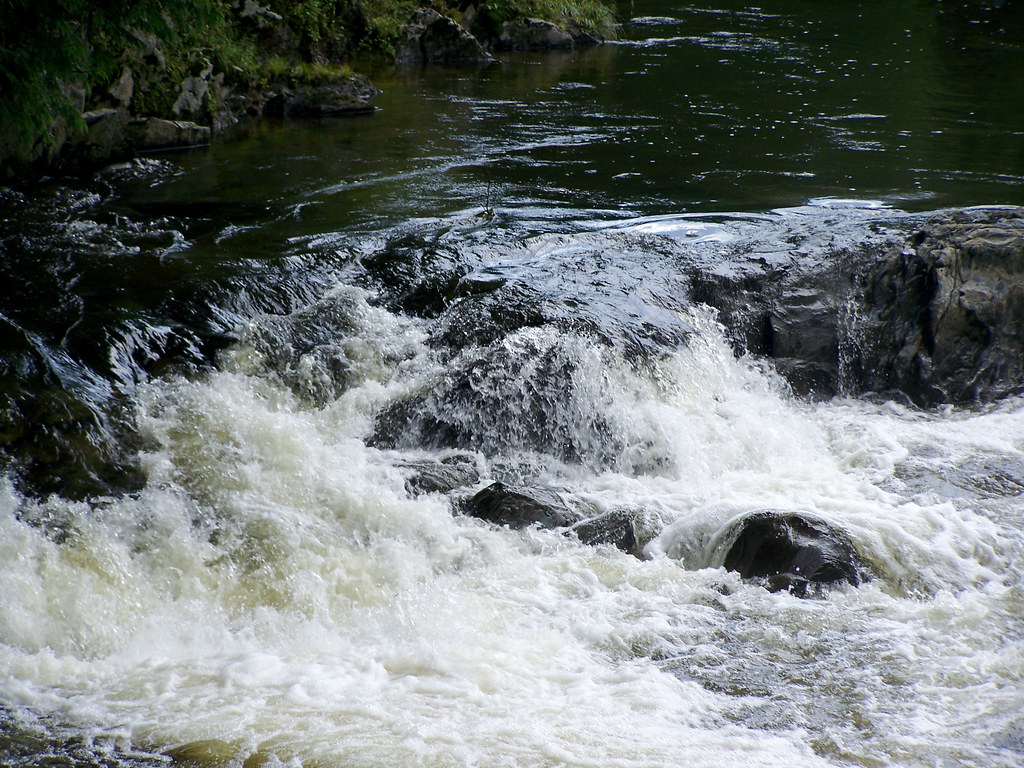
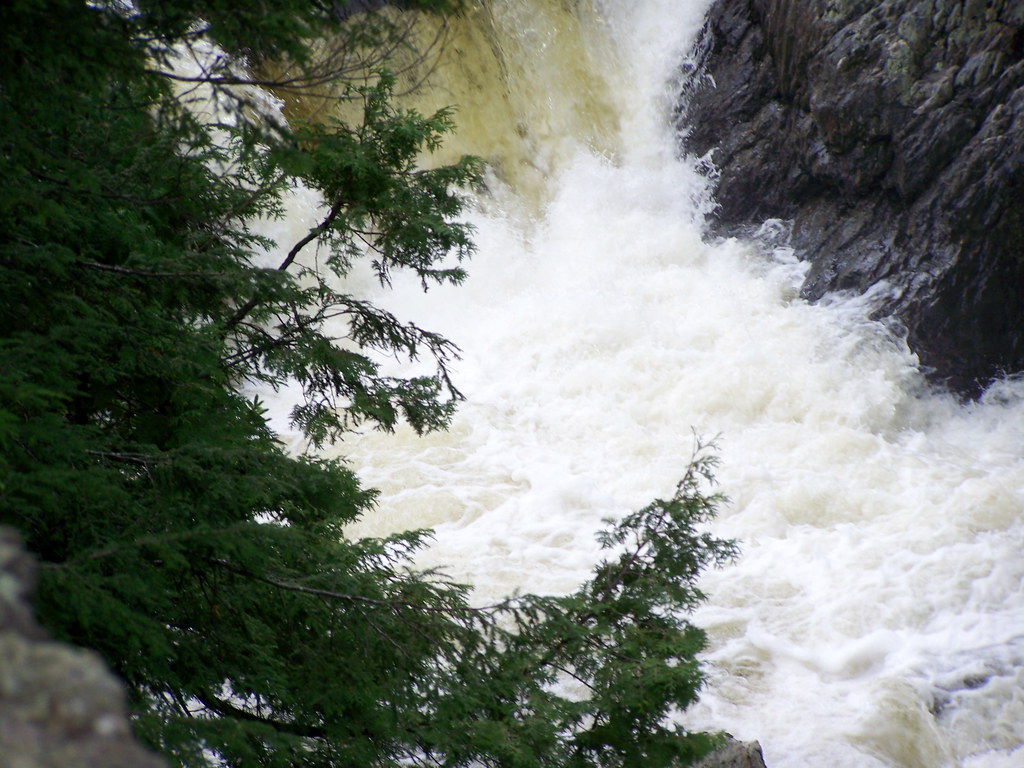

Here are Wingnut's photos of the falls. There is one short waterfall and then a large one. I have never seen the falls with my own eyes because of the dangerous cliff that you stand on to view them and my fear of heights. Wingnut's photos are my first glimpse of the falls.

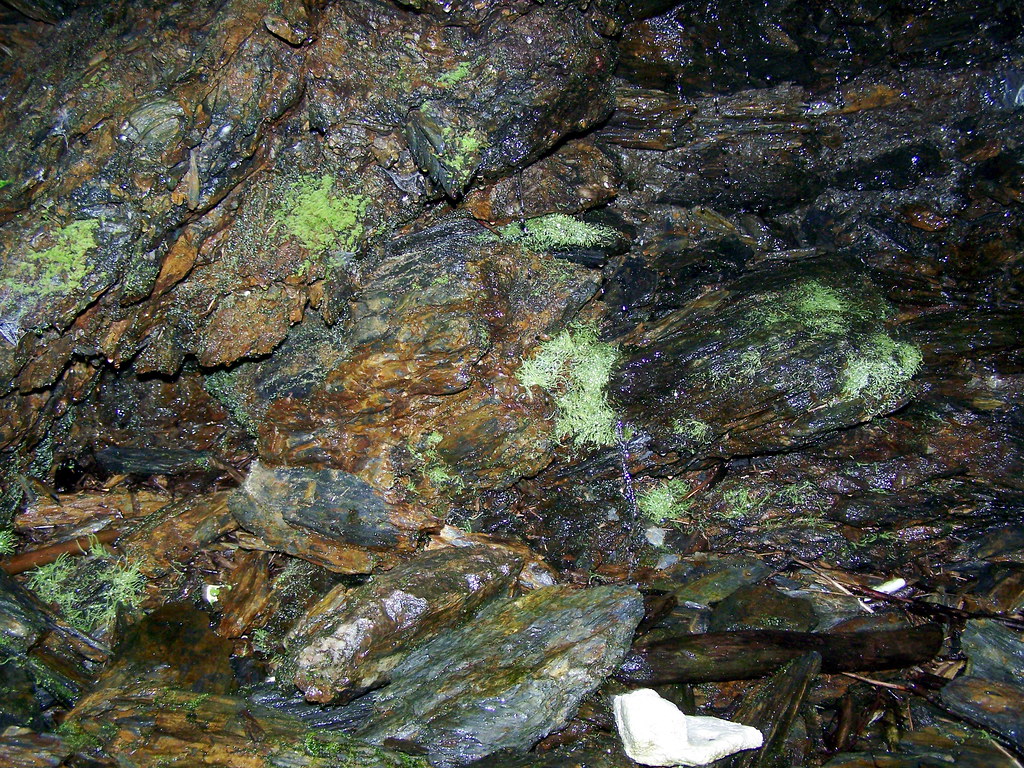
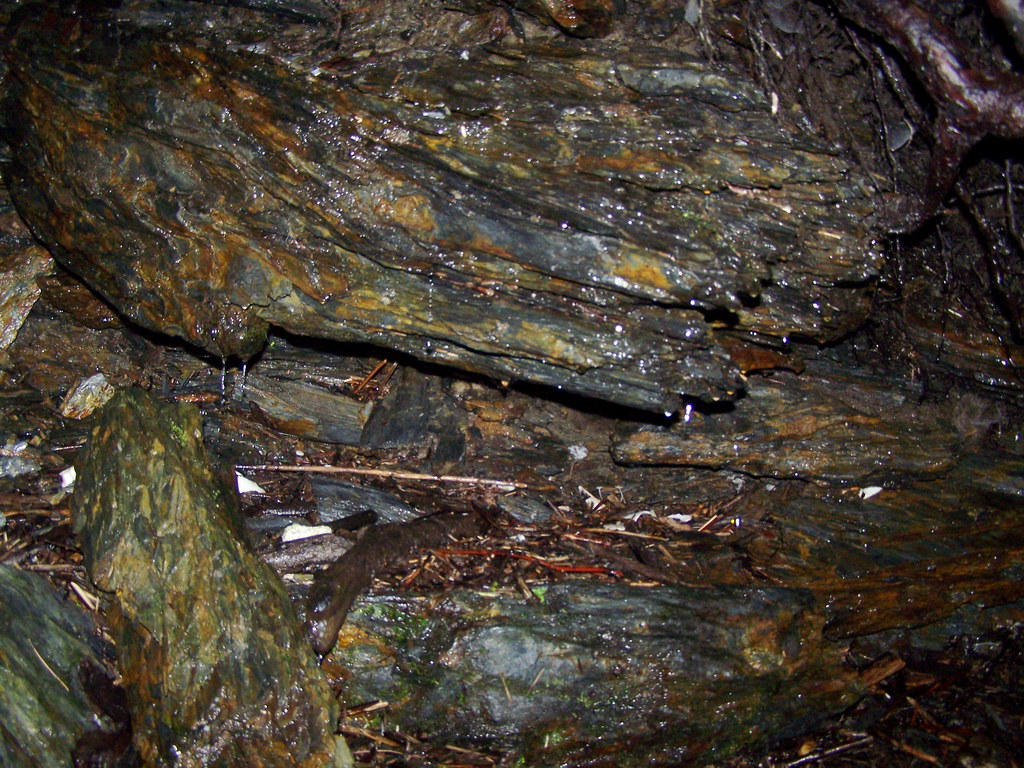
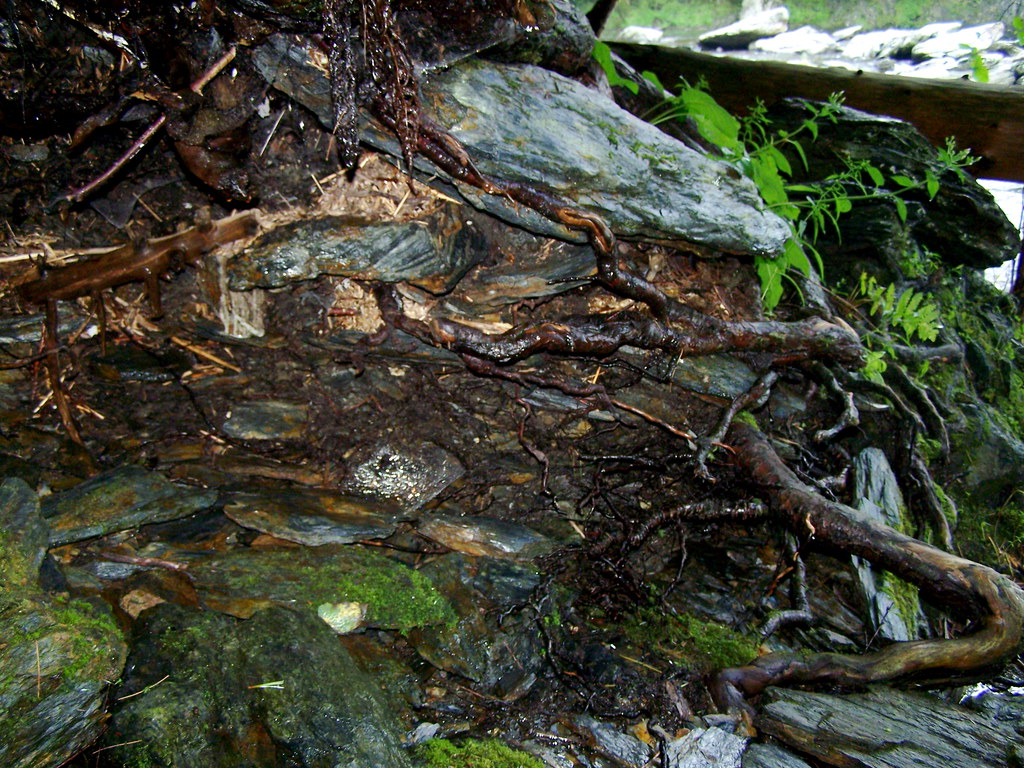
Below are some photos of the various caves in which Matt and Wingnut searched for the treasure box:


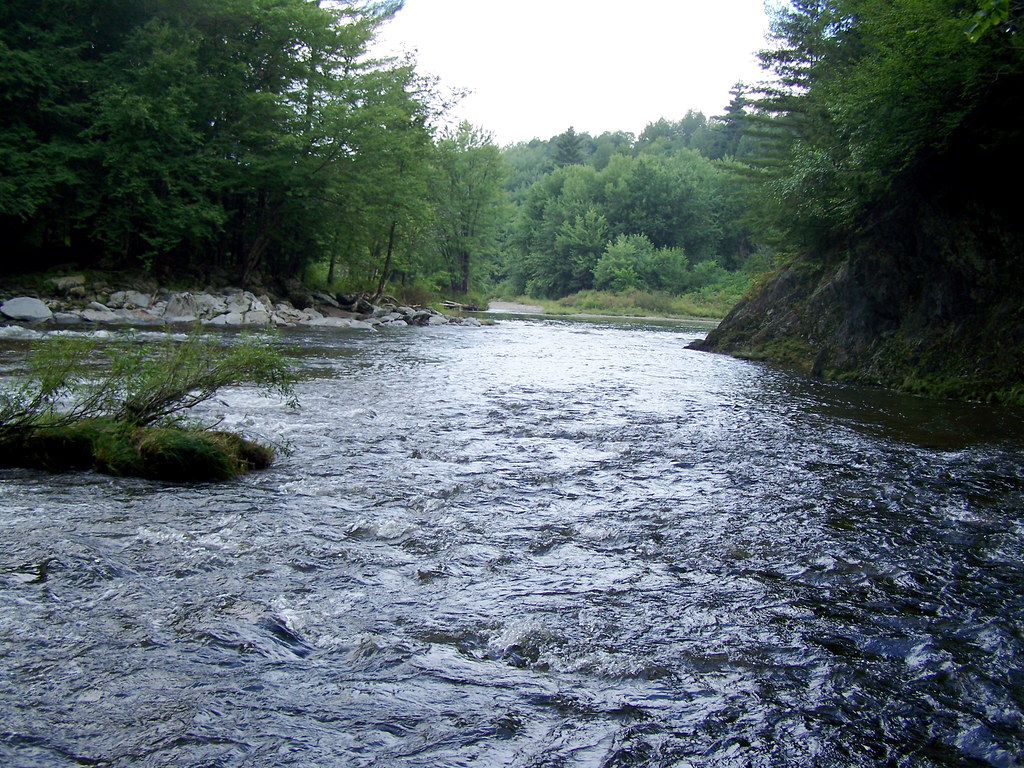
And here are photos of the Missisquoi River at the bottom of the gorge:


Big Falls State Park: Sixteen acres, Town of Troy. This site includes the largest undammed cascade and gorge remaining on a major Vermont river. The area includes big old hemlock and white pine trees. The plant life in this Natural Area is diverse and includes several uncommon species. The falls are a popular recreation attraction (swimming, fishing and viewing) as the site is readily accessible from Vermont Route 105. (Vermont Department of Forests, Parks and Recreation, Lands Administration Division).

Down the road is the The River Road Bridge (also called the Schoolhouse Bridge), built in 1910, which carries Vielleux Road across the Missisquoi River. Lattice work truss.

Fall Guy, an article about waterfalls in Vermont.

More photos can be seen at my Barton Daily Photo blog — Troy River Road Quest
Also, visit my Flickr Troy River Road Quest set.

Technorati Tags:
_/\_/\_

Monday, May 19, 2008

Heads or Tails: Pieces of Twigs Are Home for Caddisflies

These are all examples of caddisflies, collected during an aquatic insect and crustacean field trip on the Missisquoi River by our fifth and sixth graders. You can see the caddisfly emerging from their homes of pieces of twigs, plants and silk that they make. 

Interestingly, caddisflies and stoneflies are signs that the water in which they live is very clean.

Each case that the individual flies make is unique.

This is one of the most fascinating bugs I have ever learned about.

Caddisflies are popular bait for trout fishing.


These photos will open full-sized in a new window when clicked.
To see more participants click or Heads or Tails
Thank you so much for visiting.

Technorati Tags:

_/\_/\_

Saturday, May 10, 2008

Photo Hunters: Another Unidentified Plant


This photo will open full-size in a new window when clicked.
Thank you for visiting.
Click to view more participants.

Seen growing near river in open sun and sand. Do you know what this is?

This is the fertile stem of Field Horsetail (Equisetum arvense). It is a problem in pastures and can cause illness in lifestock. I would like to thank Wildlife Gardener for help with the identification.

_/\_/\_

Monday, January 28, 2008

Digital Photography Assignment 1.2: Scenics: Missisquoi River

I was excited when I took these photos. I thought they would be beautiful. Yet I never, ever, noticed that I was in shadow. None of these are any good. But I'm not going to have the time to return to the site and retake this set. I will submit them in the assignment. It'll be a good example of what to look out for. Why didn't I notice this?

All photos will open in a new window, full-sized, when clicked.


Technorati Tags:
_/\_/\_

Monday, January 21, 2008

Heads or Tails: Hoarfrost

On January 10th, I took photos of what I thought was wind blown ice formations on the Missisquoi River during the January thaw. I was wrong. What I saw is more interesting than that. It is surface hoar, a type of hoarfrost. You can see it in the above photo at the edges of the snow. In the photo below, it is in the foreground and looks like diamonds in the sun.

The Guide to Frost at SnowCrystals.com describes surface hoar:
The most common form of hoarfrost is called surface hoar. This consists of ice crystals that form on top of snow banks, usually overnight. The sparkles you see coming from a field of snow are often reflections off the facets of surface hoar crystals.

Surface hoar typically forms when a snowbank warms up during the day and is then cooled again overnight. The night air cools the surface of the snowbank more than the inside, so that water can evaporate from inside the snowbank and recrystalize on the surface. By morning the snowbank is covered with a layer of faceted ice crystals, and they can be quite large. These usually melt again once the sun comes up, so the best time to find surface hoar is early in the morning.

Surface hoar is a delight for our eyes.

To see more Heads or Tails participants, visit Skittles
or click .
Thank you so much for visiting.

Thursday, January 10, 2008

January Thaw On The Missisquoi River

In my mind, I can hear the redwing black birds. In four or five months they will return with their wonderful raucous calls, and perch on these cattails.
The Missisquoi River ice jam, caused by the January thaw, happened early before dawn on Wednesday. It wasn't a big thing and I missed the photos. But the jams caused the river to flood the meadows along the banks. The very high winds and the colder air whipped the flood water and froze it, causing these spectacular ice formations in the fields. UPDATE: this is hoarfrost. Click here for more information.

It was as if the meadows were full of diamonds standing on end, glittering in today's cold sun. The photo above is a blown-up section of the photo below. Please take the time to click and view it full size in a new window.

Technorati Tags:
_/\_/\_

Friday, April 06, 2007

Good Friday Confusion

4/6/07: A burned-out cabin on the River Road, North Troy.
The Missisquoi River is behind.

I was on my break when VPR was playing Bach's St. Matthew's Passion. I confused the portion I heard with the Easter section of the Messiah and became disoriented. It was snowing, cold and windy. The roads were covered with packed snow and it was blowing through the air as if it were mid-winter. Messiah is traditionally, now, Christmas music, and I hear it every Christmas. What was the date? Very quickly I realized that the music was clearly Bach and not Handel. I also realized how important context is to me and how strongly I weave seemingly unrelated things into my perceptions and expectations of the world.

_/\_/\_

Monday, March 19, 2007

Missisquoi Ice Jam and Doctors

A small ice jam on the Missisquoi River at North Troy, Vermont:

See that round hold in the photo? It appears as a dark area in the middle of the photo. Here it is again, closer:

And closer still:

We were let out of work half an hour early on Friday so I took advantage of the time to take these photos. There were two ice jams that crawled over Rt 105 last week. They looked like mini-glaciers! Then the big state plows come and push them aside.

The following info is from MRBA:
With headwaters in Lowell, VT, the Missisquoi River flows north into Quebec where the Missisquoi Nord joins the main stem at Highwater, QC; it then returns to Vermont at East Richford and flows west to drain in Missisquoi Bay.

In addition to draining the Missisquoi River’s 88-mile course and its over 50-miles of tributaries (Black Creek, Trout River, the Tyler Branch, and Mud Creek), Missisquoi Bay also drains the Pike and Rock Rivers.
The doctor said that most likely I am just fine! I can't believe it. I cried in gratitude. The girls were right all along. Last week, Anna sent me info about women's health that was comforting but I was still scared. I still have to go back in three weeks and have more tests, but I trust this doctor and his decades of experience with women.

But I am in a lot of pain. A lot. So I am going to bed now.

_/\_/\_