Saturday, May 27, 2023

Cake Bugs

My new Nordic Ware Backyard Bugs cake pan

My Andrew gave me the new Nordic Ware Backyard Bugs cake pan for my birthday and we've been having fun with it ever since. He even included two Ghirardelli cake mixes and Baker's Joy spray. He sent it to Amy's house where she unwrapped it, baked bugs with it with her own cake recipes, and wrapped it up again.

A ganache coated butterfly

This past week at school saw scheduling changes and half days, so I asked the high school students to bake bugs for the pre-K and K boys for their bug unit. They did.

High school kids baked bugs for me from cake mixes.

I bought tubes of cake gel for decorating, thinking that small hands and developing coordination would work better with the tubes. I can't pipe icing, so I didn't expect them to! Do you know how expensive the gel is? $3 a tube! What I failed to remember was that small children at that age think that if a small amount is good, then all of it is better. We quickly had to ration gel amounts so that we could finish decorating all 24 bug cakes.

Yesterday, despite having only 30 minutes for class, the boys managed to decorate and distribute cake bugs to all of the staff and loved eating their own creations.

Some of their creations:


Jody and I have many plans for this pan this summer. I'm going to use different recipes (and the Ghiradelli mixes) and color up some buttercream. Maybe I'll even learn how to pipe icing! I'll try different colors of sprinkles, too. Happy days are coming!

Wednesday, May 24, 2023

Kindergarten Bug Hunts

Genus Melanolophia 
with green eyes!

I caved on Monday and made each of the six pre-K and K boys (there are only boys in that class) their own bug collection container. I say "caved" because having bug hunts can be a problem. Little kids love bugs and get overly excited. Also, with my disability, I cannot take them out like in the good old days and must rely on other staff for that. But I could not resist their enthusiasm. They were amazed as they watched me create the containers, yet all I did was heat up a paper clip and poke air holes in the lid of plastic deli containers that I had from an old fossil unit. Then I wrote each their names on their own container with a Sharpie. The school is very rural, at the edge of the woods where there are bear and deer. We reviewed the rules for going outside, I told them to move slowly and gently (that is hard for boys this age!) and we let them out the classroom door. They returned 10 minutes later with the beautiful moth shown above . . . and . . .

Pyractomena larva


. . . a baby firefly! I was thrilled. I have never seen one before. Today we did a mini-lesson on fireflies to celebrate the find. 

I showed them a tick that I took off of Lucy last night and froze for them.

American Dog Tick
(Dermacentor variabilis)

I am so pleased we did a few tick lessons.
One student already found a tick on himself
and knew exactly what to do.

The boys taking turns looking at the tick.

The other creatures they found were: 

Moth cocoon

Two unidentified ground beetles
(Genus Pterostichus)


Winter Firefly (Ellychnia corrusca)

The last firefly is probably the same species as the larva from yesterday and was shown to me after class when three of the boys ran (for real), yelling my name (for real), into my next class in another room—so excited that nobody could stop them. My older math students know these little kids and were softly chuckling and waited very patiently for me to tell them what their bug was and photograph it. The K teacher is probably cursing me under her breath.  😉

We're having a great time. The best time. It's a shame that we will close for summer in four weeks now. I can't wait to see what bugs they will have found for us tomorrow morning.

All bugs are released safely after inspection and photos.
_/\_/\_

Saturday, May 13, 2023

Buggier Days

Common Bed Bug (Cimex lectularius)

I am frequently gifted bugs and sometimes they are not welcome bugs. We find all sorts of things at school. Staff found this bed bug and asked me to confirm their identification of it. Proper action has been taken at school. 

I brought the bed bug home and euthanized it in the freezer and was going to photograph it here. But I had a brainstorm and took it back to school and my pre-K/K class observed it under magnifying lenses. They were then told to draw and color what they observed (we have been learning how to make journal drawings of insects, so this was perfect). I photographed it. We compared it to photos of bed bugs on iNaturalist and the class agreed that it was a bed bug. My job was done! It was a great day . . . except now they want a bug every day! I suggested that they collect what they see (no killing allowed unless it is on our "bad bug" list). I handed out collection containers. We spent the rest of the class reading about the bug and discussed the symptoms of their bites and the dangers of them.

Our bad bug list includes those bugs, in Vermont, that are dangerous to human health: mosquitoes, bed bugs, lice, ticks, and black flies (which usually do not harm us like the others can but I hate them passionately). 

Common Bed Bug (Cimex lectularius)

Common Bed Bug (Cimex lectularius)

I was so pleased to see such realistic depictions in such young children.


The very next morning, we investigated a Pale Green Assassin Bug nymph found at a student's home. The kids were wicked happy. They used magnifying glasses, felt it crawl on their hands, and released it safely out the back door. I was very happy because I seldom see assassin bugs in the wild. And a nymph? Priceless.

Nymph of Pale Green Assassin Bug (Zelus luridus)

Finally, on Thursday, we had an earwig. They are pesky bugs but not dangerous to our health. It was found in school and all the staff were surprised that it was found so early in the season: we usually find them in August and September. It certainly has not been hot enough for us to consider they would be around. We followed the same format: magnifying lenses, holding it, releasing it, and a journal drawing followed by reading and discussion.

European Earwig (Forficula auricularia)
I am confident that this is a female.

I am now developing a Bad Bug unit for school and have ordered tick handouts from the state for each child in every class. I realized that we spend so much time with pretty bugs—the Monarchs, the bees—that we ignore the true dangers that some bugs hold for us. It's important that the kids have this information. With sunshine, longer days, a tiny bit of warmth, colors, and now emerging bugs, the days have become very pleasant.

_/\_/\_

Sunday, April 30, 2023

First Spring Hymenoptera

It's a bee. 

Update: it is a Small Carpenter Bee (Genus Ceratina).

When Lucy and I went outside to check our daffodils yesterday, I noticed an insect or two crawling in this bloom. It's a bee! My instinct, such as it is, says it is a masked bee (see cropped version below), but they are not documented to be out this early. Nomad bees are out this early, though, so it may be that. I gave a masked bee identification to iNaturalist, though, because the bee people have been swarming all over bee photos all winter making sure that IDs are correct. They will come across this and if it is wrong, they will quickly correct it.

Masked bee or nomad?
Both are native.


Last week I sat outside at the school's picnic table and beheld a cold fly trying to warm itself in the sun. The antennae are wrong for the order Diptera (flies), as were the head, eyes and wings. The venation and the antennal flagellomeres led me to the order Hymenoptera (wasps, bees, and ants), which led me to sawflies, which led me to the Family Tenthredinidae — Common Sawflies. I checked the Vermont phenology for sawflies and have concluded, rightly or wrongly, that this is a male Dolerus unicolor. No one on iNat pays too much attention to sawflies, though, so I don't know when I will be affirmed—if I ever am. And that's a shame. Sawflies have become one of my favorite families. 

Perhaps Dolerus unicolor


That is Spring in northern Vermont as of this date. But where there is one bug there are thousands more! We made it through the winter.
😂
_/\_/\_

Thursday, April 27, 2023

Skywatch Friday: Spring in Vermont

Seymour Lake, Morgan, Vermont
Noon
Thursday, April 27, 2023

I think I have made it through winter. There have been many misadventures and much bad weather. My car lost its brakes twice, I had to be pulled out of a ditch that I went into when pulling off the road during a whiteout. The new furnace is wonderful but the times we live in require $1,000 fuel deliveries. I don't know how I got through it all. But I am optimistic: there probably won't be anymore snow. I am even going to try scheduling my summer tires very soon (the first of May is traditionally when we all switch off our winter tires). 

There have been very few signs of spring at my house. There are unidentified small birds flitting about. Lucy says she has heard owls hooting in the woods. I have heard what I call the summer song of the chickadees and seen crows moving back to the woods from the village, where they like to overwinter. My apple orchard still has not bloomed, but it's probably still too early. The pussywillows, below, finally appeared April 18. Jody has photographed a queen bumble searching for a nesting place. I have started going back to church in person, and Jody and I even went to a restaurant for breakfast like the pre-COVID days. We ate outside. But we were out.

Pussywillow in full bloom on April 18.

Today at Seymour Lake in Morgan, I saw the season's first loons! A pair of them. From the top photo of the lake you can see how dark it was at noon when I saw them. So my photos are simply awful but they do document that I saw the birds. They are devilishly hard birds to photograph because they dive so deep and swim so far underwater. 


I'm tired of reading, bread making, movies and TV. I need life! This is the first day that I have had anything worthwhile to post since February vacation (back when I wasn't tired of making bread). I hope all of you are enjoying a spring full of life, bird song, and insect buzzes.

Skywatch Friday

_/\_/\_

Tuesday, March 07, 2023

Vacation Wrap-up


I saw this Asian lady beetle crawling on a cup and figured I would take advantage of the situation and see how good a video I could make on my phone. Then I made these GIFs. I want to get up much tighter for bug videos. I have to practice my skills for summer. I enjoy watching those little legs with their flat feet pumping along.


I've been reading, but not enough. TV has gotten in my way. What a bad habit! But the kids and I had a couple of watch parties with movies and a baking show. And we cooked and baked, too. 

Shells and sauce with sweet Italian sausage

I made a lot of bread, but only simple sandwich loaves.

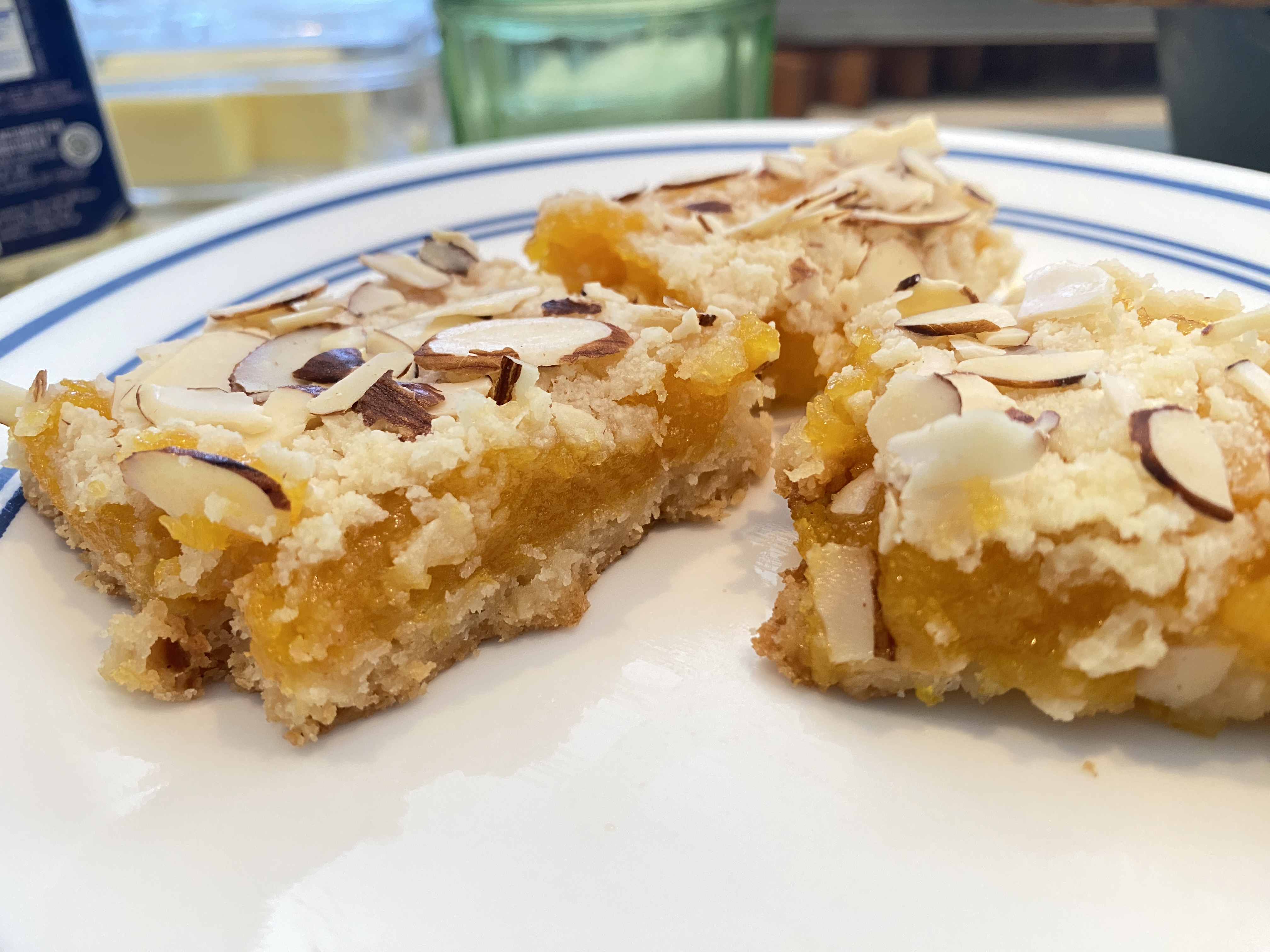
Amy and I made apricot bars:
I did the puree and Amy did the shortbread crust.


And of course, it snowed. It snowed for 8 out of 10 days. But if you count light snow showers, it snowed 10 out of 10 days. I have not left the house once. Amy did, though, and often.

Amy's house after shoveling the roof.

Dori keeps an eye on the village sidewalk plow.
Dori watches over all activity on her road.
00:41

I did my taxes and re-organized and re-created my iTunes library on Apple Music. Lucy has been happy I'm home. But the cats? Just trouble with the plants, their food, their toys, their nonsense. That's just how cats are.

Happy Poppy says "Oh, hai!"

Basically, it was a boring week. I think I needed that—time to catch my breath. 

_/\_/\_

Monday, March 06, 2023

The Collapse of Insects


"Species in the animal kingdom can be split into vertebrates and invertebrates."

In The Collapse of Insects, I learned that the entire population of insects is decreasing by 2% per year. Not much to worry about given that there are billions of insects in the world. Right? Wrong. Yet many scientists laughed off the warning last year as alarmist in an age of alarmism. The population may be declining, but it could be caused by so many variables, and there are so many bugs. Not to worry.

I remember as a child I would look closely at the hundreds of insects in the grill of my father's huge car. I would wonder how the bugs—the moths, beetles, dragonflies, butterflies, and all the others—of the world could survive this slaughter when multiplied by all of the cars the world over. I absolutely hated having to wash dead insects from the windshield. It wasn't just the problem of hating bug goo. It was the lives I was just wiping away.

"With over 387,000 species, Beetles make up around 24% of all animal species."

I have been re-thinking my childish thoughts and pondering the scientists of denial. I have concluded that I was right and they are wrong. I wanted to believe them, actually. There could be a little spark of optimism in our freaky world. But there isn't. 

"The beetle order can then be divided into families,
with rove beetles and weevils making up the two largest families."

I lifted these graphics and text from the article for two reasons. The most important reason is that I did not want to lose the information in my computer data swamp. The second reason is that somebody that reads this may also find them interesting. They don't just illustrate numbers. They show how complex the world is. Why are there at least a million more species of insects than birds? It's the old predator/prey thing: you need more prey than predators in order to keep the predators alive. If you ask why? to many of these numbers you could become overwhelmed by how important insects are to the world. They are the beating heart of our planet. Would life on the planet continue without humans? Yes. Without insects? No.

"There are more species in the two most diverse beetle
families than in all vertebrate classes."

The article nicely explains how this catastrophe favors the non-native insects we have imported deliberately or not deliberately: they will do better than the native moths, butterflies and beetles. The old joke is that the cockroach will survive World War III, even a nuclear holocaust. Insects like cockroaches, or other "pests," have become generalized eaters. They have so many choices of food that they can survive. What about our insects that only feed on nectar? Or on one species of another insect? Or whose larvae can only grow and develop on one species of plant? In one type of biome? Well, they will be gone first. Climate change is changing the time that plants bloom and provide food for so many insects. They bloom so early that the insects hatch into a world with no food. The survivors may survive so late into the season that they are fooled by warm autumns and are not ready for winter. Yeah, it's a disaster. 

The only thing I can do to mitigate this is to talk about it with others. And I can vote. I fear those are the only things left for ordinary citizens to do.


"There are more longhorn beetle species than bird species."

The numbers are incomprehensible. How many hundreds of years will it take for billions of bugs to all become extinct? I made a spreadsheet for 100 bugs. You can think of 100 bugs of one species only or of different species; but you can't think 100 species. That would be implausible: there would be no other bug of the species to mate with.


"There are about the same number of ladybug species as mammal species."

After 20 years, there are only 66 of the individuals left of the original 100. Of course, none of my original 100 died from predators, bad weather, disease, or human activity. Also, they did not have any offspring. But the statement said "2% of the population," which includes offspring.

"There are more weevil species than fish species."

My spreadsheet after 20 years: 


Year 115 brings me to single digit population:


If there were 50 species in the original 100 bugs, all bugs are gone by now. Many species died before year 115 because of starvation or low numbers when the count began. Don't forget the species that can only survive because their larvae parasitize other insects. They were gone long before, also. 

Just for laughs, I continued the spreadsheet to population zero. It is meaningless because the insects will hit zero way before this linear progression. The population seems to stay the same because of rounding, but it was continuously dropping. 


I'm not going to extrapolate this pitiful spreadsheet to the real world. It did its job and told me that things will get bad very quickly. 

Talk to others.
Vote. 
_/\_/\_