Showing posts with label geometridae. Show all posts

Saturday, June 11, 2011

Some Flora and Fauna

White-spotted Sable Moth (Anania funebris glomeralis)-1.jpg
White-spotted Sable Moth (Anania funebris glomeralis)

American Toad (Anaxyrus americanus)-6.jpg
American Toad (Anaxyrus americanus)

True Forget-me-nots (Myosotis scorpioides)-6.jpg
True Forget-me-nots (Myosotis scorpioides)

Photographed at the Brick Kingdom, May 28, 2011

True Forget-me-nots (Myosotis scorpioides)-3.jpg

Question Mark Butterfly (Polygonia interrogationis)-7.jpg
Question Mark Butterfly (Polygonia interrogationis)

Tamarack Tree-2.jpg
(Larix laricina)

Tamarack-2.jpg

Dandelion (Taraxacum officinale)-7.jpg
Dandelion (Taraxacum officinale)

Geometer Moth-3.jpg
Geometer Moth (Genus Geometridae)

_/\_/\_

Tuesday, November 16, 2010

Some Random Shots of Summer

Day lily
One of our day lilies

Day lily (1)
I am fascinated by the stigma

geometer moth (3)
A geometer moth

another brown geometer moth (2)
Another, different, brown geometer moth

Bumblebee on red clover (3)
Bumblebee on red clover

Flash flood damage
Five-toed raccoon track and tiny, round Zorro the Cat
tracks in the mud after a flash flood.

Little zinnia (1)
Dwarf zinnia that Ironman successfully planted

Little zinnia (3)
They bloomed continuously until the first heavy frost in September.

Carolina grasshopper (2)
A Carolina grasshopper

Yellow woolly bear caterpillar

HELP. . . Nashville warbler?
An unidentified warbler

Question Mark Butterfly (11)
Question Mark Butterfly

_/\_/\_

Saturday, November 13, 2010

Larvae Match-up Part 2

Last week, I showed the larvae and moths or butterflies of eight different species. I have five more tonight. What I find surprising (but probably shouldn't) is that I have photographs of some identified moths that I cannot find photos of the larvae.

Like before, each larvae / moth set has at least one photograph by me. The other photos are credited and linked so that you can find more information and different photos. All links will open in a new window or tab. So here we go!

Waved Sphinx Moth
Ceratomia undulosa

Larva (photo: bugguide.net)

Adult (photo: this past summer)

Waved sphinx moth (5) - Copy


Mottled Prominent Moth
Macrurocampa marthesia

Larva (photo: bugguide.net)

Adult (photo: on the garage this summer)

Mottled Prominent moth - Copy

Pearl Crescent Butterfly
Phyciodes tharos

Larva (photo: bugguide.net)

Adult (photo taken by me in Sutton, New Hampshire this past summer)

Pearl Crescent Butterfly  3

Virginia Ctenucha Moth
Ctenucha virginica

Larva (photo: bugguide.net)

Adult (photo: this past summer on my dirty garage window)

Virginia Ctenucha Moth (4)

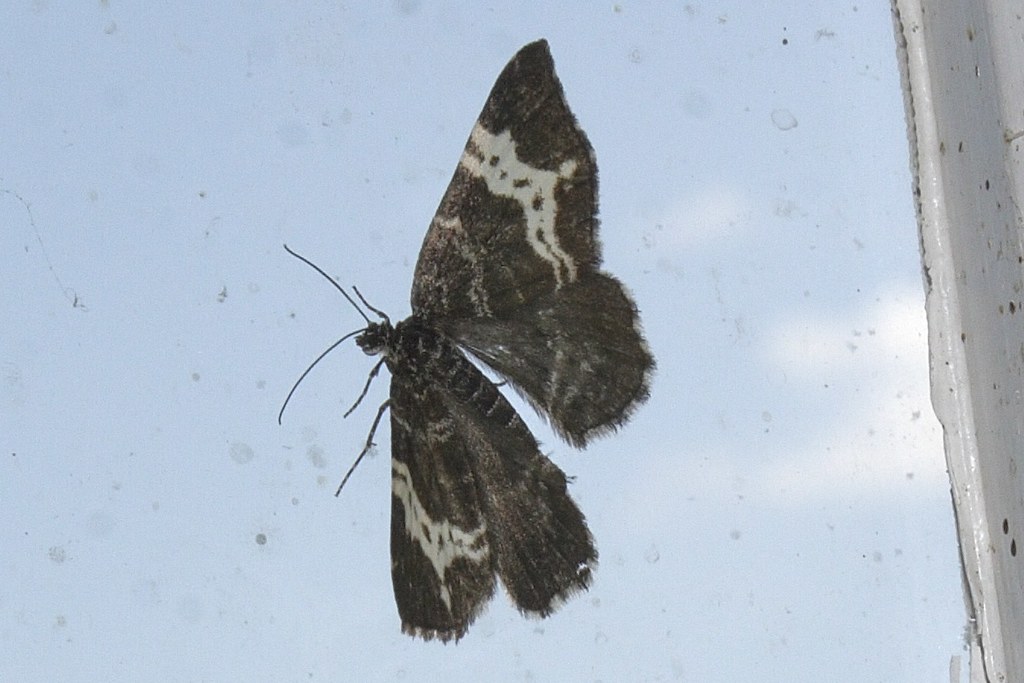
Rheumaptera hastata/subhastata species group
These geometer moths cannot be identified by looking at an image. They are separated by examination of the genitalia (which I was not about to do). See the Rheumaptera Info page for specifics. I therefore have two larvae for one moth. If I ever see one of the larvae some summer, I may know which moth I photographed.

Rheumaptera larva (photo: bugguide.net)

Rheumaptera prunivorata larva (photo: bugguide.net)

Adult (photo: again, my filthy garage window this past summer)

Hastata/subhastata Butterfly species group (5)
I have sixteen more butterflies and moths in my collection to match up, so there will be more posts. Check back next week!


_/\_/\_

Tuesday, July 27, 2010

A Deer Fly and Another Geometer Moth

click on any photo to view full size

I have photographed these two insects but the photos aren't of the quality I would post on my Photo A Day blog. This butterfly is interesting because it is one of two species but we won't be able to tell which. It is genus Rheumoptera but the species is either hastata or subhastata. You can only tell the difference by looking at the genitalia. Which I did not do. Which ever species it is, this is another geometer moth. All of the geometers I have photographed (here and here) are brown with very narrow bands across the wings, so this moth is very interesting. Butterflies and Moths of North America has no substantial information on these moths except that the subhastata species host is alder and no host is given for the hastata species.

Genus Rheumaptera; hastata/subhastata species group

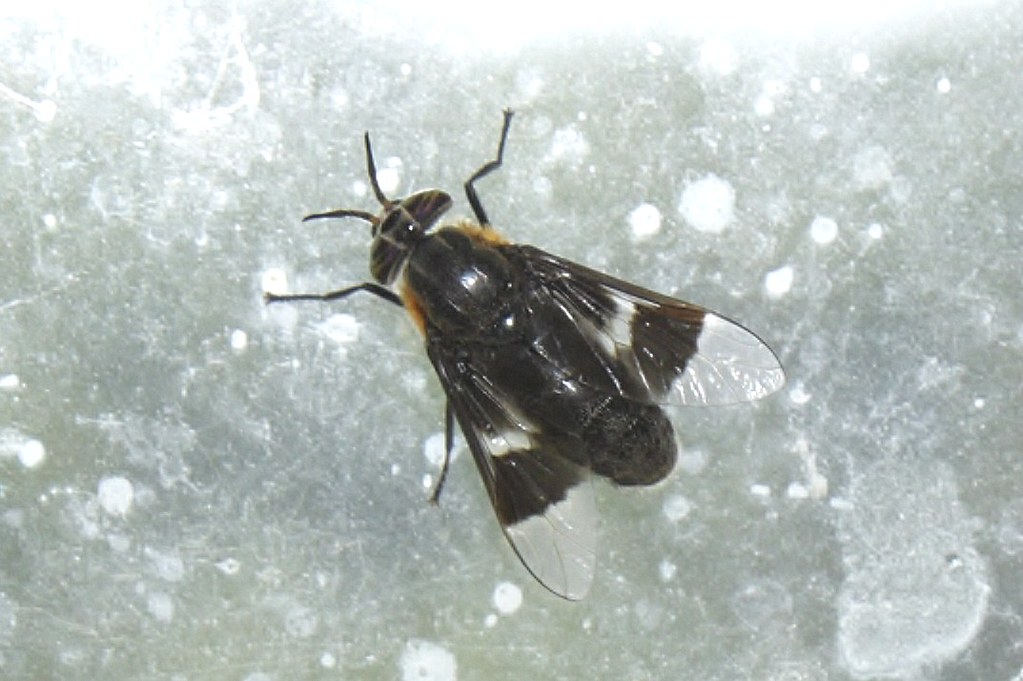
Chrysops ater

This is a deer fly. In June these flies were everywhere and biting us everywhere. For some reason, they seem to bite my ankles more than anything else. But despite their nastiness, they are pretty with black and clear banded wings. Their faces are fascinating, too, with horizontal orange/red bands. I managed to capture a poor image of this face (see the last photo below and be sure to click on it to view it large) but you can see a better photo of a face at bugguide.net.

Here you can faintly see the banded abdomen of the deer fly.

At this link at bugguide.net you will see four views of Chrysops that they say will enable you to identify any deer fly in North America.

Deer fly face and stinger

Happy bug hunting!

_/\_/\_

Sunday, November 08, 2009

Geometridae

This is the third geometer moth species I have photographed. They are difficult to identify because there are over 1,400 species in North America alone and over 35,000 species worldwide. You can tell a geometer moth with the geometric stripes across the wings. This moth was flitting about the woods when we hiked behind the dump in town. It was well camouflaged and was moving so much that it was hard to photograph. For more information on geometer moths, see bugguide.net.

Unidentified geometer from the John Hay Ecology Hike at the Fells

Curve-toothed Geometer Moth (Eutrapela clemataria)
The only geometer I have been able to identify.
Taken in Barton, Vermont


Technorati Tags: Del.icio.us Tags: Flickr Tags:

diigo it

_/\_/\_